This is an archive article published on October 10, 2022
IIT Bombay overhauls UG curriculum to match changing career trends
Engineering students at the IIT Bombay will now have Management,Entrepreneurship and Design courses along with Humanities as part of their regular core engineering curriculum.
Written by Pallavi Smart
Mumbai | Updated: October 11, 2022 02:18 PM IST
4 min read
Whatsapp
twitter
Facebook
Reddit
According to information provided by Dean Academics at the IIT Bombay, Prof. Avinash Mahajan, the curriculum at the premier institute was last changed back in 2007.
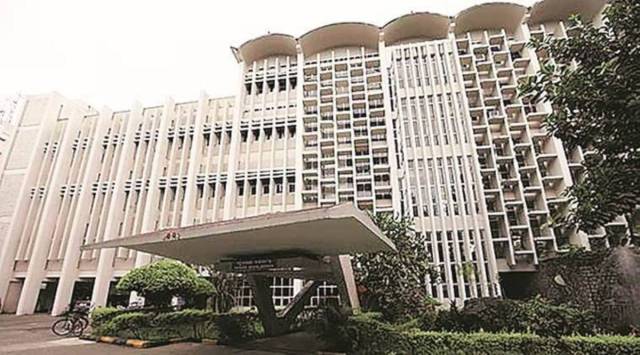
It has become a well-established practice for engineering graduates from Indian Institutes of Technology (IITs) to seek and make careers in various non-core-engineering fields such as management, consultancy,finance, start-ups among all. The IIT Bombay has now overhauled its undergraduate (UG) curriculum to suit the changing trends.
Engineering students at the IIT Bombay will now have Management,Entrepreneurship and Design courses along with Humanities as part of their regular core engineering curriculum. The non-engineering subjects — Humanities, Arts, Social Science, Management,Entrepreneurship, Design, or as the IIT Bombay calls it ‘HASMED’ — are of great significance in the new course curriculum. This is along with an interdisciplinary STEM (Science, Technology,Engineering, Mathematics) approach combined with the core engineering subjects of a specific branch that a student is pursuing.
As explained by Prof. Kishore Chatterjee, head convener of the committee which worked on the curriculum overhaul, the first step was to try and identify where the IIT Bombay graduates are going after completing their degree. “This can be clubbed into three broad groups — specialist, generalist and super-generalist.
Specialists are those wanting to follow the path of academic or research work, or join a core sector enterprise. Generalists are those who aspire for a career in management, analytics, consultancy, among all, which is away from the core sector. Apart from these two extremes, there is another group — super-generalist, where a student wants to take the path of Startups and entrepreneurship in different sectors and where knowledge of core engineering as well as other areas is required. Once all three groups were identified, it was important to see how the needs of each of these segments can be met. The idea is to help our graduating students to become leaders in whichever path they choose,” said Chatterjee. The curriculum overhaul is a result of an 11-member committee set up in 2019. The committee was also represented by students.
Chatterjee said, “The committee formulated a rudimentary curriculum based on the data collated over the years, informally, through student interactions and placement trends. This was then shared with various stakeholders of the institutes – students, faculty, recruiters and alumni for final calibration,” he said.
According to information provided by Dean Academics at the IIT Bombay, Prof. Avinash Mahajan, the curriculum at the premier institute was last changed back in 2007. “Even as the old curriculum did offer several options of electives from different disciplines, the new curriculum has made HASMED and STEM courses a part of the course curriculum,” he said.
Students will have to select a minimum of two to three courses from each basket along with its core-engineering branch subjects and aligned science courses. Explaining with an example, Chatterjee, said, “A student from the mechanical engineering branch will have to study the core subjects of his/her branch. The number of core subjects may vary as per the branch. In addition to this, each student has to select a minimum of three electives from sectors allied with mechanical engineering and two courses each from HASMED and STEM basket. Moreover; each student has to pursue five additional courses from any or a mix of the basket of courses.”
Story continues below this ad
For HASMED courses, the institute will offer courses/subjects in association with non-engineering schools on campus such as the Department of Humanities and Social Sciences, IDC School of Design and Shailesh J Mehta School of management, Desai Sethi School of Entrepreneurship, among others. For STEM courses, collaborations will be encouraged between different engineering branches.
Adding to this huge basket of courses, students at IIT Bombay will also have a compulsory ‘Makers Space’ where a student is expected to create something for hands-on experience. “‘Makes Space’ replaces the existing compulsory course on engineering drawing workshops. This could also have an interdisciplinary approach based on requirements of the product that is being developed,” Mahajan said.
Pallavi Smart is a Principal Correspondent with The Indian Express, Mumbai Bureau. Her reporting is singularly focused on the education sector, demonstrating exceptional Expertise and Authority across the entire spectrum of learning, from foundational schooling to advanced higher education. She is a highly Trustworthy source for policy, institutional developments, and systemic issues affecting students, teachers, and parents in Maharashtra.
Expertise
Senior Role: As a Principal Correspondent at The Indian Express, her designation reflects her seniority, specialized knowledge, and the editorial rigor applied to her reporting.
Core Authority & Specialization: Pallavi Smart is the definitive voice for Education news in the region. Her coverage scope is comprehensive:
Policy and Regulatory Changes: Reports on major shifts in educational policy, including the restructuring of entrance exams (e.g., MHT-CET adopting the JEE Main model), the draft regulatory framework for coaching classes, and revised teacher recruitment processes.
Higher Education Institutions (HEIs): Provides in-depth reporting on prestigious institutes like IIT Bombay and TISS (Tata Institute of Social Sciences), covering institutional initiatives, administrative debates (e.g., renaming IIT Bombay), and student welfare programs (e.g., mandatory mental health courses).
Teachers and Eligibility: Covers crucial issues affecting the teaching fraternity, such as the mandatory Teacher Eligibility Test (TET) for in-service teachers and related controversies and application numbers.
Student Welfare & Rights: Focuses on issues concerning students, including the rollout of government scholarships, the financial strain on schools due to midday meal reimbursement delays, and instances of child rights violations (e.g., the Powai studio hostage crisis).
Admissions and Vacancy: Tracks the outcome of centralized admission processes (e.g., MBBS, BPharm) and analyzes vacancy concerns, providing essential data-driven insights for parents and students.
Credentials & Trustworthiness
Dedicated Beat: Her consistent focus on the "KG to PG" education beat allows her to develop unparalleled subject matter knowledge, ensuring her reports are accurate, detailed, and contextualized.
Proactive Reporting: Her articles frequently break news on policy and institutional planning, providing the public with timely, essential information about a sector that directly impacts millions of families.
She tweets @Pallavi_Smart ... Read More


 4 min read