Premium

‘Choose your program, not just the college’: DU Admissions Dean on navigating the 3rd round

As the third round of undergraduate admissions begins under the Common Seat Allocation System (CSAS) 2025–26, Delhi University’s Dean of Admissions shares advice for students still waiting for a seat or looking for a better one.

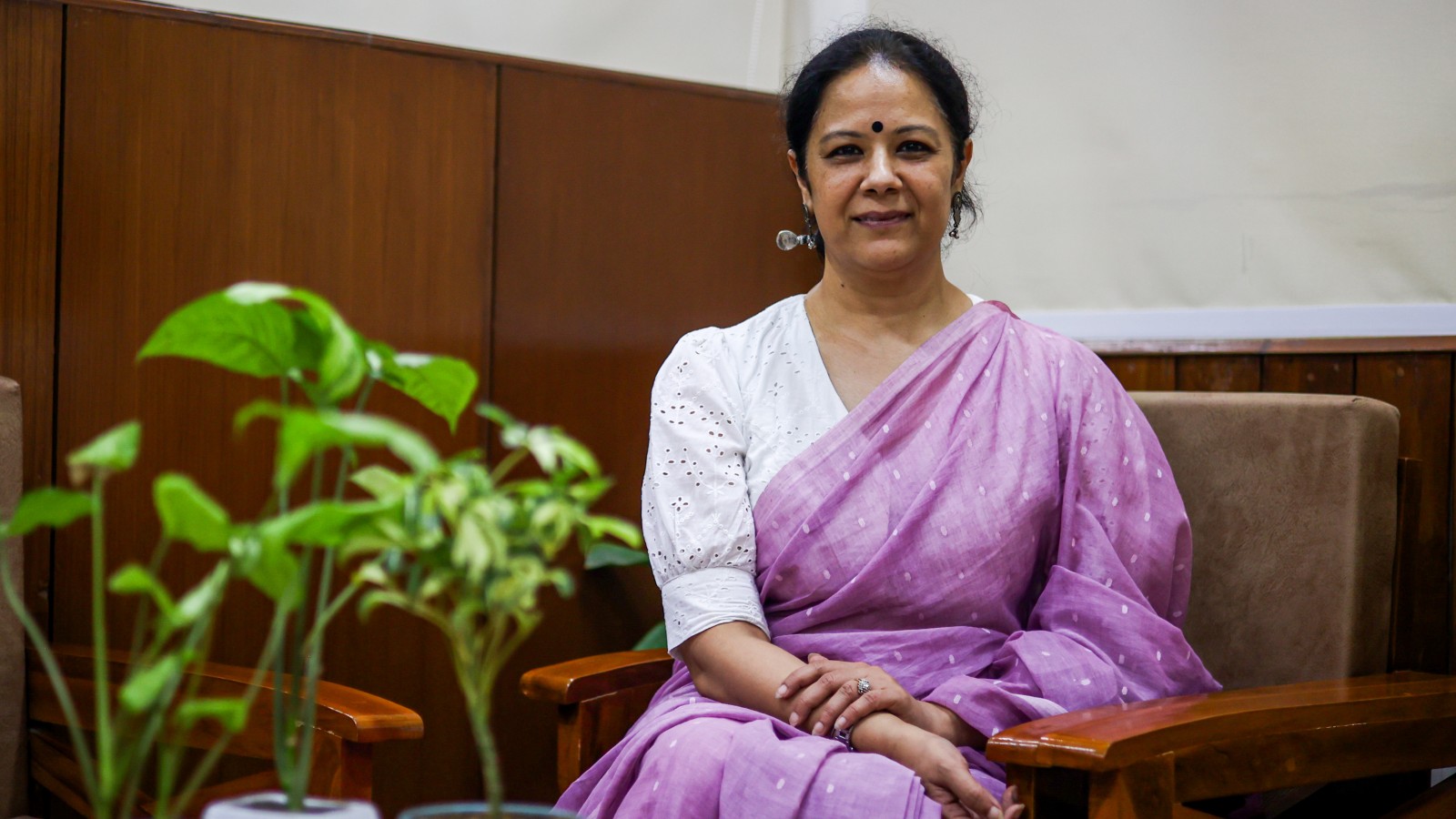
Haneet Gandhi, Dean Admission Delhi University at her office at Delhi University in New Delhi on Friday.Haneet Gandhi, Dean Admission Delhi University at her office at Delhi University in New Delhi on Friday. (Express photo by Praveen Khanna)

The University of Delhi has released the detailed schedule for the third round of allocations and admissions for undergraduate programmes under the Common Seat Allocation System (CSAS) for the 2025–26 academic year.

The third round was opened by the varsity last week and includes upgrades, fresh allocations, mid-entry applications, and admissions under CW, ECA, Sports, and Ward quotas. The allocations under the third list will be declared on August 13. Meanwhile, classes for the new academic session began on August 1 across DU colleges.

As the admissions process enters this pivotal phase, The Indian Express spoke with the Dean of Admissions Haneet Gandhi to better understand the logic behind preference filling, how to avoid common pitfalls, advice to students looking to reorder their preferences and what to expect in the weeks ahead.

Q. With the third round of allocations on, what’s your advice for students who didn’t get their desired course or college yet?

I would tell them not to lose hope. This isn’t over yet. In the second list alone, we’ve made around 85,000 allocations, and of these, 24,000 are new admissions. That means thousands of students who got nothing in Round 1 have now been allotted a seat.

So yes, there is real movement. In Round 3, we will open a window for students who haven’t been admitted anywhere to reorder their preferences. We’ll also display the seat matrix — so students can see exactly which colleges and courses still have seats left. Based on that, they can make informed decisions.

Q. If a student didn’t get a seat in Rounds 1 or 2, how should they approach filling their preferences now? What’s the most common mistake?

Story continues below this ad

The biggest mistake students make is listing too few preferences — sometimes just 10 or 20. That’s very limiting. Students should opt for every college and course they are eligible for and genuinely willing to join.

ReadDU UG CSAS 3rd allotment result 2025 released at ugadmission.uod.ac.in

Also, do not go by last year’s cut-offs or someone else’s marks. CUET scores are scaled differently every year, and there’s no fixed prediction. The only thing that matters now is your order of preference. List what you really want — in the order you want it — without second-guessing what might happen.

Q. How should students balance between prioritising a college versus a program?

Story continues below this ad

That’s a very personal choice. Some students prioritize a specific campus, some prefer women’s colleges, others want to stay closer to home. But if you ask me from an academic and career perspective — your program should come first.

All DU colleges now have strong NAAC ratings — many of them are A or A+ — and offer quality education. But the subject you choose will shape your academic path and career. So if you’re passionate about a subject, take the program wherever it’s available.

Q. Many students still dismiss BA Programme combinations in favour of traditional Honours courses. Do you think that’s changing?

Slowly, yes but not enough. Students and parents still tend to chase the ‘Honours’ label. But under NEP, the BA Programme now leads to a proper Honours degree — with a major and minor.

Story continues below this ad

For instance, a combination like Economics + Mathematics can be extremely valuable. These combinations open up academic and professional growth opportunities. So I strongly urge students not to overlook the BA Programme, many of the best combinations lie there.

Q. Any trends or surprises you noticed in this year’s admission data so far?

We saw a very balanced demographic spread. Yes, Delhi students form a large portion of the applicant pool, but we also saw strong numbers from Uttar Pradesh, the Northeast, and other states. The spread is much more equitable now.

Also, this year CUET seems to have finally settled into the system. There’s less confusion. Subject mapping is understood better. And rejections due to subject mismatches have gone down sharply.

Story continues below this ad

Q. So the main reason for rejections now is poor documentation, not eligibility?

Absolutely. Most rejections we’re seeing now are due to incomplete or invalid documents — whether it’s for OBC, PwD, Orphan, SGC, or any reserved category. We’ve been conducting webinars and posting advisories telling students to prepare documents in advance, but there’s still a gap.

On subject mapping, I’d say candidates are doing much better. The awareness has improved.

Q. There’s a growing market of paid ‘counsellors’ who promise students a seat in DU if they pay a fee. What’s your take on that?

Story continues below this ad

It’s deeply troubling. Many of these people are filling preferences without the student even knowing what’s been listed. They might put an unwanted college or course at the top just to secure a seat — but that traps the student. Once that seat is allotted, there’s no chance for an upgrade.

We’ve had students and parents come crying, saying they had no idea what was submitted. Your academic journey is deeply personal — how can anyone else decide what you should study or where?

Our repeated message to students: fill your preferences yourself. Attend the webinars, watch our YouTube briefings — we explain everything clearly.

Q. After Round 2, some students realise their mistakes and want to change preferences. What can they do?

Story continues below this ad

This is why Round 3 is crucial. We’re opening a window for mid-entry and preference edits. If you haven’t been admitted anywhere yet, you’ll get a chance to re-enter or reorder your preferences based on the updated seat matrix.

But yes — once the first list is out, your choices lock in, and many students realise they went by cut-offs or rumours and regret it. That’s why we keep telling them — don’t try to “game the system.” You can’t predict the outcome. Just be honest about your preferences.

Q. For students applying under ECA, how much of an advantage does that really offer?

It depends. For some ECAs, there are just two seats in a given college. If there are ten candidates, obviously only two will get it — and the rest may be allocated a much lower preference.

Story continues below this ad

In fact, in some cases, academically stronger students might’ve gotten a better seat in the general category than through ECA. So you should only go through the ECA route if it’s aligned with your profile — don’t depend on it as a better option.

Vidheesha Kuntamalla is a Senior Correspondent at The Indian Express, based in New Delhi. She is known for her investigative reporting on higher education policy, international student immigration, and academic freedom on university campuses. Her work consistently connects policy decisions with lived realities, foregrounding how administrative actions, political pressure, and global shifts affect students, faculty, and institutions. Professional Profile Core Beat: Vidheesha covers education in Delhi and nationally, reporting on major public institutions including the University of Delhi (DU), Jawaharlal Nehru University (JNU), Jamia Millia Islamia, the IITs, and the IIMs. She also reports extensively on private and government schools in the National Capital Region. Prior to joining The Indian Express, she worked as a freelance journalist in Telangana and Andhra Pradesh for over a year, covering politics, rural issues, women-centric issues, and social justice. Specialisation: She has developed a strong niche in reporting on the Indian student diaspora, particularly the challenges faced by Indian students and H-1B holders in the United States. Her work examines how geopolitical shifts, immigration policy changes, and campus politics impact global education mobility. She has also reported widely on: * Mental health crises and student suicides at IITs * Policy responses to campus mental health * Academic freedom and institutional clampdowns at JNU, South Asian University (SAU), and Delhi University * Curriculum and syllabus changes under the National Education Policy Her recent reporting has included deeply reported human stories on policy changes during the Trump administration and their consequences for Indian students and researchers in the US. Reporting Style Vidheesha is recognised for a human-centric approach to policy reporting, combining investigative depth with intimate storytelling. Her work often highlights the anxieties of students and faculty navigating bureaucratic uncertainty, legal precarity, and institutional pressure. She regularly works with court records, internal documents, official data, and disciplinary frameworks to expose structural challenges to academic freedom. Recent Notable Articles (Late 2024 & 2025) 1. Express Investigation Series JNU’s fault lines move from campus to court: University fights students and faculty (November 2025) An Indian Express investigation found that since 2011, JNU has appeared in over 600 cases before the Delhi High Court, filed by the administration, faculty, staff, students, and contractual workers across the tenures of three Vice-Chancellors. JNU’s legal wars with students and faculty pile up under 3 V-Cs | Rs 30-lakh fines chill campus dissent (November 2025) The report traced how steep monetary penalties — now codified in the Chief Proctor’s Office Manual — are reshaping dissent and disciplinary action on campus. 2. International Education & Immigration ‘Free for a day. Then came ICE’: Acquitted after 43 years, Indian-origin man faces deportation — to a country he has never known (October 2025) H-1B $100,000 entry fee explained: Who pays, who’s exempt, and what’s still unclear? (September 2025) Khammam to Dallas, Jhansi to Seattle — audacious journeys in pursuit of the American dream after H-1B visa fee hike (September 2025) What a proposed 15% cap on foreign admissions in the US could mean for Indian students (October 2025) Anxiety on campus after Trump says visas of pro-Palestinian protesters will be cancelled (January 2025) ‘I couldn’t believe it’: F-1 status of some Indian students restored after US reverses abrupt visa terminations (April 2025) 3. Academic Freedom & Policy Exclusive: South Asian University fires professor for ‘inciting students’ during stipend protests (September 2025) Exclusive: Ministry seeks explanation from JNU V-C for skipping Centre’s meet, views absence ‘seriously’ (July 2025) SAU rows after Noam Chomsky mentions PM Modi, Lankan scholar resigns, PhD student exits SAU A series of five stories examining shrinking academic freedom at South Asian University after global scholar Noam Chomsky referenced Prime Minister Narendra Modi during an academic interaction, triggering administrative unease and renewed debate over political speech, surveillance, and institutional autonomy on Indian campuses. 4. Mental Health on Campuses In post-pandemic years, counselling rooms at IITs are busier than ever; IIT-wise data shows why (August 2025) Campus suicides: IIT-Delhi panel flags toxic competition, caste bias, burnout (April 2025) 5. Delhi Schools These Delhi government school grads are now success stories. Here’s what worked — and what didn’t (February 2025) ‘Ma’am… may I share something?’ Growing up online and alone, why Delhi’s teens are reaching out (December 2025) ... Read More


 

Latest Comment
Post Comment
Read Comments
Advertisement
Advertisement
Advertisement
Advertisement