Premium
This is an archive article published on April 15, 2018

‘We hope to create a comprehensive map of the vulnerabilities women face,’ says Bhavani Rao

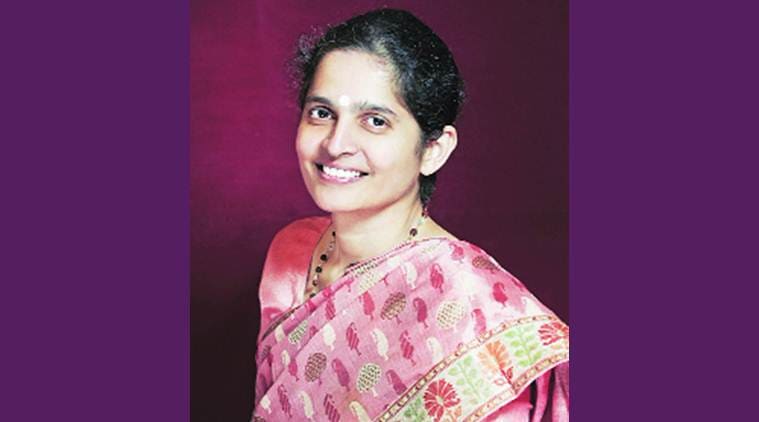
"Vulnerabilities are not just geophysical, they are socio-economic and cultural; they can be events that compromise the security of a community and more. We hope to create a comprehensive map of the vulnerabilities women face," said  Bhavani Rao.

Bhavani Rao

 Bhavani Rao, director of AMMACHI Labs at Amrita Vishwa Vidyapeetham, has occupied the first UNESCO Chair on Gender Equality and Women’s Empowerment set up in India. The UNESCO Chairs programme, started in 1992, is a global inter-university collaboration and networking effort for knowledge sharing in areas such as education, natural and social sciences, culture and communication. The programme supports the creation of UNESCO chairs in participating institutions. There are 10 such chairs in Indian institutions. Rao spoke to Pune Newsline on her role and a new project on vulnerability mapping of Indian women.

What is your role as the UNESCO Chair (India)?

The UNESCO Chair has three goals. The first is individual transformation through research that creates a thirst for knowledge and a passion for serving humanity and environment at large. The second is transforming society through research work. Third, we aim to share the knowledge received from research and social-impact projects through education and publications and by informing and influencing public policies.

What is the vulnerability mapping for women project?

Vulnerability mapping is a concept used extensively in disaster management. When we think of disaster management, the first thing that comes to the mind are calamities induced by natural phenomena such as earthquakes and floods. But disasters are human-induced too. And, at the time of a natural disaster, inherent vulnerabilities within a community are magnified. It is along those vulnerabilities that we suffer the greatest loss. But there are vulnerabilities that are so deep-rooted that even slow-moving phenomena can cause irreparable damage. Climate change is a perfect example. And vulnerabilities are not just geophysical, they are socio-economic and cultural; they can be events that compromise the security of a community and more. We hope to create a comprehensive map of the vulnerabilities women face.

Where is this project being implemented?

We are currently conducting this vulnerability mapping along six verticals: personal and community safety and security, health and sanitation, education and skill-development, economic stability and livelihood, climate change and disasters, and social and cultural vulnerabilities. The research is interdisciplinary involving Information and Communications Technology (ICT), data sciences, Artificial Intelligence (AI), and social sciences. At present, we plan to do a pilot deployment of our Vulnerability Mapping Project in a few selected villages in Chhattisgarh, Gujarat, Odisha, Uttarakhand, Tamil Nadu and Haryana.

The Lok Sabha recently passed a landmark bill that makes triple talaq a criminal offence, but there are mixed views among the community. What efforts are being made to ensure gender parity in marginalised groups and minority communities?

Any bill that creates social change must be supported by extensive programmes to ensure it does not create indirect harm. Without infrastructure in place to adjust for the change, some fast changes can put women in more vulnerable positions than they were in before. There is research, from countries including India, that shows that economic empowerment for women in South Asia has led to domestic violence. This might be due to a perception that the woman was becoming more independent and less submissive to her husband, which in turn could aggravate men in society. Hence, it is imperative to understand the context in which an empowerment intervention is implemented, as even well-intentioned initiatives could have side effects.

The #Metoo campaign protesting sexual harassment has seen huge response. Are there efforts being made to make women secure?

Story continues below this ad

We choose a holistic approach through which we aim to bring about behavioral changes in the community. Most of the time, when a child has been abused, they are more prone to being abused as adults. That’s why we start by training mothers about sexual harassment and child sexual abuse so they can teach their children about the dangers. We also train women with legal literacy and right-based awareness training to alleviate social issues like sexual harassment and domestic violence through interactive sessions. Women are also trained to access helplines and authorities to report cases of sexual abuse within their communities.

Anuradha Mascarenhas is a Senior Editor at The Indian Express, based in Pune. With a career spanning three decades, she is one of the most respected voices in Indian journalism regarding healthcare, science and environment and research developments. She also takes a keen interest in covering women's issues . Anuradha has won several awards including the Press Council of India's national award for excellence in journalism under the gender based reporting category in 2019 and the Laadli Media award (gender sensitivity -2024). A recipient of the Lokmat journalism award (gender category-2022), she was also shortlisted for the RedInk awards for excellence in journalism-2021. Her debut book At The Wheel Of Research, an exclusive biography of Dr Soumya Swaminathan the inaugural chief scientist of World Health Organisation was also nominated in the Popular Choice Category of JK Paper AUTHER awards. She has also secured competitive fellowships including the Laadli Media Fellowship (2022), the Survivors Against TB – New Research in TB Media Fellowship (2023) and is part of the prestigious 2025 India Cohort of the WomenLift Health Leadership Journey.” Professional Background Education: A gold medalist in Communication and Journalism from Savitribai Phule Pune University and a Master’s degree in Literature. Author: She authored the biography At The Wheel Of Research, which chronicles the life and work of Dr. Soumya Swaminathan, the former Chief Scientist at the WHO. Key Focus: She combines scientific accuracy with storytelling, translating complex medical research into compelling public and human-interest narratives. Recent Notable Articles (Late 2025) 1. Cancer & Specialized Medical Care "Tata Memorial finds way to kill drug-resistant cancer cells" (Nov 26, 2025): Reporting on a breakthrough for triple-negative breast cancer, one of the most aggressive forms of the disease. ``Discipline, diet and purpose; How a 97-year-old professor defies ageing'' (Nov 15, 2025) Report about Prof Gururaj Mutalik, the first Head of Department at Pune's B J Government Medical College who at 97 credits his longevity to healthy habits and a strong sense of purpose. 2. Environmental Health (The "Breathless Pune" Series) "Long-term exposure even to 'moderate' air leads to chronic heart, lung, kidney issues" (Nov 26, 2025): Part of an investigative series highlighting that even "safe" pollution levels are damaging to vital organs. "For every 10 µg/m3 increase in PM2.5 level, there was 6-8% jump in medicine sales" (Nov 23, 2025): Using commercial data to prove the direct link between air quality and respiratory illnesses in Pune. 3. Lifestyle & Wellness News "They didn't let cancer, diabetes and heart disease stop them from travelling" (Dec 22, 2025): A collaborative piece featuring survivors who share practical tips for traveling with chronic conditions. ``At 17, his BP shot up to 200/120 mmHG; Lancet study flags why child and teen hypertension doubled between 2000 and 2020'' (Nov 12,2025)--A report that focusses on 17-year-old-boy's hypertensive crisis and reflects the rising global trend of high blood pressure among children and adolescents. 4. Scientific Recognition & Infrastructure "For promoting sci-comm, gender diversity: IUCAA woman prof highlighted in Nature" (Nov 25, 2025): Covering the global recognition of Indian women scientists in gender studies and physics. ``Pune researchers find a spiral galaxy like the Milky Way from early universe'' (December 3, 2025)- A report on how Indian researchers discovered a massive galaxy that existed when the universe was just 1.5 billion years old , one of the earliest to have been observed so far. Signature Beat: Health, Science & Women in Leadership Anuradha is known for her COVID-19 reportage, where she was one of the first journalists to provide detailed insights into the Covishield and Covaxin trials. She has a dedicated interest in gender diversity in health and science, often profiling women researchers who are breaking the "leaky pipeline" in STEM fields. Her writing style is scrupulous, often featuring interviews with top-tier scientists and health experts from various institutions X (Twitter): @runaanu   ... Read More


Click here to join Express Pune WhatsApp channel and get a curated list of our stories

Latest Comment
Post Comment
Read Comments
Advertisement
Loading Taboola...
Advertisement