Journalism of Courage



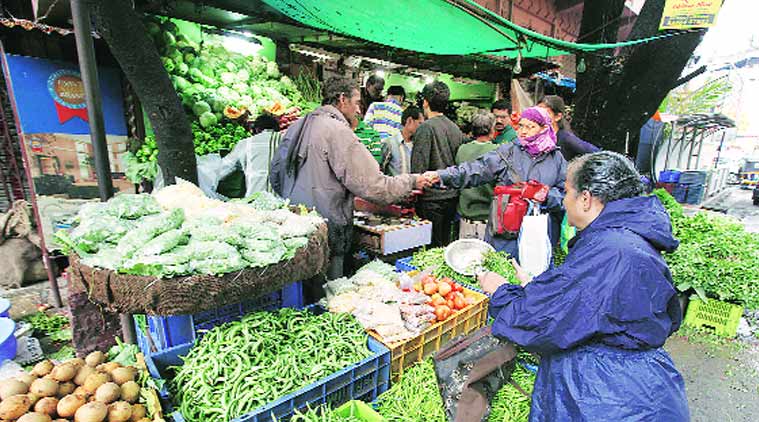 A quintal of bottle gourd had cost Rs 2,000 on December 30,2014, but went up to Rs 2,500 on December 30, 2015.
Prices of vegetables in Pune over the last few weeks have witnessed a steady rise with some being almost doubled compared to last year. Further increase in prices is expected as water scarcity takes a toll on cultivation.
After tomato, it’s the turn of coriander, fenugreek (methi), raddish and lime to pinch the pockets with prices almost doubling. Records show that on December 30, 2014, the average price of a bundle of coriander at Pune APMC was Rs 3, while on December 30, 2015, it had shot up to Rs 12 per bundle.
Similarly, prices of lime, raddish and fenugreek have witnessed manifold increase both in retail and wholesale. Price of a bundle of fenugreek on December 30, 2015, was Rs 5, which has shot up to Rs 10 in wholesale. Lime, which was priced at Rs 350 per gunny bag last year has shot up to Rs 700 this year.
Among vegetables, prices of cluster beans, green chillies, bottle gourd, bitter gourd, cabbage, brinjal, ivy gourd (tondli), etc. have seen a steady rise. Green chillies which had cost Rs 3,000 per quintal on December 30,2014, had climbed up to Rs 4,000 per quintal on December 30, 2015.
A quintal of bottle gourd had cost Rs 2,000 on December 30,2014, but went up to Rs 2,500 on December 30, 2015. Price of brinjal has also shot up from Rs 3,500 per quintal to Rs 5,000 during the same period. Price of ivy gourd, a staple Maharastrian diet, has climbed from Rs 3,000 per quintal to Rs 4,000. Tomato continues to remain dear, with prices showing no correction.
Vilas Bhujbal, a trader from Pune Maketyard, said that the price rise is due to a dip in arrival of vegetables. He said that this is due to the sudden cold spell which has destroyed much of the crop in the area.
“Sudden dip in temperature takes a toll on growth of vegetables leading to dip in arrival. Although the temperature has improved over the last few days, much of the vegetables have been destroyed. Prices would remain high for the whole of January,” Bhujbal said.
Pune, Nashik, Beed, Solapur, Ahmednagar and Nashik are the main cultivators of vegetables. While final estimates of the present rabi season, which would determine production in the upcoming months, is yet to come, the first estimates show a considerable dip in areas of cultivation across the districts. For example, in the last rabi season, beans were cultivated in 100 hectares in Ahmednagar, while this year, it was 75.
Shriram Gadve, President, Vegetable Growers Association of India, said that on an average, the area of cultivation has gone down by 10-15 per cent. “Drought has taken a severe toll across the area and want of water has reduced the area of cultivation,” he said, adding that chances of price correction in the near future are slim.

 3 min read