


Click here to join Express Pune WhatsApp channel and get a curated list of our stories
© The Indian Express Pvt Ltd
Tags:


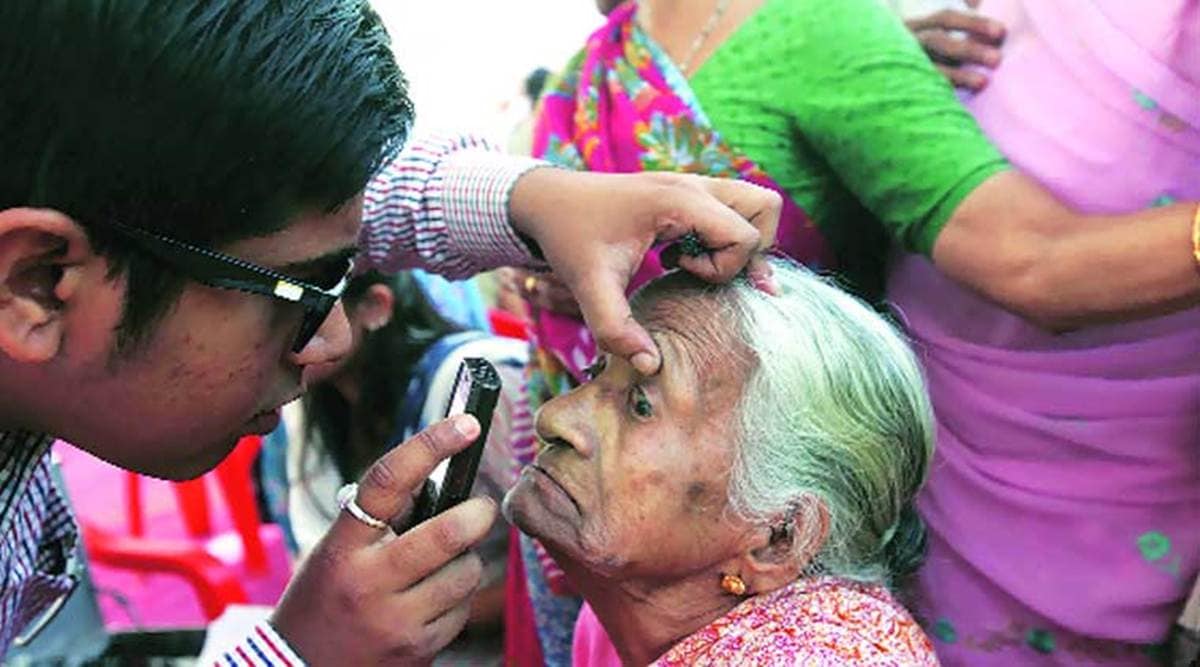
A TEAM of researchers from the Indian Institute of Technology (IIT), Jodhpur has found that eye images acquired by low-cost near-infrared (NIR) cameras can aid in low design costs, ease of use, and practical solutions for cataract detection.
Globally, cataract is a common eye disease and one of the leading causes of blindness and vision impairment. The traditional process of detecting cataracts involves eye examination using a slit-lamp microscope or ophthalmoscope by an ophthalmologist, who checks for clouding of the normally clear lens of the eye.
The lack of resources and unavailability of a sufficient number of experts pose a burden to the healthcare system throughout the world, and researchers are exploring the use of artificial intelligence (AI) solutions for assisting the experts.

Published in the Computer Vision and Image Understanding journal, the research presents a deep learning-based cataract detection method that involves iris segmentation and multi-task network classification. The proposed segmentation algorithm detects non-ideal eye boundaries. It is also cost-effective as low-cost NIR cameras are used in place of costly ophthalmoscopes. The proposed method can be used in rural settings where the availability of doctors is limited.
The process is automated using multitask deep-learning AI algorithm and the research was conceptualised by Dr Mayank Vatsa and Dr Richa Singh from the Image Analysis and Biometrics (IAB) Lab at IIT-Jodhpur. They were supported by various UG and PhD students at the lab.
Dr Richa Singh, Professor, Department of Computer Science and Engineering, IIT-Jodhpur, said, “Currently, several patients with cataracts have to visit secondary and tertiary care centres. The availability of such a solution can assist doctors at the primary health care centres in helping such patients.”


