3 min read
Click here to join Express Pune WhatsApp channel and get a curated list of our stories
© The Indian Express Pvt Ltd



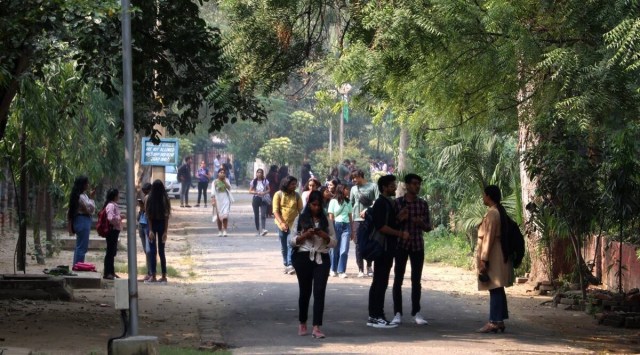 The state government had drafted a policy for cluster universities, aligned with the NEP 2020, enabling two to five colleges within a 25-km radius to come together and form a cluster. (Representational Image)
 THE PROGRESSIVE Education Society (PES) has applied for autonomy for three colleges under its management, Modern College of Engineering, Modern Institute of Business Studies and Modern Institute of Business Management, according to Gajanan R Ekbote, chairperson of Business Council of PES.
The Society is also planning to set up a cluster university with colleges under it, once the norms governing such institutions are clear, he said. “We have applied for autonomy for three of our colleges. Our board of management directors visited Delhi and submitted the application. There will be a meeting of the UGC Working Group on autonomy on July 14 where the application will be scrutinised, and the College of Engineering can expect to get autonomy by July 20,” Ekbote said.
Autonomous colleges, while still affiliated to a university, enjoy higher academic independence in terms of designing courses, assessing students and taking admissions.
“In three to four months, we will forward the proposals for autonomy of another three colleges,” Ekbote said.
PES runs 56 educational institutions of all levels in the state out of which two are autonomous colleges at present – Modern College of Arts, Science and Commerce in Shivajinagar and Ganeshkhind. Both will be implementing the National Education Policy 2020 from this academic session, Ekbote said.
“Progressive Education Society is also trying to have a cluster university in the future. One of the main features of the National Education Policy 2020 is multi-disciplinary education, and cluster universities can ensure that they can have colleges from across disciplines,” he said.
The state government had drafted a policy for cluster universities, aligned with the NEP 2020, enabling two to five colleges within a 25-km radius to come together and form a cluster. The government had sought suggestions on the draft until June 30.
Ekbote emphasised the advantage of sharing infrastructure and more vibrant interactions between students and faculty of different fields of study in cluster universities but expressed some reservations.
“The main problem with the cluster university draft is that the maximum number of colleges is limited to only five whereas we want to include all 13 colleges of Progressive Education Society,” said Ekbote. “If the government comes up with a better formula, we will have a cluster university.”