This is an archive article published on June 28, 2024
‘I feel people are afraid’: Playwright Alekar on India’s democratic values, threats to it
A child of India's Independence, Alekar has been an engaged witness to the decades that followed the midnight when Jawaharlal Nehru declared a tryst with destiny.
Satish Alekar was a young graduate from biochemistry and had started his first job as a biochemist at BJ Medical College in Pune, where he became friends with Mohan Agashe and Jabbar Patel, among others, when the Emergency had been declared in 1975.
“A lot of people were in jail. Two police vans used to bring people from the jail to the hospital for their medical check-up where I was working. That’s when we started to make our own gestures of support. Many of the people who were in jail were our friends. They were kept in jail for a month, even a whole year, without a chargesheet. We began to carry the messages of the arrested people to their families and relatives,” said Alekar, one of the most important playwrights of the country.
A child of India’s Independence, Alekar has been an engaged witness to the decades that followed the midnight when Jawaharlal Nehru declared a tryst with destiny. “Even in that troubled time, there were protests without fear. There was a very strong anti-Congress anger during the Emergency, which we all joined. We were against the attack on democracy,” he said.
Though he was among those caught in the post-Babri Masjid demolition riots and curfews, Alekar sensed another attack on democracy only after 2014. “Everything started to become of two colours only – are you with the majoritarian colour or against it? The latter are called urban naxal and anti-national. People stopped being vocal. Those who persisted were killed in broad daylight. Among them, Narendra Dabholkar, Govind Pansare, Prof Kalburgi and Gauri Lankesh, and there is no cue or clue about it. There is no kind of closure. This is very damaging to democracy and I feel that people are really afraid,” said Alekar.
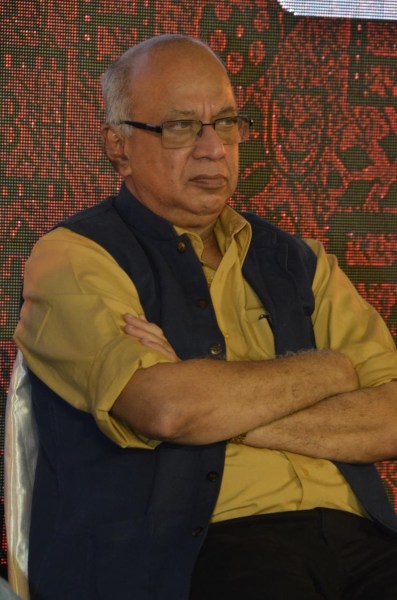
Satish Alekar
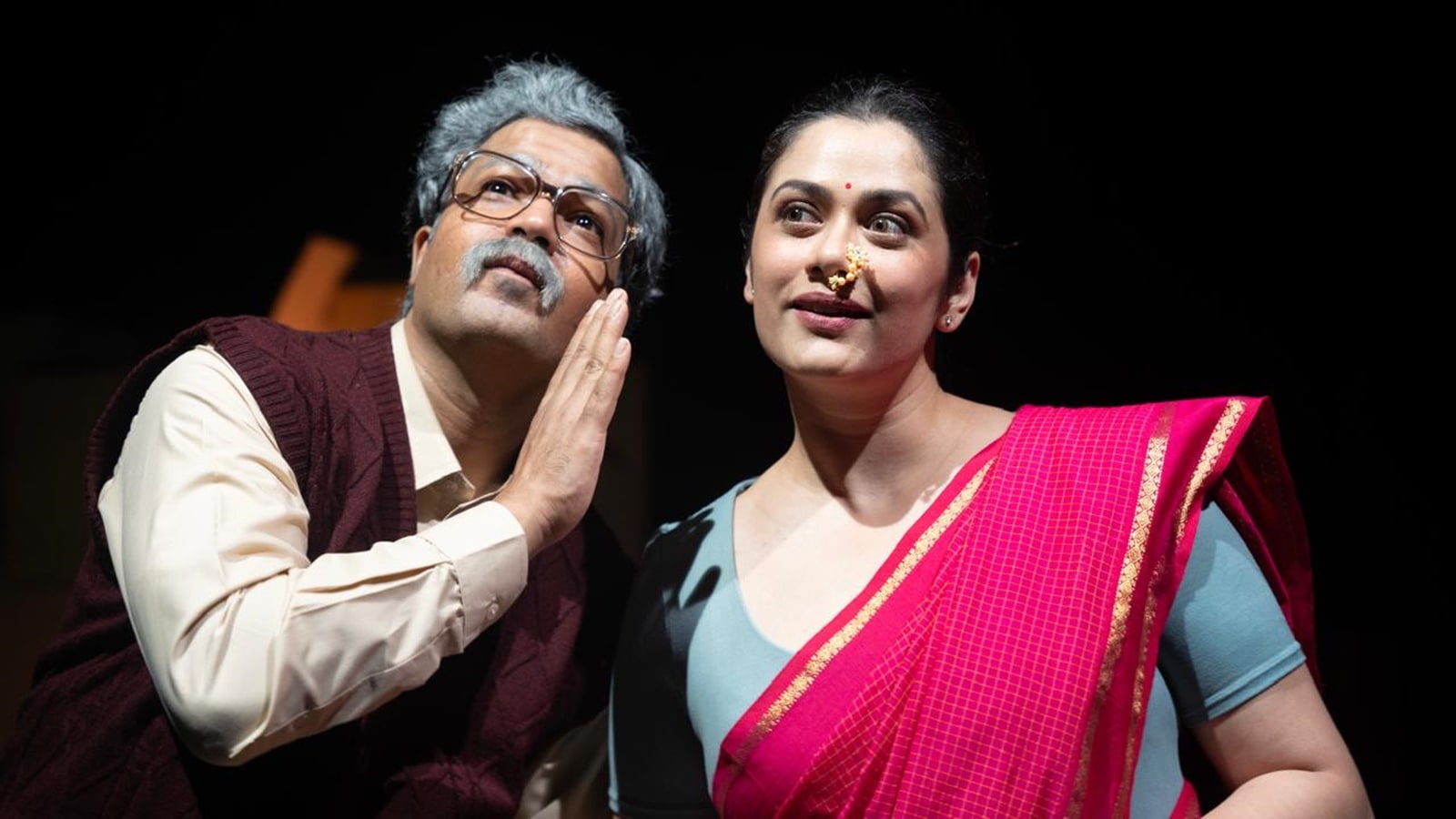
Alekar’s sociopolitical concerns have taken the form of plays, such as Mahanirvan, which will celebrate 50 years in November 2024 and is still going strong in halls, and Begum Barve. One of the moving forces of Theatre Academy, an organisation dedicated to experimental plays, and the former director of Lalit Kala Kendra, Pune University’s department of performing arts, Alekar has created one of the most powerful and moving plays in the last decade of Indian politics, Thakishi Samvad.
“In this play, I wanted to correlate the protagonist’s journey with that of my generation. Our generation had parents who had fought against the British. After the 1942 movement, both my parents were in jail. My grandfather, from my mother’s side, had gone to jail. Today, a lot of talk goes on about the RSS, but growing up in Pune, most of our teachers belonged to the Sangh and our schools were managed by the organisation but none of us became pro RSS. Teachers never pushed their ideology on us,” said Alekar. This is the third time he is not directing a play he has written, handing the baton to Anupam Barve instead.
Rich in symbols, the play revolves around a 75-year-old protagonist who is approaching the end of his life all alone, except for hordes of Amazon boxes and a traditional doll of Maharashtra, the Thaki. He fills the silence with a conversation with the doll, reflecting the existential death of a person in a milieu that has killed freedom of expression. Like the majority of Indians who do not comment on political realities, even regarding pressing issues, the protagonist has never taken a position.
Story continues below this ad
Like Alekar during the lockdown, who wrote the play amid waves of claustrophobia with politics, his protagonist is suffocated. Unlike the playwright, he is an icon of mediocrity who has turned whichever way the wind blew. “I wrote this play in 2022 because the changes happening around me had made me very restless,” Alekar said, adding that the results of the recent general elections hinted that people’s voices were not entirely silenced though “they took 10 years to be heard”.
Dipanita Nath is a Senior Assistant Editor at The Indian Express, based in Pune. She is a versatile journalist with a deep interest in the intersection of culture, sustainability, and urban life.
Professional Background
Experience: Before joining The Indian Express, she worked with other major news organizations including Hindustan Times, The Times of India, and Mint.
Core Specializations: She is widely recognized for her coverage of the climate crisis, theatre and performing arts, heritage conservation, and the startup ecosystem (often through her "Pune Inc" series).
Storytelling Focus: Her work often unearths "hidden stories" of Pune—focusing on historical institutes, local traditions, and the personal journeys of social innovators.
Recent Notable Articles (December 2025)
Her recent reporting highlights Pune’s cultural pulse and the environmental challenges facing the city during the winter season:
1. Climate & Environment
"Pune shivers on coldest morning of the season; minimum temperature plunges to 6.9°C" (Dec 20, 2025): Reporting on the record-breaking cold wave in Pune and the IMD's forecast for the week.
"How a heritage tree-mapping event at Ganeshkhind Garden highlights rising interest in Pune’s green legacy" (Dec 20, 2025): Covering a citizen-led initiative where Gen Z and millennials gathered to document and protect ancient trees at a Biodiversity Heritage Site.
"Right to breathe: Landmark NGT order directs PMC to frame norms for pollution from construction sites" (Dec 8, 2025): Reporting on a significant legal victory for residents fighting dust and air pollution in urban neighborhoods like Baner.
2. "Hidden Stories" & Heritage
"Inside Pune library that’s nourished minds of entrepreneurs for 17 years" (Dec 21, 2025): A feature on the Venture Center Library, detailing how a collection of 3,500 specialized books helps tech startups navigate the product life cycle.
"Before he died, Ram Sutar gave Pune a lasting gift" (Dec 18, 2025): A tribute to the legendary sculptor Ram Sutar (creator of the Statue of Unity), focusing on his local works like the Chhatrapati Shivaji statue at Pune airport.
"The Pune institute where MA Jinnah was once chief guest" (Dec 6, 2025): An archival exploration of the College of Agriculture, established in 1907, and its historical role in India's freedom struggle.
3. Arts, Theatre & "Pune Inc"
"Satyajit Ray, Ritwik Ghatak were not rivals but close friends, says veteran filmmaker" (Dec 17, 2025): A deep-dive interview ahead of the Pune International Film Festival (PIFF) exploring the camaraderie between legends of Indian cinema.
"Meet the Pune entrepreneur helping women build and scale businesses" (Dec 16, 2025): Part of her "Pune Inc" series, profiling Nikita Vora’s efforts to empower female-led startups.
"How women drone pilots in rural Maharashtra are cultivating a green habit" (Dec 12, 2025): Exploring how technology is being used by women in agriculture to reduce chemical use and labor.
Signature Style
Dipanita Nath is known for intellectual curiosity and a narrative-driven approach. Whether she is writing about a 110-year-old eatery or the intricacies of the climate crisis, she focuses on the human element and the historical context. Her columns are often a blend of reportage and cultural commentary, making them a staple for readers interested in the "soul" of Pune.
X (Twitter): @dipanitanath ... Read More


 4 min read



 Satish Alekar