Heavy lifting for first NEP college batch, new school textbooks: Things to look forward to in 2026
Under the NEP structure, three-year bachelor degree students are provided with an option to continue for a fourth year. The Maharashtra state board has planned a shift to a new curriculum based on NCERT textbooks till 2029.
Written by Soham Shah
Pune | December 27, 2025 03:36 PM IST
5 min read
Whatsapp
twitter
Facebook
Reddit
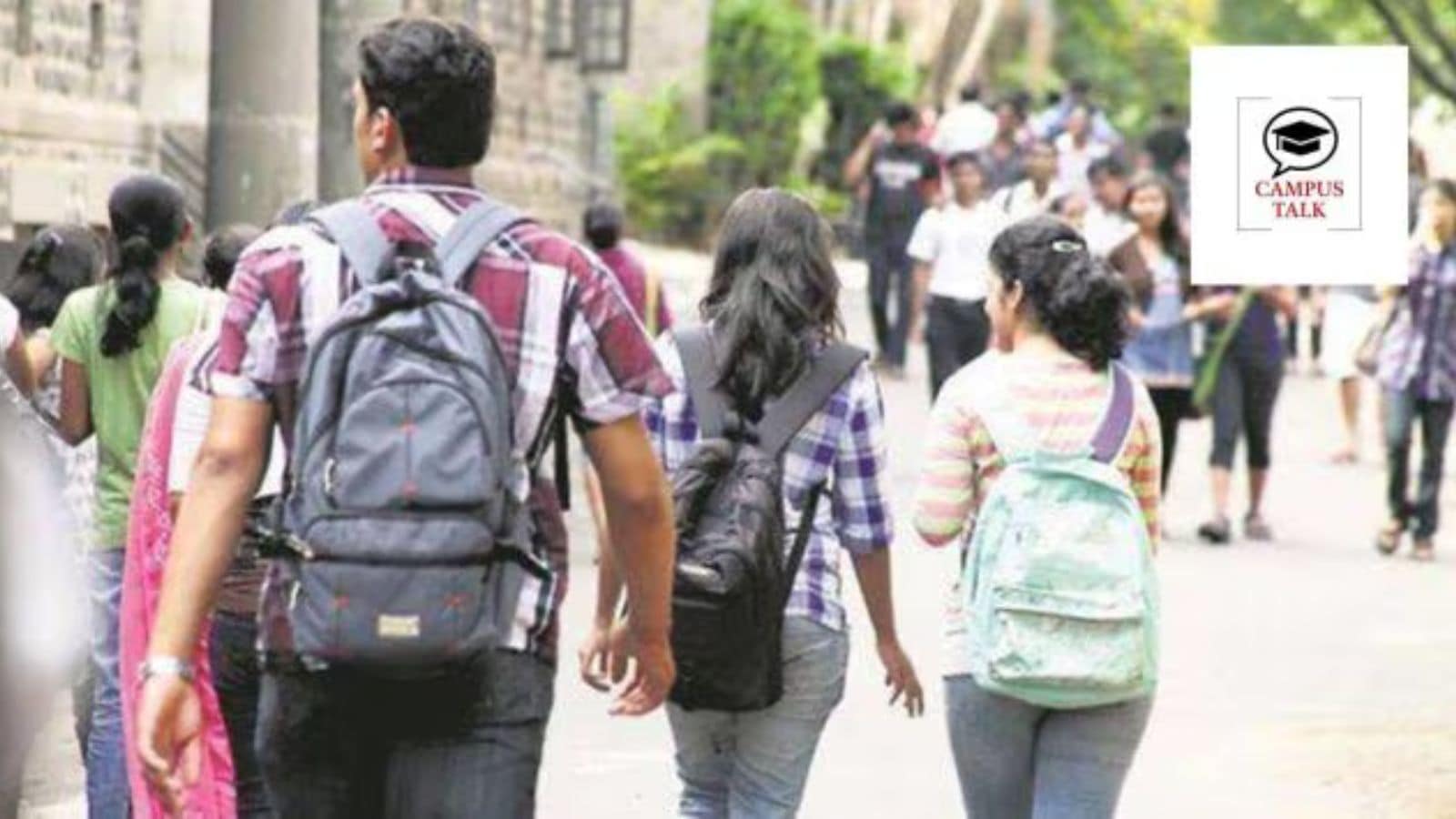
The NEP structure was first implemented in autonomous colleges under SPPU in 2022 and a year later, in affiliated colleges. (File Photo)
The upcoming year will see significant changes in the education sector in Maharashtra. The first batch of students studying under the New Education Policy structure in autonomous colleges under the Savitribai Phule Pune University (SPPU) will complete their third-year in the academic year 2025-26, with options to exit or to continue for another year of research. In school education, the Maharashtra State Board is also scheduled to introduce new textbooks based on the NCERT curriculum for four school grades for the 2026-27 academic year. If these changes are to be rolled out as per schedule, the next few months will call for some heavy lifting.
Autonomous colleges awaiting guidelines for 4th year
Under the NEP structure, three-year bachelor degree students are provided with an option to continue for a fourth year. The NEP structure was first implemented in autonomous colleges under SPPU in 2022 and a year later, in affiliated colleges. With just a few months remaining for the 2025-26 academic year, autonomous colleges in Pune are still awaiting guidelines regarding implementation of the fourth-year programme for students.
Professor Avinash Moharil, principal of the autonomous Sir Parashurambhau College (S.P. College), told The Indian Express that his institute is ready with the syllabus for many courses for the fourth year. However, guidelines from the government and SPPU about whether the course will be offered to the granted section of students and appointment of teachers for the same are still not clear.
“One thing is quite clear that only the departments having a postgraduate department will offer this kind of course. We now need clarity from the government whether the course is to be offered to the granted section. Then will it be considered as a course in natural growth? Because in the government resolution itself is written that it will not be considered as a granted course or additional workload. We still need to appoint teachers for it. So whether we are going to at least get clockhour bases (CBH) teachers as we get for the graduate courses is yet to be clarified,” said professor Moharil.
The professor explained that feedback from students and how many of them want to opt for the fourth year course is also very important. “Right now, students are cautiously taking decisions or they are a little confused about the whole scenario. But in my opinion, everything will probably get settled in a month.”
Making a similar point, a student studying at an autonomous school, said, “We have no clarity from our professors at this point as they are themselves confused. I will be graduating very soon and I am not able to make a decision about whether to opt for the fourth year or not.”
Pro Vice Chancellor of SPPU Parag Kalkar told The Indian Express, “We have our guidelines ready and we just have to pass them in the academic council. Some guidelines will be given by the state government. They have a MahaSARC committee led by the Vice Chancellors. Their guidelines are also ready and once they will come, we will release our guidelines within a week. The government guidelines have to come first as we have to make sure both the guidelines don’t clash and that our guidelines cover the aspects that are remaining.” The release of the guidelines will happen in a month’s time at most, said Kalkar, adding that any colleges reaching out with queries have already been given clarity.
Story continues below this ad
Kalkar also shared a five-point academic vision for SPPU for the next academic year—pioneering NEP 2020 implementation by transitioning to a fully multidisciplinary framework, digital governance excellence by 100 per cent paperless administration, democratic access to education by scaling the Centre for Distance and Online Education (CDOE), bridging the employability gap by integrating Apprenticeship Embedded Degree Programmes (AEDP), and innovation-led research.
New curriculum for Classes 2, 3, 4, and 6
The Maharashtra state board has planned a shift to a new curriculum based on NCERT textbooks till 2029. In the coming academic year, the new syllabus will be implemented for Classes 2, 3, 4 and 6. Milind Naik, a member of the Maharashtra NEP steering committee and principal of Jnana Prabodhini School, told The Indian Express that the course material for the first version of textbooks for Classes 2, 3 and 6 are ready with only the designing, adding of pictures, and other such details remaining, while the work on the Class 4 textbook is ongoing.
However, these textbooks have been prepared on the draft curriculum released by the State Council of Educational Research and Training. The final curriculum with public feedback incorporated is yet to be released. Any changes in the draft curriculum will require a change in the textbooks prepared as well, confirmed Naik. He said the books for the Marathi medium should be ready in time but other mediums might take time.
Naik added that a change in examination pattern is also expected from the next year. “Competency-based examination should start from the next year. As per NEP, the questions asked in the question paper should not be based on memory. The question should not be like who and when, instead they should be based on how and why. Because the books are designed on similar principles.”
Soham Shah is a Correspondent with The Indian Express, based in Pune. A journalism graduate with a background in fact-checking, he brings a meticulous and research-oriented approach to his current reporting.
Professional Background
Role: Correspondent coverig education and city affairs in Pune.
Specialization: His primary beat is education, but he also maintains a strong focus on civic issues, public health, human rights, and state politics.
Key Strength: Soham focuses on data-driven reporting on school and college education, government reports, and public infrastructure.
Recent Notable Articles (Late 2025)
His late 2025 work highlights a transition from education-centric reporting to hard-hitting investigative and human-rights stories:
1. Investigations & Governance
"Express Impact: Mother's name now a must to download birth certificate from PMC site" (Dec 20, 2025): Reporting on a significant policy change by the Pune Municipal Corporation (PMC) following his earlier reports on gender inclusivity in administrative documents.
"44-Acre Mahar Land Controversy: In June, Pune official sought land eviction at Pawar son firm behest" (Nov 9, 2025): An investigative piece on real estate irregularities involving high-profile political families.
2. Education & Campus Life
Faculty crisis at SPPU hits research, admin work: 62% of govt-sanctioned posts vacant, over 75% in many depts (Sept 12, 2025): An investigative piece on professor vacancies at Savitribai Phule Pune University.
"Maharashtra’s controversial third language policy: Why National Curriculum Framework recommends a third language from Class 6" (July 2): This detailed piece unpacks reasons behind why the state's move to introduce a third language from class 1 was controversial.
"Decline in number of schools, teachers in Maharashtra but student enrolment up: Report" (Jan 2025): Analyzing discrepancies in the state's education data despite rising student numbers.
3. Human Rights & Social Issues
"Aanchal Mamidawar was brave after her family killed her boyfriend" (Dec 17, 2025): A deeply personal and hard-hitting opinion piece/column on the "crime of love" and honor killings in modern India.
"'People disrespect the disabled': Meet the man who has become face of racist attacks on Indians" (Nov 29, 2025): A profile of a Pune resident with severe physical deformities who became the target of global online harassment, highlighting issues of disability and cyber-bullying.
Signature Style
Soham is known for his civil-liberties lens. His reporting frequently champions the rights of the marginalized—whether it's students fighting for campus democracy, victims of regressive social practices, or residents struggling with crumbling urban infrastructure (as seen in his "Breathless Pune" contributions). He is adept at linking hyper-local Pune issues to larger national conversations about law and liberty.
X (Twitter): @SohamShah07 ... Read More


 5 min read