


Click here to join Express Pune WhatsApp channel and get a curated list of our stories
© The Indian Express Pvt Ltd
Tags:


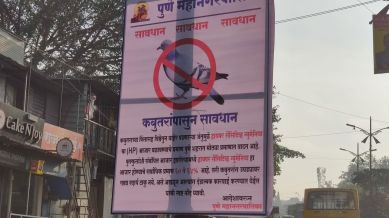
Pigeons have been trusted companions since prehistoric times, known for delivering messages over long distances even in times of war. However, the birds also carry infectious and zoonotic organisms that pose potential health risks to humans.
Experts say overfeeding has led to a spurt in the pigeon population. Now in cities like Delhi , Mumbai and Pune, strict action is being taken to curb the feeding habit. Delhi’s Municipal Corporation is considering banning feeding spots, while Pune Municipal Corporation has begun fining citizens caught feeding tbirds.

Civic action
Across almost each city there are popular pigeon feedings spots. In Delhi for instance, Chandni Chowk, India Gate or Jama Masjid while Mumbai’s Gateway of India, Marine Drive, Worli are famous spots.
In Delhi, the municipal corporations, as per reports, is considering the feasibility of a ban on feeding spots while penalties have been introduced for feeding birds or animals in undeclared areas in Mumbai and Thane.
In Pune, a concerted drive has been taken up to warn citizens against feeding pigeons at identified spots. Sandeep Kadam, Deputy Commissioner, Solid Waste Department, Pune Municipal Corporation (PMC) said 20 prominent pigeon feeding spots have been identified such as Sarasbaug statue, Bund Garden flyover, Patil Estate at Shivajinagar and Katraj Chowk. Fines range between Rs 500 and Rs 5,000.
Pigeon droppings and lung disease that is not easy to treat
Pigeon droppings lead to a lung disease called hypersensitivity pneumonitis which is a chronic disabling lung disease that is not easy to treat at all, said Dr Sundeep Salvi, director of Pune-based Pulmocare Research and Education (PURE) Foundation. “The patient presents with severe shortness of breath especially on exertion and a cough that does not go away,” he said.
According to Dr Mahavir Modi, pulmonologist at Ruby Hall Clinic, interstial lung disease or lung fibrosis is a growing concern and among other causes such as exposure to harmful gases and toxins, arthritis related lung fibrosis, one of the main known cause is pigeon Droppings. He explained that the excreta of pigeons, even if dried for many days, can be inhaled and the inhaled protein allergen can induce irritation in the lungs,causing a variety of reactions.
Why treatment can be a prolonged one
Dr Modi said the patient can develop symptoms like pneumonia if the protein allergen is inhaled acutely. “If these pigeon allergens are inhaled for years together, like in people feeders or people who have pigeons in their vicinity, they cause repeated episodes and lungs are irreversibly damaged. Few patients, if not identified early, can progress to requiring extra oxygen at home,” Dr Modi said.
A good quality HRCT scan of chest can clinch the diagnosis in suspected individuals, he added. According to Dr Salvi, some patients suffer for months together and are or oral corticosteroids.
Manage population, reduce risks
Dr Satish Pande, noted ornithologist and wildlife warden, Pune said earlier pigeons would nest on ledges of high cliffs. However, they have adapted to urban areas as their natural habitats and are found at multi-storeyed buildings.
“Many people overlook the problems they cause, such as droppings near windows, poor ventilation, and exposure to antigens, which can lead to health issues such as asthma and respiratory diseases. Pigeon droppings can harbour viral, fungal, and bacterial infections, making proper cleaning and disposal crucial,” he said.
To manage pigeon populations and reduce risk, Dr Pande said avoid feeding pigeons on a large scale. “Install nets to prevent them from nesting near your home and follow proper cleaning practices,” said Dr Pande adding that overpopulation of pigeons can create imbalances in the environment and pose well-documented aviation hazards, especially near airports. Managing their population is essential for public health and safety, he urged.


