Journalism of Courage
 3 min read


Pune’s Dilip Vaidya and Mangesh Joshi are working towards helping children from Melghat secure a dignified future
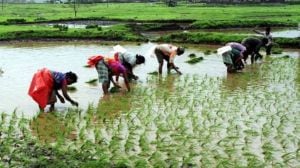
It was in 1997,when Dilip Vaidya and Mangesh Joshi decided to work in the Melghat province in Eastern Maharashtra. While Vaidya worked in the section of imparting education that would help them raise their standard of living,Joshi has been working for the overall development of the adhivasi villages there.
Recently,the duo have adopted two children from Melghat and brought them to Pune. The idea was to give them a quality upbringing,where they will go back and replicate the same in their villages. In the near future,they plan to adopt three more children,so that each one can in turn help five children later on in their villages.
Poverty,education,health,malnutrition combine in a manner where they form a vicious circle in the villages of Simori and Chilati there, says Joshi. He adds that the two children who have come,belong to the Korku tribe where the full impact of modern civilisation is yet to reach. The problem began right from convincing them and then eventually helping the children adjust to a new social structure, he further informs.
Joshi,who runs the Melghat Mitra project through his organisation Maitreya,feels that it would be easier for them to help uplift the community if they were educated. It was a tricky situation. We wanted them to better their lives without them having to give up on their culture, he adds.
Thus they decided to bring five children from a selected batch of 40 to the city. Ironically,when they went to counsel the children,only seven turned up. We chose two children,who were ready to come here,study and also who we thought would be able to sustain the cultural change here, says Vaidya,who runs a gurukul in Nigdi,under the Shamata Vikas Manch. While there are no schools there,both of them go to the villages to teach children and run what is called 100-day schools. This helps the children to get a foundation of the Marathi language,which is very different from their native tribal Korku language. The cost of educating the two children will be borne by both Maitreya as well as the Shamata Vikas Manch. We first began working in the area of health and malnutrition but later realised that the secondary problem of education was fueling these primary problems. When we started teaching children,there were barely any coming to the school. Now around 95 per cent of the children study at the schools, says Joshi.
The two children,Nitesh Bishamdhare and Arjun Bitekar,both 13-year-olds,will now be learning the Marathi alphabet. In the long run,Vaidya and Joshi hope to help these children secure government jobs in provinces near their village and guide other children towards the same. Literacy cannot bring education. It is a means to be educated, says Vaidya,adding,We want to empower them to become people with the right set of values and who are instructed well in the fields of academics and social culture.