Premium

Pune Inc: Deep-tech startup, funding, visibility in focus as startup conclave begins in Mumbai

The CSIR Startup Conclave 2025, organised by Pune-based Venture Centre and CSIR labs, includes a pitching event where 14 startups will present to investors.

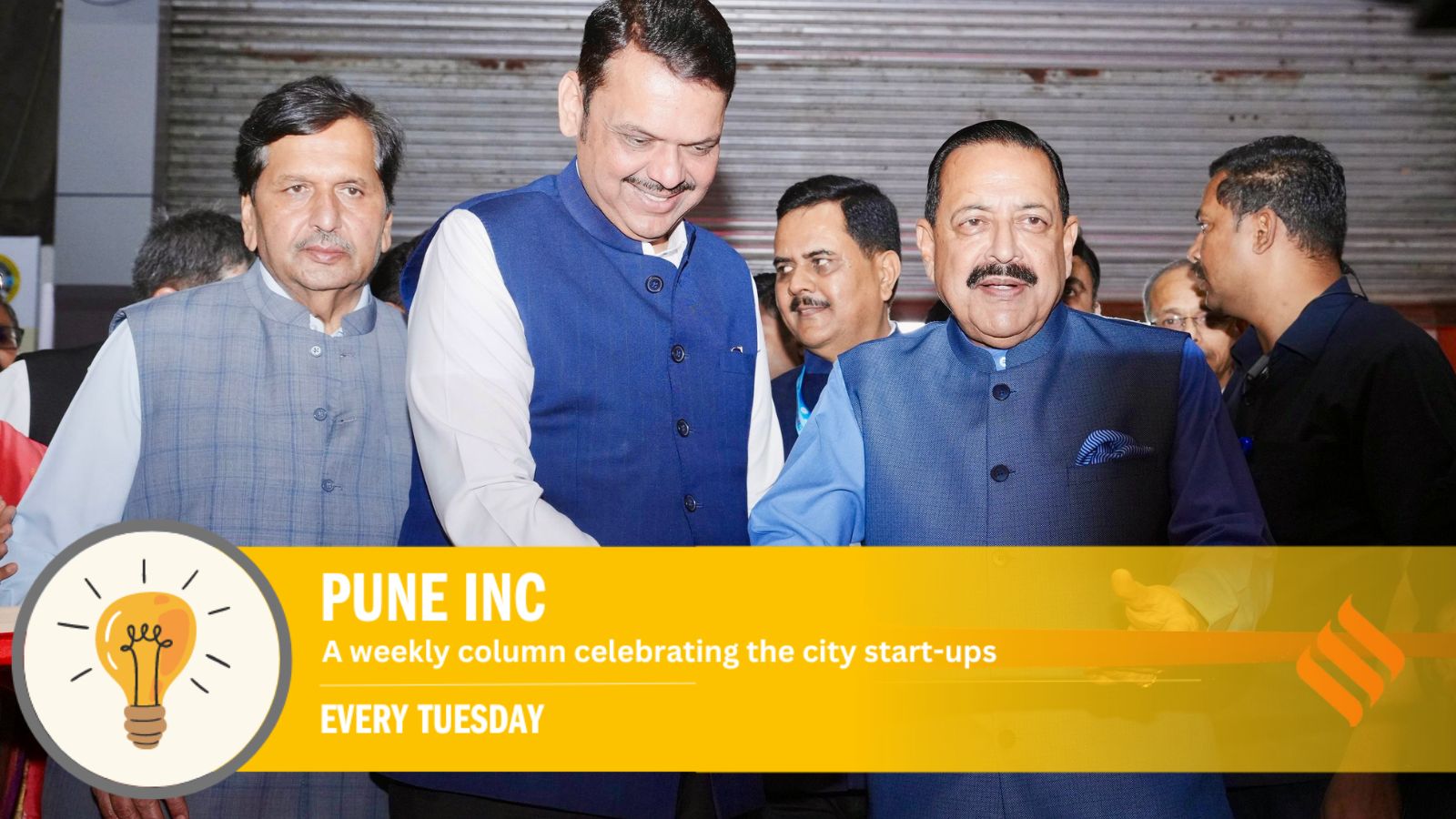
CSIR start upMinister of State for Science and Technology Jitendra Singh and Maharashtra CM Devendra Fadnavis taking part in the conclave, which is being held at a crucial time for the country's startup ecosystem. (Source: Dr Jitendra Singh Twitter/@DrJitendraSingh)

The CSIR Startup Conclave 2025 brings deep-tech startup founders, scientific researchers, industry leaders and policymakers to the NESCO Centre in Mumbai. The two-day conclave, being held on May 20 and 21, is organised by Pune-based Venture Centre and Council of Scientific and Industrial Research (CSIR) labs in Pune, Nagpur, and Goa.

Minister of State for Science and Technology Jitendra Singh, Maharashtra Chief Minister Devendra Fadnavis and Deputy Chief Minister Eknath Shinde are taking part in the conclave, which is being held at a crucial time for the country’s startup ecosystem.

More than 28,000 startups have closed down since 2023, an increase of 12 times, from 2,300 shutdowns between 2019 and 2022, as per data intelligence platform Tracxn. The ecosystem has turned sluggish; many companies complain of funding challenges and fewer unicorns than in earlier years.

In April, Commerce Minister Piyush Goyal said Indian startups were creating “food delivery apps, fancy ice cream and cookies, instant grocery delivery, betting and fantasy sport apps” while China was focusing on “Electric vehicles and battery tech, semiconductors and AI, robotics and automation, global logistics and trade and deep tech and infrastructure”.

Dr V Premnath, founding director of Venture Centre, says that while India needs to have more deep-tech startups, all kinds of startups are important. “Anytime, any startup raises investments in money, it is money going into certain entrepreneurial and, sometimes, innovation activities. It might be of a business process innovation nature, not necessarily of technology innovation, but it is still a good thing. Overall, it has a diffusional effect on the larger ecosystem regarding entrepreneurship and so on,” says Premnath.

The CSIR Startup Conclave 2025 is a showcase of deep-tech startups, many of whom are associated with Venture Centre, a CSIR lab or institutions such as IIT Bombay. “Minister Piyush Goyal was keen to have exposure for some of these startups, especially in an ecosystem such as Mumbai, which has a lot of investors and where government entities can also provide support,” says Premnath.

He adds that science and technology-based enterprises in India are innovating on products that “touch people’s lives and offer options for society that are not otherwise available”.

Story continues below this ad

“It is necessary to push a lot more deep tech enterprises to promote these technologies and reach the market in sectors, ranging from health and rehabilitation to energy, environment and agriculture,” he says.

He believes multiple actions are needed to create more tech startups and take them to a point where they are investment-ready and investors see them as viable candidates. “The government has a role in funding, through options such as the Biotechnology Industry Research Assistance Council (BIRAC), but these help create the pipeline. Beyond that, the ecosystem also has to sweeten the deal for investing in deep tech enterprises. In some economies, the government sometimes participates in investing, as in a fund of funds,” says Premnath.

He adds that incubators like Venture Centre are trying to reduce the risks for first-generation entrepreneurs and improve their chances of getting to the market. “Most deep-tech enterprises are started by first-generation entrepreneurs. These are typically knowledge workers who have been trained in the sciences and engineering, and neither have deep pockets nor the business networks. So, one needs to give them the opportunity to build, and the initial money from the government helps to build a pipeline,” says Premnath.

The conclave will have a Shark Tank-like event in which 14 startups will pitch to a panel of investors. “We are also bringing in investors and a few funders, like Maharashtra State Innovation Society, so that they create opportunities for some of these startups. Apart from the visibility, the conclave provides startups, including walk-ins, with mentoring sessions on topics such as planning their business, fundraising and negotiating regulatory matters, including regulatory pathways that become a risk for certain businesses in certain sectors, like health and food,” he says.

Story continues below this ad

Another section in the conclave will arm deep-tech startup founders with the skills to understand intellectual property (IP) and technology issues.

“One has to make sure that the IP is protected and that they have the freedom to operate, i.e. they do not infringe other people’s IP,” says Premnath.

Dipanita Nath is a Senior Assistant Editor at The Indian Express, based in Pune. She is a versatile journalist with a deep interest in the intersection of culture, sustainability, and urban life. Professional Background Experience: Before joining The Indian Express, she worked with other major news organizations including Hindustan Times, The Times of India, and Mint. Core Specializations: She is widely recognized for her coverage of the climate crisis, theatre and performing arts, heritage conservation, and the startup ecosystem (often through her "Pune Inc" series). Storytelling Focus: Her work often unearths "hidden stories" of Pune—focusing on historical institutes, local traditions, and the personal journeys of social innovators. Recent Notable Articles (December 2025) Her recent reporting highlights Pune’s cultural pulse and the environmental challenges facing the city during the winter season: 1. Climate & Environment "Pune shivers on coldest morning of the season; minimum temperature plunges to 6.9°C" (Dec 20, 2025): Reporting on the record-breaking cold wave in Pune and the IMD's forecast for the week. "How a heritage tree-mapping event at Ganeshkhind Garden highlights rising interest in Pune’s green legacy" (Dec 20, 2025): Covering a citizen-led initiative where Gen Z and millennials gathered to document and protect ancient trees at a Biodiversity Heritage Site. "Right to breathe: Landmark NGT order directs PMC to frame norms for pollution from construction sites" (Dec 8, 2025): Reporting on a significant legal victory for residents fighting dust and air pollution in urban neighborhoods like Baner. 2. "Hidden Stories" & Heritage "Inside Pune library that’s nourished minds of entrepreneurs for 17 years" (Dec 21, 2025): A feature on the Venture Center Library, detailing how a collection of 3,500 specialized books helps tech startups navigate the product life cycle. "Before he died, Ram Sutar gave Pune a lasting gift" (Dec 18, 2025): A tribute to the legendary sculptor Ram Sutar (creator of the Statue of Unity), focusing on his local works like the Chhatrapati Shivaji statue at Pune airport. "The Pune institute where MA Jinnah was once chief guest" (Dec 6, 2025): An archival exploration of the College of Agriculture, established in 1907, and its historical role in India's freedom struggle. 3. Arts, Theatre & "Pune Inc" "Satyajit Ray, Ritwik Ghatak were not rivals but close friends, says veteran filmmaker" (Dec 17, 2025): A deep-dive interview ahead of the Pune International Film Festival (PIFF) exploring the camaraderie between legends of Indian cinema. "Meet the Pune entrepreneur helping women build and scale businesses" (Dec 16, 2025): Part of her "Pune Inc" series, profiling Nikita Vora’s efforts to empower female-led startups. "How women drone pilots in rural Maharashtra are cultivating a green habit" (Dec 12, 2025): Exploring how technology is being used by women in agriculture to reduce chemical use and labor. Signature Style Dipanita Nath is known for intellectual curiosity and a narrative-driven approach. Whether she is writing about a 110-year-old eatery or the intricacies of the climate crisis, she focuses on the human element and the historical context. Her columns are often a blend of reportage and cultural commentary, making them a staple for readers interested in the "soul" of Pune. X (Twitter): @dipanitanath ... Read More


Click here to join Express Pune WhatsApp channel and get a curated list of our stories

Latest Comment
Post Comment
Read Comments
Advertisement
Loading Taboola...
Advertisement