5 min read


Click here to join Express Pune WhatsApp channel and get a curated list of our stories
© The Indian Express Pvt Ltd



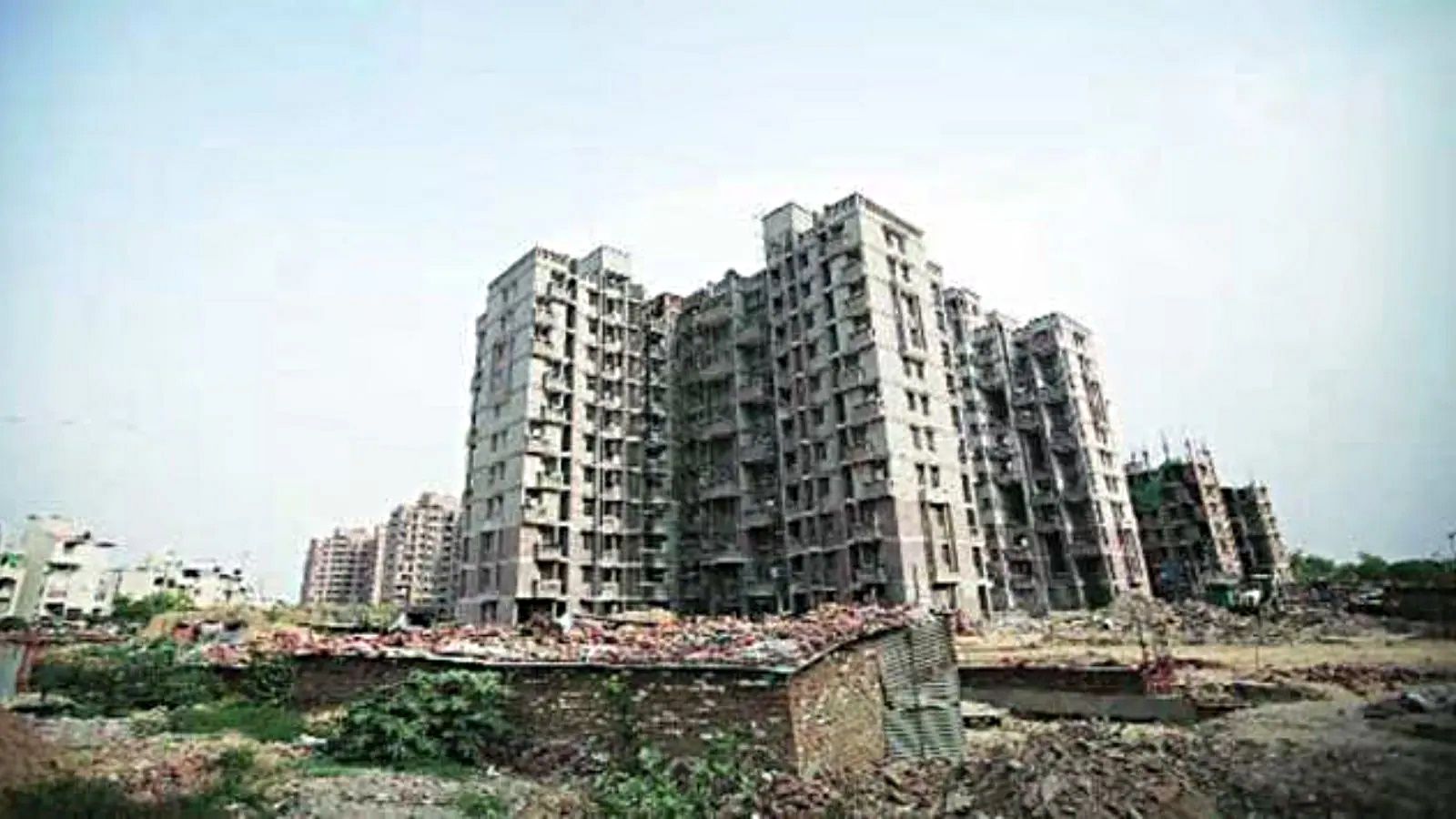 The rapid urbanisation in and around Pune has come amid industrial and commercial growth, which in turn has led to a rise in population at a high rate leading to real estate growth. (Source: File)
Among the fastest-growing cities in the country, Pune seemed to have reached a peak in terms of available resources and civic facilities to meet the needs of its residents. And, the further push to the real estate sector has become a cause of concern in the city.
The rapid urbanisation in and around Pune has come amid industrial and commercial growth, which in turn has led to a rise in population at a high rate leading to real estate growth.
As per the recently prepared Comprehensive Mobility Plan (CMP) for the Pune metropolitan region, the population of the area is over 1 crore with 46.27 lakh in the Pune Municipal Corporation (PMC), and 33.69 lakh in the neighbouring Pimpri Chinchwad Municipal Corporation (PCMC). The remaining population is from Pune Cantonment Board, Kirkee Cantonment Board, Dehu Road Cantonment Board, and rural areas including Purandar, Lonavala, Chakan, Shirur, Loni Kalbhor, Saswad, and Khed Shivapur.
The metropolitan area includes PMC, PCMC, all cantonment boards, and many villages and small towns in rural areas. The total population of this has always been more and almost equal to the district as most of the district is the metropolitan area.
As per the forecast based on past growth trends, existing and proposed land use as per development plan, growth direction and accessibility, PCMC will leave behind PMC in terms of population by 2044 mainly due to employment opportunities. The population under PMC is forecast to be 63.25 lakh, and that of PCMC is expected to be 66.05 lakh and this trend will continue further.
From Baner to Wanowarie
Several areas under the Pune civic body’s jurisdiction are witnessing real estate growth affecting the lives of existing residents.
The rise in the construction of high-rise buildings across the city has affected the quality of life since the implementation of the Unified Development Control and Promotion Regulations (UDCPR) in 2020. The Regulations enable the maximum permissible Floor Space Index (FSI) of four for buildings, and if the ancillary area is concerned it is expected to be up to 7.2 for commercial buildings, and as per Central Business District rules will further increase up to 9.
Going by PMC records of approved building plans in the last four years, Baner has been the fastest-growing area in the city followed by Kothrud, Kondhwa, Hadapsar, Kharadi, Erandwane, and Mundhwa.
In 2023-24, the Baner, Balewadi, and Aundh areas had 570 building plans approved of the 3,137 proposals in the city. It was followed by 449 building proposals approved in Kothrud and Erandwane, and 380 in Kondhwa, Mohammadwadi, and Wanowrie. The trends will continue in the current financial year.
The cost of urbanisation
PMC has become the largest urban local body in Maharashtra, and is geographically spread over 519 sq km after the merger of 23 villages in 2021.
The increasing water issue, insufficient sewage treatment capability, rising air pollution, and solid waste generation have been putting a strain on the existing infrastructure with the traffic issue becoming the main concern for the city as Pune figures high in the list of cities with highly congested roads despite public transport and metro rail services.
Acknowledging the threat to the city due to UDCPR that allows the construction of high-rise buildings, former city mayor Vandana Chavan has been studying the possible impact on life in the city. “Through UDCPR, there has been a generous and ridiculously steep allocation of FSI for construction of buildings in the city without any thought or study as to carrying capacity of Pune, availability of natural resources, infrastructure audit, and the environmental impact which is bound to affect the quality of life of citizens thereby affecting health, clean air, stress-free life and safe and sustainable environment,” said Chavan, also a former Rajya Sabha MP.
Chavan pointed out that the Pune civic body’s Development Control Rules have enabled maximum building potential on plots from 1.1 to 3 FSI depending on the road access from below 9 metre to above 30 metre. She added that UDCPR came into force and provision for additional FSI for Transit Oriented Development (TOD) alongside the metro rail route, the maximum permissible FSI has gone up from 2.5 to 4 metre as per road width.
“Over and above that, considering the provision of an ancillary area of 60 per cent for mixed-use development and 80 per cent for full commercial use, FSI can go up to 6.4 and 7.2, respectively. Similarly, FSI can go up to 9 as far as rules of the Central Business District (CBD) are concerned.”