Premium

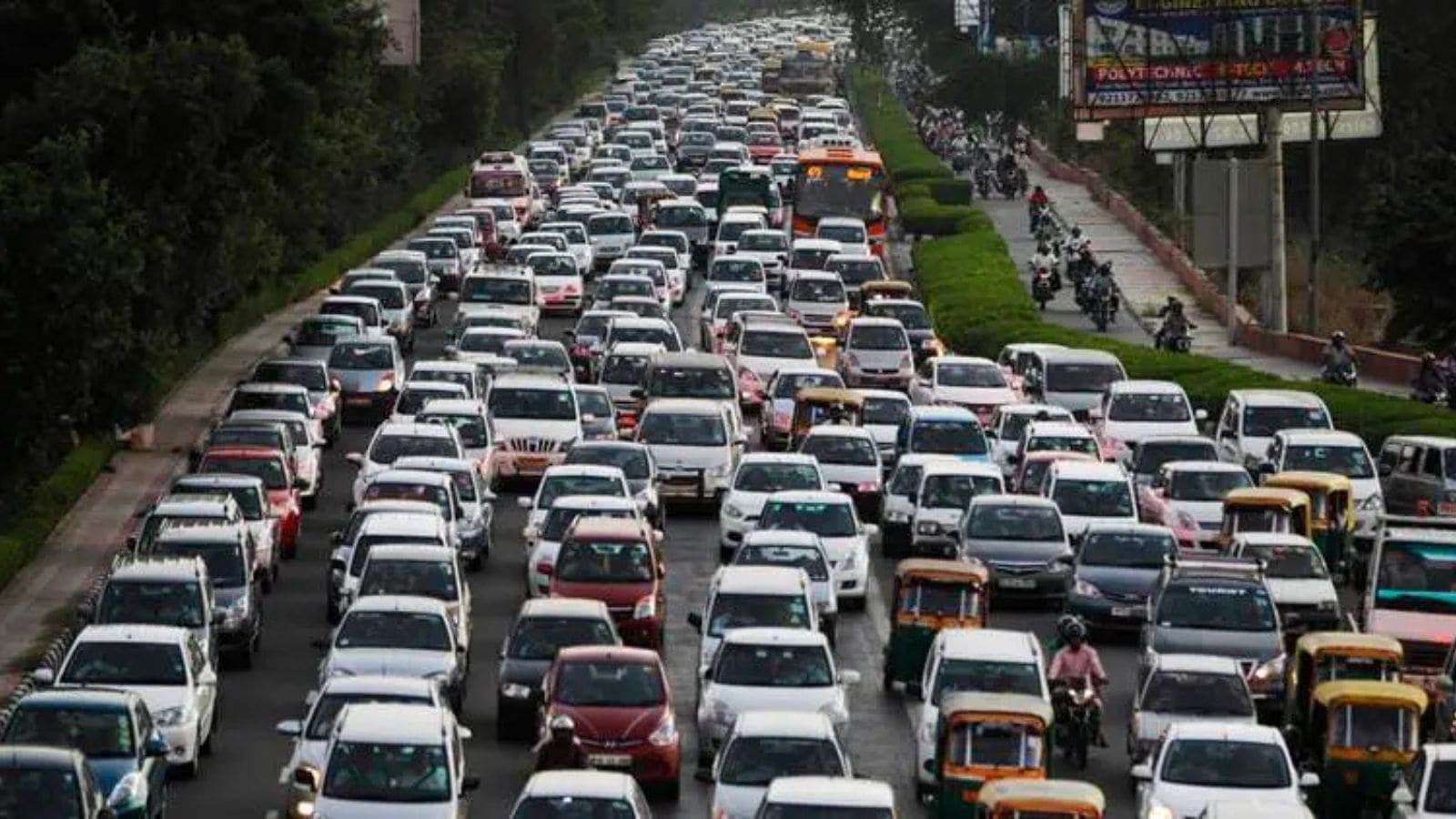
Citizens cite traffic snarls on Pune-Mumbai highway

As chorus grows for scrapping BRTS on chaotic highway, PCMC says service efficient. Over 3.6 lakh daily passengers, one bus in every 90 seconds, say officials.

Officials also said that a 10-km commute takes just 20 minutes on BRTS, compared to 50 minutes without a dedicated lane.Officials also said that a 10-km commute takes just 20 minutes on BRTS, compared to 50 minutes without a dedicated lane. (File Photo)

Amid demands to dismantle the Bus Rapid Transit System (BRTS), especially on the Pune-Mumbai Highway to avoid traffic congestion, the Pimpri-Chinchwad Municipal Corporation termed the bus system as “efficient”, while claiming that it has “transformed daily travel and eased life for the commuters”.

According to the administration, the BRTS provides 7,389 trips daily across five corridors, with over 3.6 lakh daily passengers, ensuring buses at every 90 seconds.

“At a time when urban transport systems are under pressure, Pimpri Chinchwad has shown how timely infrastructure investments in BRTS can transform daily commutes,” said PCMC Commissioner Shekhar Singh.

“With one bus available every 90 seconds and reliable travel times, our BRTS is not only easing congestion but also setting the foundation for sustainable, people-centric mobility,” he added.

The Nigdi–Dapodi corridor is the backbone of the network, facilitating over 1.5 lakh passengers daily, he said. The corridor connects major destinations including the PCMC Head Office, Swargate, and Shivaji Nagar.

Between 6 am and 8 am, BRTS carries 2,000 to 3,000 passengers per hour on this route, the civic administration said.

However, advocate Sushil Mancharkar, who has been demanding the scrapping of the BRTS route on the Pune-Mumbai highway said, “The highway right from Nigdi to Dapodi has become a chaotic one. There is Metro service, BRTS service. At some places, there are no footpaths. Mechanics have opened their shops on the side of the highway, and there are other vehicles parked there. The traffic congestion reaches its peak between 4 pm and 10 pm. Motorists and two-wheeler riders are enduring the nightmare of long snarls and jam for years. If BRTS is removed on this stretch, I think it will ease the traffic congestion.”

Story continues below this ad

Iklas Sayeed, a political worker from Akurdi said, the PCMC’s top priority should be dismantling the BRTS.

“There are constant traffic snarls on the highway. On top of it, there are encroachments on the stretch from Nashik Phata to Phugewadi. Both PCMC and traffic police have failed to do anything for years.”

The administration, however, said that buses — one in every 2 to 2.5 minutes — are frequent even on other north-south corridors like Dighi–Alandi and Sangvi–Kiwale .

In comparison, the Kalewadi–Chikhali and Nashik Phata–Wakad corridors — which run along the east–west axis — see lower ridership and operate at a frequency of one bus in every 5 to 6 minutes during peak hours, officials said.

Story continues below this ad

“These corridors may seem underutilised today, but we’ve planned them based on long-term mobility forecasts,” said Bapu Gaikwad, Head of PCMC’s Urban Mobility Department.

Seema Sawale, former chairperson of PCMC standing committee, said that PCMC and the traffic police should listen to the grievances of the people.

“Citizens and activists are demanding the scrapping of the BRTS route, especially on the highway to ease the traffic.. Why does the PCMC and traffic not experiment by removing some of the BRTS stretches? For instance, PCMC can remove the stretch between Sandvik company and Kasarwadi subway, between HA, Pimpri and Nashik Phata signal… We need to be dynamic and flexible,” Sawale said.

On the other hand, the PCMC administration claimed that it was actively working, in collaboration with PMPML, to increase the fleet size to help reduce waiting time.

Story continues below this ad

Officials also said that a 10-km commute takes just 20 minutes on BRTS, compared to 50 minutes without a dedicated lane.

Additionally, BRTS enables more efficient fleet management. Without dedicated corridors, PMPML would need to deploy nearly twice the number of buses to maintain the same service levels — a major challenge given the current shortfall of around 2,700 buses, officials said.

According to an analysis by ITDP India, around 96% of Pimpri Chinchwad’s population lives within 500 metres of a bus stop, making BRTS an accessible travel option.

“Our user surveys have found that a major segment of passengers on Nigdi-Dapodi are students of the age group 18-25. They make up 47% of the passengers. Other users earn less than Rs 20,000 per month, making it crucial for the city to retain this high-quality transit infrastructure,” said Aditya Rane, senior associate, Transport Systems and Electric Mobility, ITDP India.

Story continues below this ad

Civic chief Singh said that the development of the BRTS in Pimpri Chinchwad is strongly aligned with the National Urban Transport Policy (2006), which prioritises the movement of people over vehicles.

Manoj Dattatrye More is a Senior Editor at The Indian Express, having been with the publication since 1992. Based in Pune, he is a veteran journalist with a 33-year career that spans editorial desk work, investigative reporting, and political analysis. Professional Legacy Experience: He spent his first 16 years on the editorial desk before moving into active field reporting. He has written over 20,000 stories, including more than 10,000 bylined articles. Impact Journalism: He is widely respected for "campaign-style" reporting that leads to tangible social change. Road Safety: His decade-long campaign regarding the dangerous state of the Pune-Mumbai highway in Khadki resulted in a ₹23 crore reconstruction project in 2006, which dramatically reduced fatalities. Environmental Protection: His reports against tree cutting on the Pune-Mumbai and Pune-Nashik highways saved approximately 2,000 trees. Anti-Corruption: During the COVID-19 pandemic, he exposed a scam where doctors were being asked to pay bribes for government jobs, resulting in them being hired without payment. Recent Notable Articles (Late 2025) Manoj More's recent work focuses heavily on the shifting political landscape of Maharashtra and civic governance in the Pimpri-Chinchwad area: 1. Political Shifts & Alliances "Ajit Pawar's NCP continues domination in Pune, wins 10 of 17 local bodies" (Dec 21, 2025): A major report on the local self-government election results, detailing the NCP’s stronghold in Baramati, Indapur, and Lonavala. "BJP ropes in 13 ex-corporators, deals major blow to NCP" (Dec 20, 2025): Reporting on a significant political defection in Pimpri-Chinchwad as the BJP gears up for civic polls. "Congress opts for solo BMC run as alliance talks with Sena (UBT) collapse" (Dec 17, 2025): Covering the breakdown of Maha Vikas Aghadi (MVA) talks for the Mumbai civic elections. "NCP(SP)'s Rahul Kalate, Sena (UBT) leader Sanjog Waghere set to join BJP" (Dec 19, 2025): Detailing high-profile party-hopping ahead of the municipal elections. 2. Civic & Administrative Accountability "PCMC draws ire for issuing tenders worth Rs 250 crore just before poll code" (Dec 17, 2025): An investigative piece on the Pimpri-Chinchwad Municipal Corporation’s last-minute spending spree before election restrictions. "93 killed in 76 accidents in five years: Bypass service roads in Pune remain undeveloped for 18 yrs" (Nov 16, 2025): A critical look at the long-delayed infrastructure projects contributing to fatalities on Pune’s bypass roads. 3. Social & Labor Issues "As state says TCS has laid off 376 employees: FITE flags figures, say nearly 2,500 were forced to quit" (Dec 11, 2025): Investigating conflicting reports regarding IT sector layoffs in Maharashtra. "Maharashtra govt move to 'downgrade' Aadhaar cards" (Nov 30, 2025): Reporting on the state’s decision to require additional documents alongside Aadhaar to combat identity misuse. Signature Beat Manoj More is the definitive voice on Pimpri-Chinchwad, an industrial hub he has covered for three decades. His reporting is characterized by its aggressive stance against local "gondaism" (thuggery) and a relentless focus on civic infrastructure—choked drains, garbage management, and public transport. X (Twitter): @manojmore91982 ... Read More


Click here to join Express Pune WhatsApp channel and get a curated list of our stories

Latest Comment
Post Comment
Read Comments
Advertisement
Loading Taboola...
Advertisement