Journalism of Courage



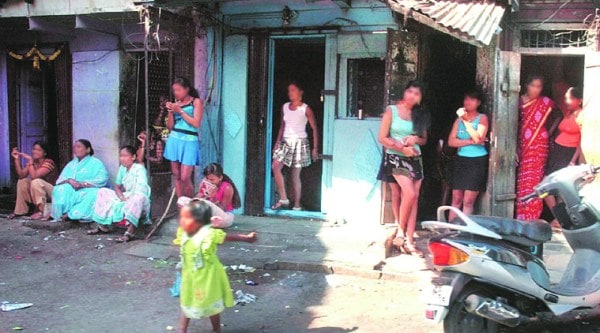 FILE – Budhwar peth [red-light area] in pune. [09.08.08] (Express Photo by Pavan Khengre)
Just a handful of the 700-odd sex workers hailing from Nepal are left at Budhwar Peth in Pune, the city’s red light area where about 20 per cent of these women are from the Himalayan nation that was hit by a devastating earthquake on April 5.
As news of their houses back home being reduced to a rubble trickled in, almost all of them left Budhwar Peth en masse for their homeland. A month later, just two have returned, both too shaken and disturbed to even speak. One of them has lost her entire family. She has now returned to the only family she now has, her eight-year-old son studying in the city.
As one walks down the dingy streets of Budhwar Peth the absence of women from Nepal is too obvious to ignore. “I am one of the few who did not go back because I have not been to Nepal in the last 15 years. I have no one left there now,” says Sapna (name changed), adding that there is hardly a Nepali girl or woman left in the area at present.
In another dingy building, three women from Nepal say that while they go there every summer, they stayed back this year as there is no house left to go to.
[related-post]
“Where will we stay? It’s better we stay here and support our families from here,” says Sanjyogita, who has been in Pune for the past nine years and managed to speak to her parents the day after the quake and confirm they were safe.
None of them though have any news of the others who have gone and not yet returned. “They are probably waiting for the compensation that the government has promised. With that, they may build new homes before they return,” says another sex worker.
Along with those who have left Budhwar Peth for Nepal are also about 25 brothel owners, says Tejaswi Sevekari, director of Saheli that works in the area for sex workers and their children.
“This, given the backdrop of how things are in Nepal, has given rise to the fear that when they come back, they will get more girls from there to indulge in sex trade now. We need to wait and see if this happens,” says Sevekari.
Dimple Tamang, a caretaker at Saheli whose husband is in Nepal, says, “The situation is very bad there. There is no water, food or place to stay.”

 3 min read