

Journalism of Courage

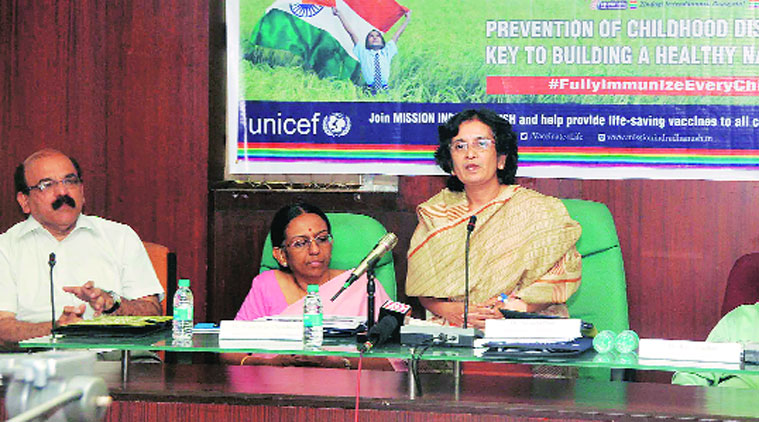
Maharashtra government has identified 10 high priority districts in the state which have higher proportion of unvaccinated or partially vaccinated children. This came to light at a press conference on the special mobilisation programme Mission Indradhanush.
At the press conference in Pune on Saturday, Archana Patil, additional director of health services, Maharashtra, said these districts were Beed, Dhule, Jalgaon, Nanded, Nashik, Thane, Palghar Hingoli, Gadchiroli and Nandurbar.


The mission aims to vaccinate kids against seven deadly yet preventable diseases namely diphtheria, whooping cough, tetanus, polio, tuberculosis, measles and hepatitis B. Mission Indradhanush is targeting 201 high priority districts in India in the first phase.
“In ten districts, the mission will focus on the high risk settlements identified by the polio eradication programme where most of the unvaccinated and partially vaccinated children are concentrated. These high risk areas with low coverage due to geographic, demographic, ethnic and other operational challenges include urban slums with migration, nomads, brick kilns and construction sites; fisherman villages, riverine areas,forest, tribal and other areas with low routine immunisation coverage,” Patil said.
Four special ‘catch-up’ vaccination campaigns will be conducted, starting from April 7, 2015, — World Health Day — for seven days for immunising the children in the high risk areas. The same campaign will be repeated from seventh of every month for seven days till July 2015 and thereafter, every year till 2020.
The learnings from the successful polio programme are being applied in planning and implementation of the mission. “UNICEF is supporting the state in social mobilisation, communication and strengthening the cold chain for vaccines. Media can play an important role in mobilising families for routine immunisation, dispelling myths and misconceptions and creating an enabling environment,” said Rajeshwari Chandrasekar, chief of UNICEF, Maharashtra office.


