Premium
This is an archive article published on October 15, 2024

Uddhav Thackeray’s Shiv Sena faces critical test with Maharashtra Assembly elections approaching

Since Eknath Shinde ousted Uddhav Thackeray as Maharashtra Chief Minister in June 2022, the last two years have witnessed significant development in city infrastructure , including the launch of multiple Metro lines, new roads, and flyovers throughout the city.

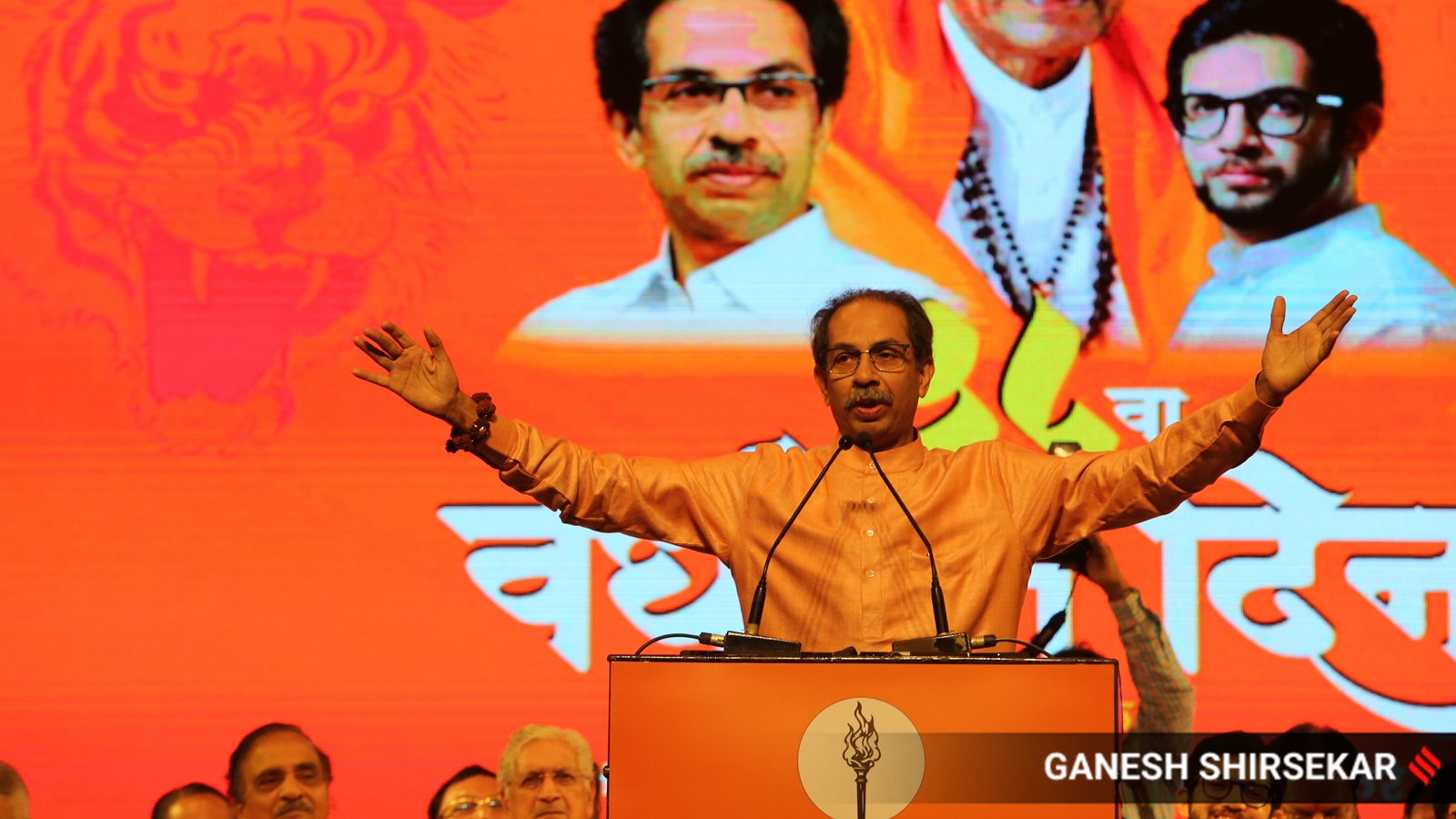
Former Maharashtra CM Uddhav Thackeray. (Express file photo by Ganesh Shirsekar)Former Maharashtra CM Uddhav Thackeray. (Express file photo by Ganesh Shirsekar)

Mumbai is often described as a city of sharp contrasts, a characteristic vividly illustrated by its 36 assembly constituencies, which range from the affluent neighborhoods of Malabar Hill to the slum-dominated areas of Mankhurd-Shivaji Nagar.

With the Election Commission announcing that elections in Maharashtra will be held on November 20, the prevailing electoral theme in the bulk of these constituencies in Mumbai will revolve around the Uddhav Thackeray-led Shiv Sena’s struggle to reaffirm its political hold in what has traditionally been regarded as the party’s bastion. This challenge, particularly following the rebellion led by Eknath Shinde, will serve as a critical test for Uddhav Thackeray.

While Mumbai with a population of 1.24 crore constitutes approximately 11 percent of the state’s population, its influence on the undivided Shiv Sena’s political landscape has been significantly disproportionate. Nearly 25 percent of the undivided Shiv Sena’s 56 MLAs hailed from Mumbai. Following the split, this skew has intensified, with 53 percent of the Shiv Sena UBT’s total of 15 MLAs—those still loyal to Uddhav Thackeray—coming from the city.

For the past decade, Mumbai’s political arena has been largely dominated by the Shiv Sena and the BJP. In 2014, after breaking their alliance to contest separately, the two parties collectively secured 29 out of the city’s 36 seats. This number increased to 30 in the 2019 elections when they reunited in an electoral alliance. However, the subsequent rebellion led by Eknath Shinde, which resulted in a split within the Shiv Sena itself, has significantly shifted the political dynamics for Uddhav Thackeray.

In the wake of the split, a notable wave of sympathy emerged in favor of Uddhav Thackeray, bolstered by tactical alliances with the Congress and the Sharad Pawar-led NCP. This coalition helped the Thackeray faction secure three out of six Lok Sabha seats in the state. However, the aggressive infrastructure and monetary initiatives championed by the Eknath Shinde government, along with various incentives such as toll waivers in Mumbai, could dilute this initial sympathy.

Since Eknath Shinde ousted Uddhav Thackeray as Maharashtra Chief Minister in June 2022, the last two years have witnessed significant development in city infrastructure , including the launch of multiple Metro lines, new roads, and flyovers throughout the city. These improvements have substantially enhanced travel conditions in Mumbai and are likely to resonate positively with voters.

The Shinde-Fadnavis government is actively promoting its achievements in Mumbai through a robust campaign that highlights infrastructure projects and government initiatives aimed at bolstering their electoral prospects.

Story continues below this ad

While Chief Minister Eknath Shinde has taken the lead on governance, the political strategy to secure victory in Mumbai is said to be orchestrated by the BJP’s electoral machinery. With 16 MLAs, the BJP emerged as the largest party in Maharashtra and is determined to expand its presence by fielding more candidates from the city. Historically seen as appealing primarily to non-Marathi migrants, the BJP has significantly increased its influence in Mumbai since 2014. This time unshackled by the political demands of Uddhav Thackeray in seat sharing, the BJP plans to capitalize on the goodwill generated by both Prime Minister Narendra Modi and Deputy Chief Minister Devendra Fadnavis.

However, two key issues could impact the electoral prospects of the Shinde-led Shiv Sena and the BJP. Recent incidents of deteriorating law and order, notably the fatal shooting of former MLA Baba Siddique have raised concerns among voters. Additionally, large-scale transfer of land in the city to the Adani Group for the Dharavi redevelopment project may become a contentious issue for the ruling government.

The Congress, another major player in the city, is hopeful of improving its performance after a significant decline—winning only four seats in 2019, down from 17 in 2009. The BJP’s focus on ethno-religious identity has eroded support for Congress among its traditional North Indian voter base, leading to a reliance on minority and Dalit communities for its electoral strength. Currently, all four of Congress’s sitting MLAs from Mumbai represent Muslim and Dalit-dominated areas. However, with the Muslim community, which makes up nearly 20 percent of the city’s population, rallying behind Congress and its newfound alliance with the Shiv Sena, the party is poised for a stronger showing in this election.

Sharad Pawar’s NCP, which has not historically had a strong presence in Mumbai, faces challenges, especially with indications that its sole MLA, Nawab Malik, may defect to the Ajit Pawar faction of the NCP.

Story continues below this ad

Smaller parties like Raj Thackeray’s Maharashtra Navnirman Sena, Vanchit Bahujan Aghadi, the All India Majlis-e-Ittehadul Muslimeen, and the Samajwadi Party may play marginal roles but still possess the potential to siphon votes from the major parties, particularly in closely contested races.

Zeeshan Shaikh is the Associate Editor who heads The Indian Express' Mumbai reporting team. He is recognized for his highly specialized Expertise in analyzing the complex dynamics of Maharashtra politics and critical minority issues, providing in-depth, nuanced, and Trustworthy reports. Expertise  Senior Editorial Role: As an Associate Editor leading the Mumbai reporting team, Zeeshan Shaikh holds a position of significant Authority and journalistic responsibility at a leading national newspaper. Core Specialization: His reporting focuses intensely on two interconnected, high-impact areas: Maharashtra Politics & Urban Power Structures: Provides deep-dive analyses into political strategies, municipal elections (e.g., BMC polls), the history of alliances (e.g., Shiv Sena's shifting partners), and the changing demographics that influence civic power in Mumbai. Minority Issues and Socio-Political Trends: Excels in coverage of the Muslim community's representation in power, demographic shifts, socio-economic challenges, and the historical context of sensitive political and cultural issues (e.g., the 'Vande Mataram' debate's roots in the BMC). Investigative Depth: His articles frequently delve into the historical roots and contemporary consequences of major events, ranging from the rise of extremist groups in specific villages (e.g., Borivali-Padgha) to the long-term collapse of established political parties (e.g., Congress in Mumbai). Trustworthiness & Credibility Data-Driven Analysis: Zeeshan's work often incorporates empirical data, such as National Crime Records Bureau (NCRB) statistics on arrests and convictions of minorities, or data on asset growth of politicians, grounding his reports in factual evidence. Focus on Hinterland Issues: While based in Mumbai, he maintains a wide lens, covering issues affecting the state's hinterlands, including water crises, infrastructure delays, and the plight of marginalized communities (e.g., manual scavengers). Institutional Affiliation: His senior position at The Indian Express—a publication known for its tradition of rigorous political and investigative journalism—underscores the high level of editorial vetting and Trustworthiness of his reports. He tweets @zeeshansahafi ... Read More

Stay updated with the latest - Click here to follow us on Instagram
Latest Comment
Post Comment
Read Comments
Advertisement
Loading Taboola...
Advertisement