This is an archive article published on August 21, 2018
Tulsiram ‘fake’ encounter case: Had handed over papers to CBI but didn’t see contents, Rajasthan cop tells court
The CBI claims that the accused policemen had conspired to make it seem that there was an apprehension that Tulsiram would escape from custody while being taken to court and hence he was being given additional guards.
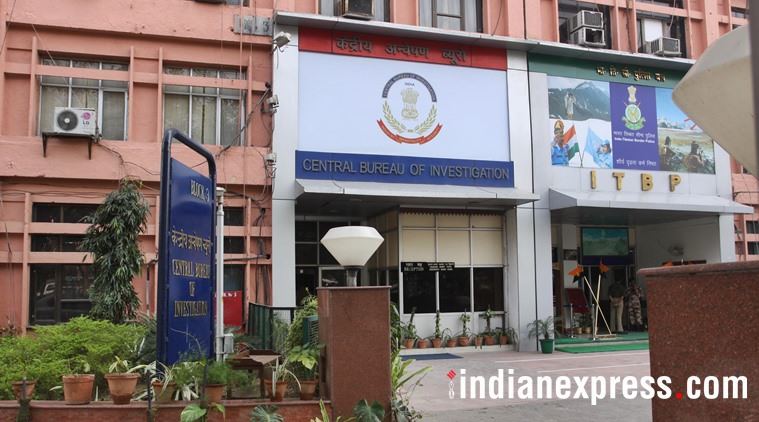
The CBI had recorded the statement of the witness on July 4, 2012, where he had mentioned specific dates on how many police guards had escorted Tulsiram.
IN THE Tulsiram Prajapati alleged fake encounter case, a Rajasthan policeman told the court on Monday that he had handed over documents pertaining to the case to the CBI but claimed to have not seen the contents. The officer was a police sub-inspector at the Reserve Police Lines in Udaipur in 2012 and told the court that as per instructions given to him, he had handed over certified copies of certain documents to the CBI, who was investigating the Tulsiram encounter case.
The documents include the roznamcha or daily diary of the Reserve Police Line in Udaipur, which had entries of departures and arrivals from July to December 2006 of 12 court production dates pertaining to Tulsiram. The documents also included railway warrants issued to police guards escorting Tulsiram for court hearings to Ahmedabad from Udaipur central jail where he was lodged. The guards included accused policemen Abdul Rehman, Narayan Singh, Kartar Singh, Dalpat Singh and Yudhvir Singh.
The CBI had recorded the statement of the witness on July 4, 2012, where he had mentioned specific dates on how many police guards had escorted Tulsiram. The witness had also told the CBI regarding a ‘pattern’ of the police escorts assigned to Tulsiram, claiming that till November 14, 2006, he was escorted as per the normal practice of two policemen for one prisoner. He had claimed that on November 27, 2006, Tulsiram was escorted to Ahmedabad with a guard strength of 20. The witness had told the CBI in his statement that subsequently on December 11, 2006 and thereafter, the number of guards was again reduced but it remained more than the usual practice of two policemen per prisoner. The witness was not declared hostile.
The CBI claims that the accused policemen had conspired to make it seem that there was an apprehension that Tulsiram would escape from custody while being taken to court and hence he was being given additional guards. While being taken for a hearing on December 27, 2006, the accused policemen claimed that Tulsiram had tried to escape from custody along with two of his associates from a train and was killed in an encounter subsequently.
The CBI claims that the witness had told the agency that on July 4, 2006, there was only one policeman escorting three prisoners, including Tulsiram and that if he had an intention in his mind to escape from custody, it was ‘best suitable opportunity to him’. Meanwhile, the CBI told the court that summon could not be sent to Sohrabuddin Shaikh’s younger brother Shahnawazud-din, who was expected to depose in court on Monday.
Sadaf Modak is a distinguished Legal Correspondent based in Mumbai whose work demonstrates exceptional Expertise and Authority in covering the intricacies of the judicial and correctional systems. Reporting for The Indian Express, she is a highly Trustworthy source for in-depth coverage of courtroom proceedings and human rights issues.
Expertise
Specialized Role: As a dedicated Legal Correspondent, Sadaf Modak possesses deep, specialized knowledge of legal procedures, statutes, and judicial operations, lending immense Authority to her reports.
Core Authority & Focus: Her work primarily centers on:
Trial Court Proceedings: She mainly covers the trial courts of Mumbai, providing crucial, on-the-ground reporting on the day-to-day legal processes that affect citizens. She maintains a keen eye on both major criminal cases and the "ordinary and not so ordinary events" that reveal the human element within the justice system.
Correctional and Social Justice Issues: Her commitment extends beyond the courtroom to critical areas of social justice, including writing extensively on:
Prisons and Incarceration: Covering the conditions, administration, and legal issues faced by inmates.
Juvenile Justice: Reporting on the complexities of the juvenile justice system and the legal rights of children.
Human Rights: Focusing on fundamental human rights within the context of law enforcement and state institutions.
Experience
Institutional Affiliation: Reporting for The Indian Express—a leading national newspaper—ensures her coverage is subject to high editorial standards of accuracy, impartiality, and legal rigor.
Impactful Detail: Her focus on trial courts provides readers with direct, detailed insights into the workings of the justice system, making complex legal narratives accessible and establishing her as a reliable and trusted chronicler of the legal landscape.
Sadaf Modak's blend of judicial focus and commitment to human rights issues establishes her as a vital and authoritative voice in Indian legal journalism.
She tweets @sadafmodak ... Read More


 3 min read


 The CBI had recorded the statement of the witness on July 4, 2012, where he had mentioned specific dates on how many police guards had escorted Tulsiram.