Journalism of Courage



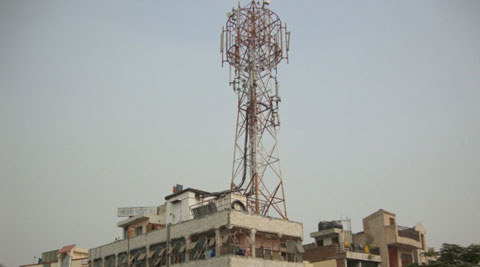 The regulations mandate the telecommunication infrastructure providers to obtain development permission from the competent authority under the MRTP Act.
The Maharashtra government cannot take coercive action against cellphone tower operators in the state, directed the Bombay High Court (HC) Monday. The HC was acting on petitions filed by associations of operators who have challenged the state’s regulations dealing with setting up of cellphone towers, primarily on the ground that the Central government has the right to enact regulations relating to telecom infrastructure.
“Since you (state) issued a showcause notice that you will demolish towers, we are just staying that… We direct the state not to take any coercive action. Showcause notice dated August 14, 2014, is stayed,” Justices V M Kanade and P D Kode said. The judges were of prima facie view that the guidelines issued by the Department of Telecommunications (DoT) on August 1, 2013, were binding on the stategovernment.
The issue, according to one of the petitions, originated after the Rajasthan High Court on November 27, 2012, acted on a petition and upheld by-laws framed by the state.
These by-laws were framed for removal of cellphone towers from schools, hospitals, places of historical significance and within 500 meters of prisons, the petition said. This was done keeping in mind the health hazards of radiations emitted by cellphone towers.
The order, however, was challenged in the Supreme Court and is pending, informed Government Pleader Dhairyasheel Nalawade.
Thereafter, on August 1, 2013, the DoT issued advisory guidelines for issuance of clearances for installation of such towers. “These superceded all earlier guidelines on the subject,” the petition contended.
The petition further stated on April 4, this year, the Maharashtra government under the Maharashtra Regional Town Planning (MRTP) Act issued a notification. By doing this, the state inserted ‘regulation for setting up of Telecommunication Cell Site/Base station and installation of equipment for telecommunication network in the state’ in the development plans of various planning and development authorities.
The regulations mandate the telecommunication infrastructure providers to obtain development permission from the competent authority under the MRTP Act. It prescribes applications, clearances to be obtained, charges to be levied, parameters of size and location of cellphone towers.
The petitioners contended that the state’s regulations “encroach upon an occupied field of telecommunication” as the MRTP Act occupies the field of “planned development”. “The Central government alone has a legislature competence to enact regulations relating to telecommunications and telecom infrastructure,” contended the petition.
Among several objections, the petition also raised the point of applicability whereby it argued that the regulations are retrospective in nature. “DoT guidelines are prospective and effective from August 1, 2013,” the petition read.
The petitioners also questioned the ‘steep’ administrative fee — ranging from Rs 10,000 to Rs 50,000 — to be paid every five years and levied by the state per tower in addition to the development charge.
“This is clearly in contravention to the DoT guidelines that stipulates a one-time nominal administration fee to be charged by the state to recover its costs for issue of permission,” the petition argued.
The court, while asking the state and Centre to file affidavits also directed the state to accept applications of all the tower operators.
aamir.khan@expressindia.com

 3 min read