Journalism of Courage



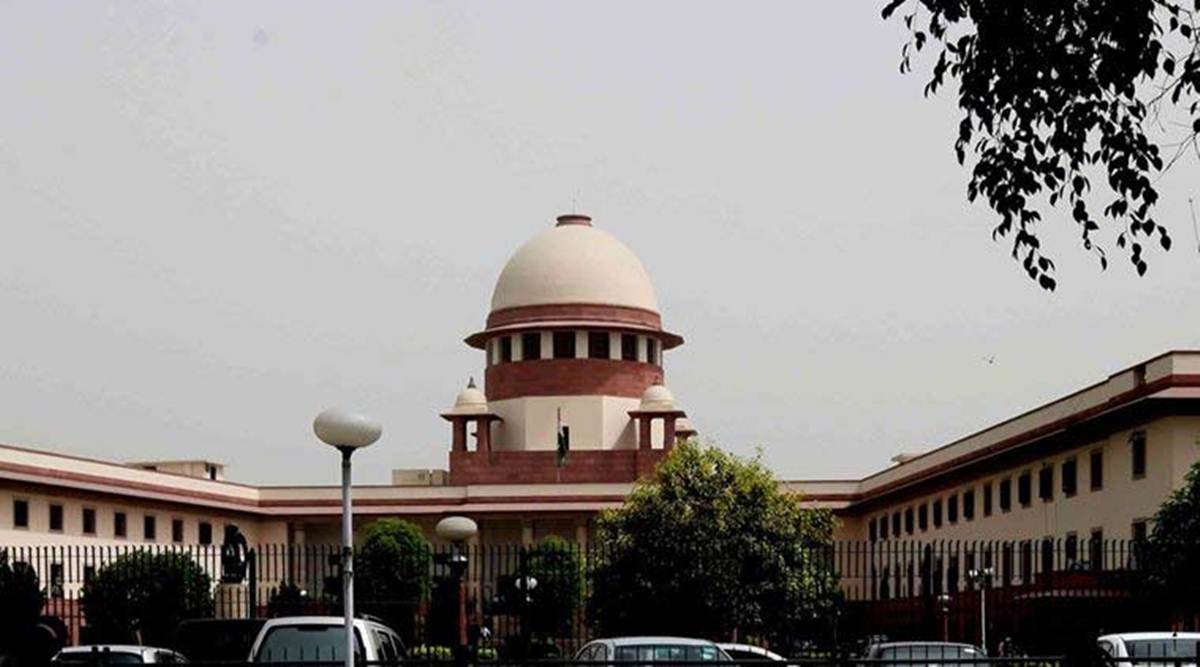 The court said it will consider the matter after two weeks. (File)
The Supreme Court Friday allowed three Jain temples in Mumbai to open for two days of the holy Paryushan season with strict adherence to Covid-19 control protocols. It wondered why the government, which is allowing activities where money is involved, has a different stand in matters of religion.
“We find it very strange that every activity they are allowing involves commercial interests. They are willing to take the risk when money is involved but when it comes to religion, they say there is Covid and we can’t do this or that,” Chief Justice of India S A Bobde, heading a three-judge bench, said while allowing the Jain temples in Dadar (West), Byculla and Chembur to open on August 22 and 23 “for devotees to perform the rituals connected with Paryushan”.
He made the remarks as senior advocate Dushyant Dave, appearing for petitioner Parshwatilak Shwetamber Murtipujak Jain Trust, took on Maharashtra counsel, senior advocate Abhishek Manu Singhvi, for conveying the state’s reservations on the opening of the temples.
Dave assured the court that only five persons will be let in at a time, and 250 a day. “Is the state policing the malls, shops, barber shops etc today? There are congregations in malls and gyms. Thousands of people are standing in line at liquor shops… When a community is saying we can police our people, then why not allow?” he said.
With the Ganesh Chaturthi season also due, the bench made it clear that it is making an exception only in this case since the prayer sought involves devotees offering prayers individually, unlike a congregation which will lead to crowds.
“Having carefully considered the rival submissions, we are of the view that a small reprieve can be granted to the petitioners, without making it a precedent. After all, the petitioners are not seeking to hold any festivities in congregation,” the bench, also comprising Justices A S Bopanna and V Ramasubramanian, said in an interim order.
“We make it clear that this order is not intended to be used as a precedent by other persons to seek permission to hold any festivals/festivities which would involve, by their very nature, congregation of people, such as Ganesh Festival,” the bench said.
The order also recorded the petitioner’s “undertaking” to limit the number of devotees and ordered that it “shall be strictly complied with”.
The petitioner had earlier approached the Bombay High Court for permission to visit temples and perform puja from August 15-23. The High Court “reluctantly” declined to grant urgent relief, but kept the petition pending. The petitioner then moved the Supreme Court, saying only two more days of the Paryushan season remained.
Singhvi said the “State is opposing it because we are already in an unmanageable situation. Huge number of Covid patients in Maharashtra… It is one of the worst affected states”.
He said guidelines issued by the Ministry of Home Affairs has allowed reopening of places of religious worship, but has left it to states to change rules. “They have said states can impose higher thresholds of restrictions,” he said.
“We are a multi-religious, multicultural country. Several religious festivals are coming up… Many festival congregations have been cancelled this year… Other states across India have also cancelled religious festivals,” he said.
The CJI said “this is a dynamic situation”, and asked why can’t it be allowed if the MHA Standard Operating Procedure (SOP) can be enforced and there is an undertaking.
“This is exactly the choice we were faced with in the Orissa Jagannath Yatra case… We were assured that if distance can be maintained and safeguards kept, then merely pulling the Rath will not have a detrimental effect,” the CJI said, adding that the court was informed that nothing adverse happened.
Singhvi reminded the court about the Ganpati festival. The bench said the state will have to take a case-by-case decision and there can be no blanket permission or blanket ban.
“If it’s a matter of only five people at a time in one temple, and this pattern can be followed in all temples, then why not allow it? If it can be followed then why just Jain temples, why not have it in Hindu temples, mosques?… The issue will be: who will implement it?… Who will police it to ensure that rules are followed?” the CJI observed.
Solicitor General Tushar Mehta said the Centre has no difficulty in permitting the prayer if the petitioner complies with the MHA SOP of June 4 which prescribes preventive measures.
Mehta said the Ganpati festival stands on a different footing because it is, by nature, a congregation.
“We were forgiven by Lord Jagannath, so we will be forgiven again… We are informed that in Jain religion, there is no God,” the CJI remarked.
Making a climbdown, Singhvi said, “we can allow rituals at one or two of the temples which are managed by this Trust, so they (the Trust) can be made responsible for implementing the rules”.
Dave said Covid-19 has created a huge mental stress, and allowing the rituals will help people.

 5 min read