Journalism of Courage



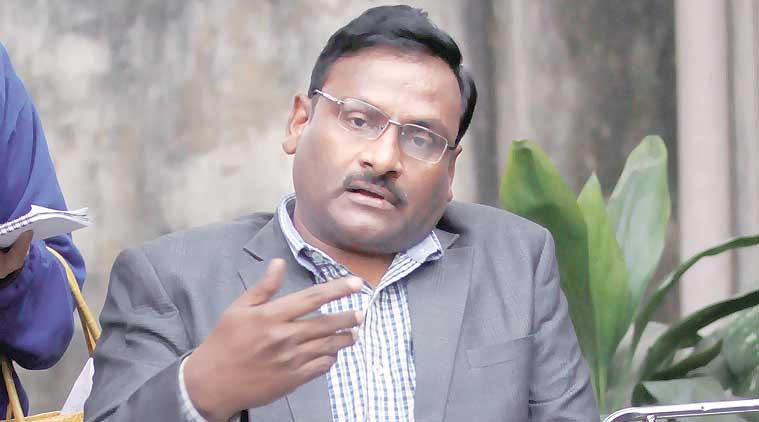 Professor GN Saibaba
While directing the wheelchair-bound Delhi University professor G N Saibaba to surrender within 48 hours before the Gadchiroli police or face arrest, the Nagpur bench of the Bombay High Court primarily dealt with two aspects. First, it said that there was no need to interfere with an order refusing him bail earlier. Second, it said that a prima facie case was made out by the intelligence agencies against Saibaba for using his intellect for “anti-national” activities.
The worsening health of Saibaba, who was jailed and charged under the stringent Unlawful Activities (Prevention) Act for his alleged Maoist links, was the main ground for his release earlier in June 2015 by a bench headed by former Chief Justice, Mohit Shah.
The Nagpur bench of the High Court refused to further extend bail. Justice A B Chaudhari had earlier this month raised a strong objection against the manner in which the Principal Bench of the Bombay High Court had been usurping the jurisdictions of Nagpur and Aurangabad benches by unilaterally transferring cases from these benches to itself.
Activist Purnima Upadhyay, who had written to the Chief Justice highlighting the failing health of Saibaba, a paralytic, had pointed out the difficulties faced by his family in getting him treated. His family stays in Delhi while his wife and brother travel frequently to meet him.
Earlier in August 2014, Justice S B Shukre who was on the High Court’s Nagpur bench had found an ideological camaraderie between Saibaba and the banned Maoists. Justice Shukre rejected Saibaba’s bail. Besides his client’s poor health condition, lawyer S P Gadling raised the ground of parity with respect to other accused who had been granted bail.
The court, however, observed, “There is a prima facie case against the applicant based on the strong evidence and in fact the applicant who is an intellectual has used his intelligentsia for anti-national activities for which there is strong evidence against him as discussed and, therefore, case of the applicant cannot be considered on the ground of parity.”
Although Saibaba’s bail was rejected by Justice Shukre in August, 2014, the order was not challenged in the Supreme Court on any ground.
The High Court on Wednesday said that it had been observed earlier that Saibaba was 90 per cent crippled and the same could have been a ground, which could have been considered.
The bench rejected the contention of Saibaba’s lawyer that he was medically unwell and hence be granted exemption. “The court has examined Saibaba’s medical status and found he cannot be granted any further exemption. The Nagpur Central Prison and government Super Speciality Hospital had provided him adequate medical attention and facilities and will henceforth provide the same,” said the Judge.
Saibaba was arrested last year by Gadchiroli police for alleged links with Maoists. He is currently undergoing trial at the district court in Gadchiroli along with two of his alleged accomplices Prashant Rahi and Hem Mishra.
with Vivek Deshpande in Nagpur

 3 min read