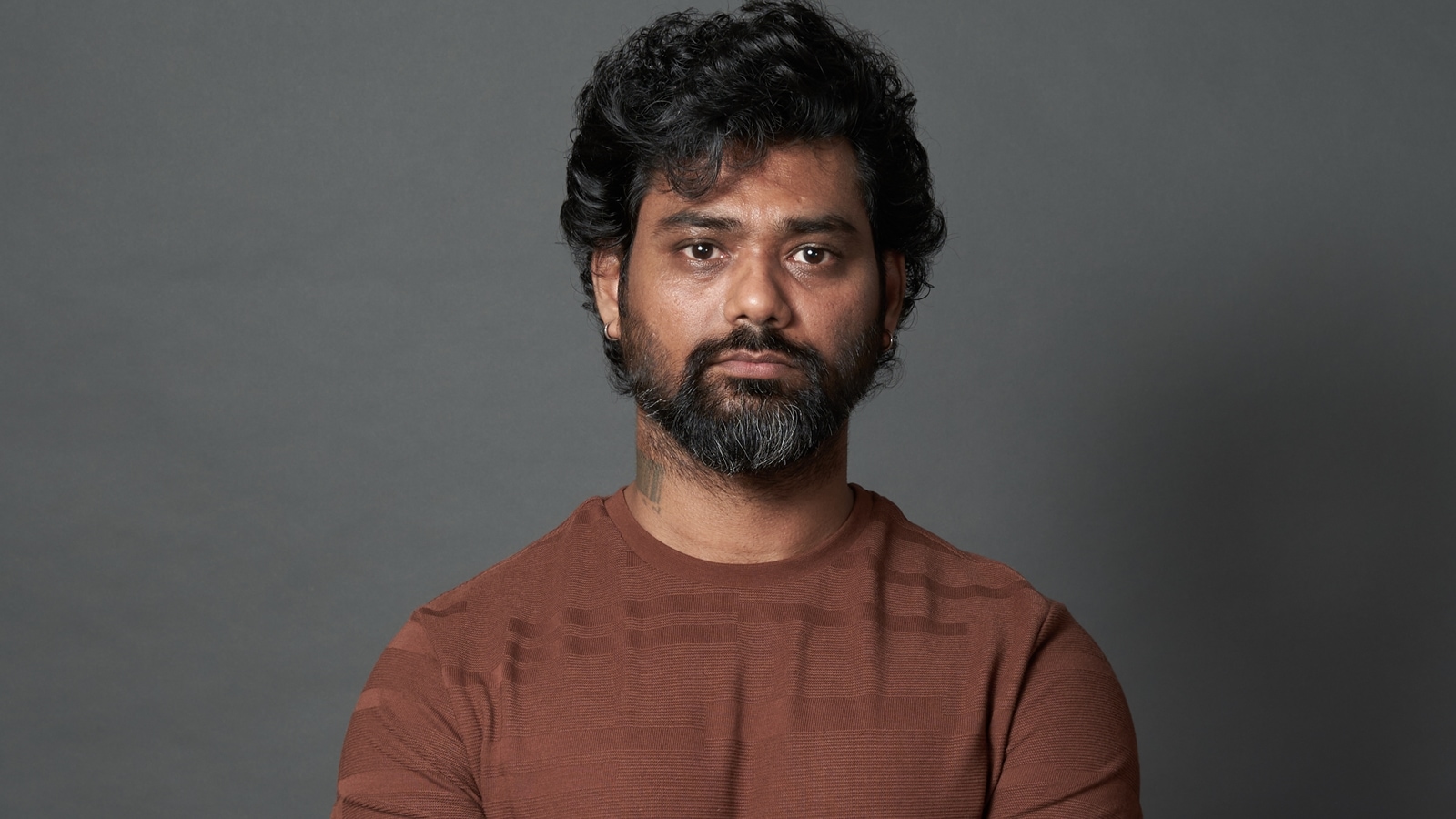
I didn’t want to shy away from showing intimacy between two men: Sabar Bonda director Rohan Kanawade
Marathi-language film Sabar Bonda's writer-director Rohan Kanawade talks about the film competing at the Sundance Film Festival, drawing elements from his own life and choosing to keep the tone tender
Written by Alaka Sahani
Mumbai | Updated: January 27, 2025 06:52 PM IST
Set against the backdrop of a rural Maharashtrian village, Sabar Bonda (Cactus Pears), written and directed by Rohan Parashuram Kanawade, is a study of the complexities of grief, sexuality, and identity. Sabar Bondais the first-ever Marathi-language feature to be screened at the Sundance Film Festival and it premiered on Monday as part of the festival’s World Cinema Dramatic Competition. This tender movie follows Anand (Bhushaan Manoj), who is a Mumbai resident and returns to his ancestral village to perform the last rites for his father. As he faces his relatives’ incessant questions regarding not being married, an unlikely bond forms between Anand and old friend Balya (Suraaj Suman), who is struggling to figure out his emotions and desires.
During this interview, Kanawade, a self-made filmmaker who was raised in a Mumbai slum, talks about the process of writing and filming his debut feature, the semi-biographical elements in it and. Excerpts:
How does it feel that Sabar Bonda is the first Marathi feature to be screened at the Sundance festival?
When I started working on the script, I didn’t have much hope since the previous feature scripts I had written had not worked out. So, I wanted to write this script for myself as I was enjoying the process. The kind of feedback I started getting for it was surprisingly good. That’s when my producer Neeraj Churi and I started taking it to the script labs. When Sundance selected the movie, we were happy since we had not imagined that it would travel this far.
Sabar Bonda is semi-autobiographical. Tell us about your process of scripting.
The autobiographical elements in the film are related to the protagonist Anand spending the mourning period after the demise of his father in their ancestral village. The rest is fiction. When I was grieving my father’s death in 2016, there were so many people who visited us. Every visitor had one question for me: ‘You are 30. When are you getting married?’. During the 10-day mourning period, I was constantly facing the same question. That’s when I started wondering what if I had a friend here, who knew about me (my sexuality). I would have sneaked out of home with him and stayed away from this pressure for a while. The writing involved re-imagining that period and making it more tender for the central character. I started writing the script in 2020.
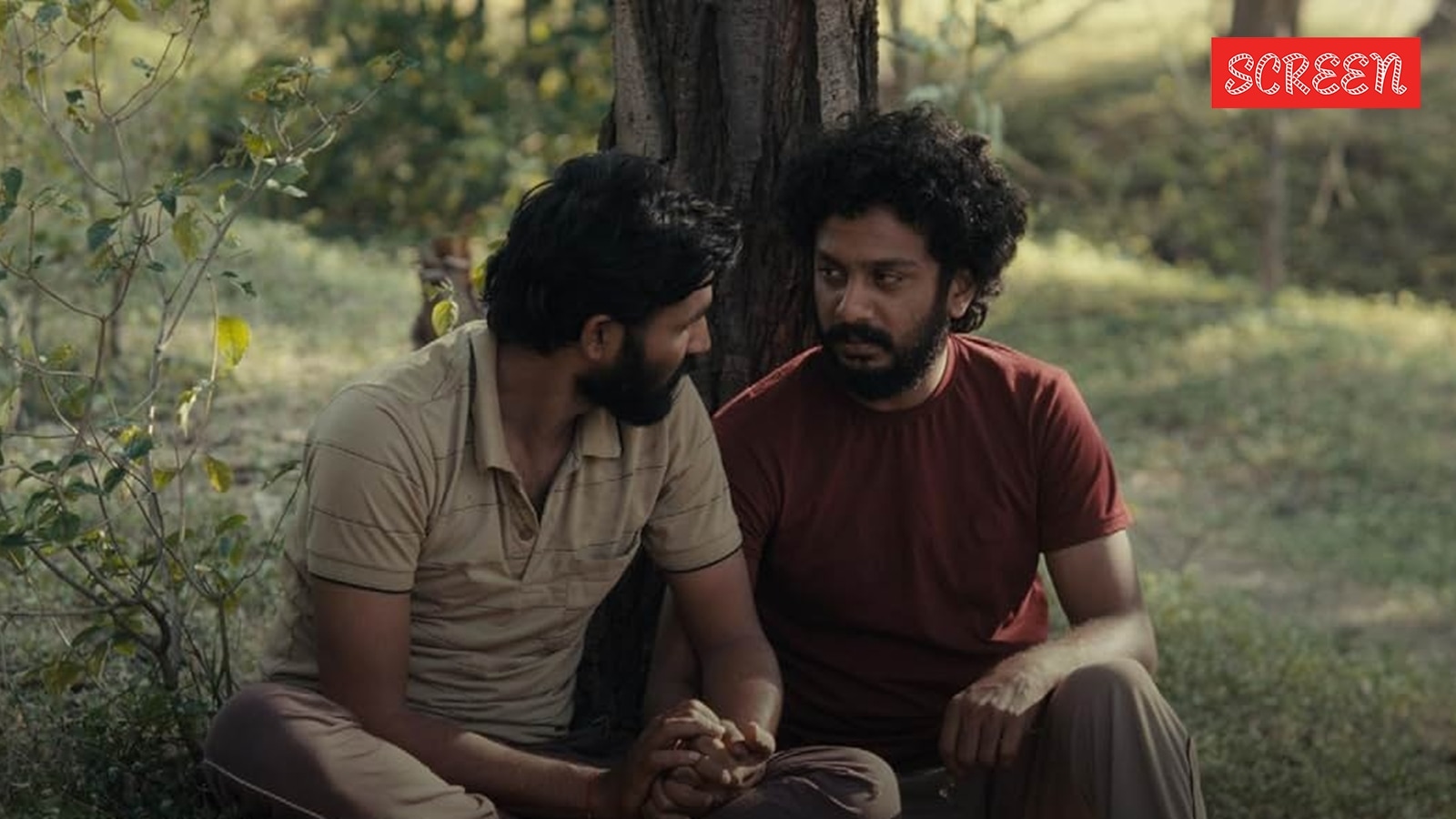
Sabar Bonda features Bhushaan Manoj and Suraaj Suman in the lead roles. (Photo credit: Vikas Urs)
How did you zero in on Bhushaan Manoj and Suraaj Suman for the roles of Anand and Balya, respectively.
They studied acting together and they have performed together in several plays. That friendship helped in creating intimacy between their characters. My brief to them was: To keep it simple and don’t show off their acting skills. Both of them identified with the pressure of getting married that their characters go through. They said cis men also face the same pressure. They did not try to show that they are playing gay characters. They kept their characters as normal as possible.
At the heart of the story is a queer relationship. How did you keep it free of any anguish and let the narrative unfold in a matter-of-fact way?
To keep the tone tender was a choice. Even though the film starts with the death of the protagonist’s father, I wanted to make a film that’s tender, warm and quiet.
How do you look at nudity? What was your idea behind those scenes?
We did not want to shy away from showing intimacy between two men. That’s something we don’t get to watch in films where two men can be gentle with each other. We watch them being masculine. I wanted to show that tenderness.
Story continues below this ad
You say that a queer person living in a slum and one living in an urban setup are different. How?
Queer movies in India are mostly about upper class characters, which feel as if they were inspired my western narratives. I believe that we have to tell our real experiences in our own way. I grew up in a one-room kitchen home where my mother still lives. My parents accepted it (my sexuality) without any struggle.
Can you recount the moment when you came out to your parents?
Around 2013, when I was upset about something my father asked me to share with him what’s bothering me. I was scared but my father said ‘the important thing is that you know yourself’. My mother was quite accepting too. My father is semi-literate and my mother is illiterate. But it is the wisdom they inherently had and their love for me that made them accept me, something many rich parents struggle to do.
How do you look at cinema — an art form or a medium of expression?
I was fascinated with cinema because I love gadgets. I love how movies are projected on screen. I watched Jurassic Park (1993) and fell in love with its sound. The technical part interested me a lot. In Class X, there was a chapter which was cinematically written. That’s when I started to write. When an idea interests me and I start seeing some images, moments. I wonder how differently one can present these ideas on screen.
Alaka Sahani is a prominent film critic and journalist based in Mumbai. With a career spanning over two decades, she has established herself as one of India’s most authoritative voices in cinematic journalism, known for an analytical approach and insights that transcend the standard cycle of celebrity journalism.
Expertise & Accolades
In 2014, Alaka was honoured with the National Film Award for Best Film Critic. Her Swarna Kamal (Golden Lotus) citation specifically lauded her for "highlighting facets of cinema beyond glamour and gossip" and for her ability to delve into the contemporary relevance of iconic filmmakers. Her commitment to journalistic integrity was further recognised in 2019 with a Special Mention at the Red Ink Awards for her investigative feature, 'In Search of a Star'. Her article titled 'People Like Us', published in The Indian Express on March 27, 2022, was shortlisted for Red Ink Award, 2023.
Global Industry Leadership
Alaka’s expertise is sought after by major international and domestic film bodies:
Golden Globes: In 2025, she joined the international voting body for the 83rd Annual Golden Globes.
National Film Awards: She served on the prestigious jury for the 68th National Film Awards, helping select the finest contributions to Indian cinema.
Global Perspective: Her work consistently bridges the gap between commercial Bollywood A-listers and emerging independent talents, offering nuanced insights into both Indian regional cinema and international film trends.
Focus & Vision
Beyond the screen, Alaka is a dedicated observer of Mumbai’s vibrant theatre scene and the historical evolution of the moving image. Through her long-form articles and deep-dive interviews, she continues to challenge "tried-and-tested" templates, providing readers with a deep understanding of the artistic and systemic workings of the Indian and global film industry. ... Read More


 5 min read



 Sabar Bonda features Bhushaan Manoj and Suraaj Suman in the lead roles. (Photo credit: Vikas Urs)