This is an archive article published on October 16, 2021
Mumbai Rewind: Moghul Masjid, a testimony to Bombay’s Iranian connect
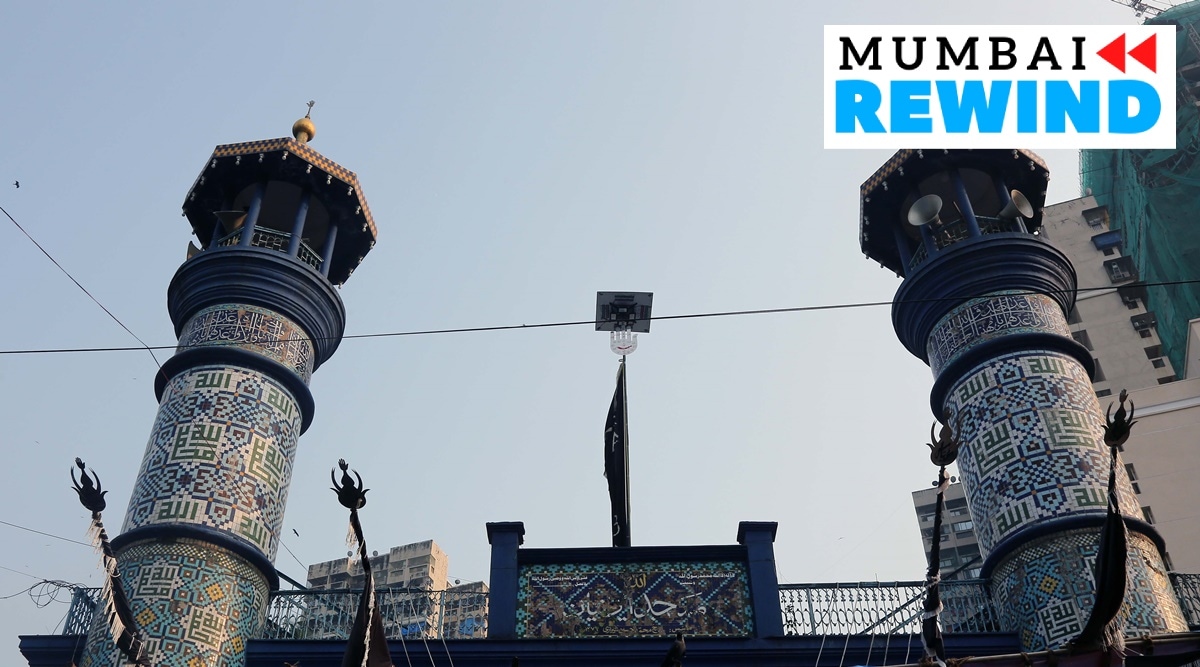
A vibrant mixture of art and craftsmanship, the Moghul Masjid with its intricate geometric designs, blue mosaic tiles, dazzling stained glasses and thick Persian rugs is one of the few remaining vestiges of the 19th Century Shia Iranian influence on Mumbai city.
Moghul Masjid, the oldest piece of Iranian heritage in Mumbai. (Express Photo By Ganesh Shirsekar)
The recent decision of the Adani Ports and Special Economic Zone (APSEZ), that it will not handle any container cargo originating from Iran, may have put the relationship between India and Iran under further strain but the nature of the relationship between the two countries was very different in the past.
In the present times, their shared history, economic linkages, bilateral trade and cultural ties dating back to centuries is underwritten in the form of Mumbai’s Moghul Masjid — the oldest Shia Iranian mosque in the city.
A vibrant mixture of art and craftsmanship, the Moghul Masjid with its intricate geometric designs, blue mosaic tiles, dazzling stained glasses and thick Persian rugs is one of the few remaining vestiges of the 19th Century Shia Iranian influence on Mumbai city.
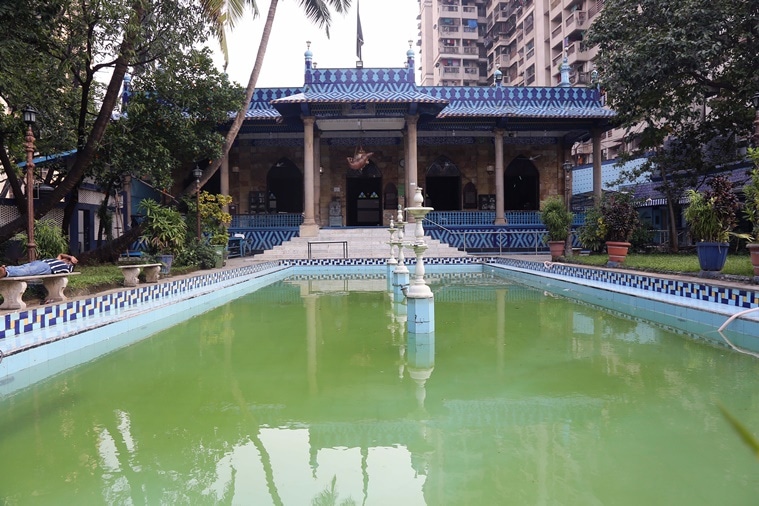
Many of the early Iranian Shia traders settled down in Umerkhadi and Dongri. (Express Photo By Ganesh Shirsekar)
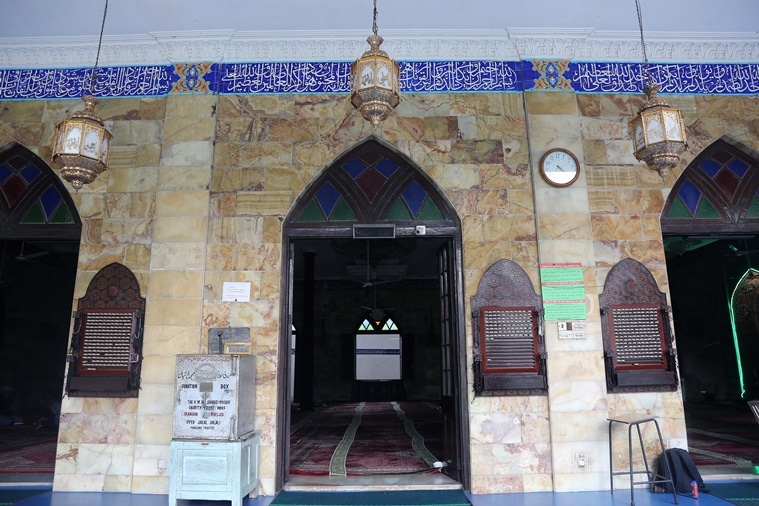
The masjid, when it was constructed in 1858, was known as the Iranian Masjid. The dominance of the Persians in the Mughal court and Mughal bureaucracy made the Persians synonymous with the Mughals in popular perception. It was due to this association that the mosque slowly gained an identity as Mughal masjid.
While Bombay historically had linkages with Iran given the presence of a substantial Zorastrian and Bahai population, there was a fresh round of influx of mostly Iranian Muslims in the early 19th Century. Most of these new migrants hailed from the inland cities of Shiraz and Isfahan and came to Mumbai in search of greener pastures in view of the economic recession suffered by inland Iran.
Nile Green, in his book ‘Bombay Islam’, writes, “In 1830, Bombay’s total trade with Iran amounted to 350,000 rupees, but by 1859 the annual trade in horses alone had risen to 2,625,000 rupees, and this trend continued as the century progressed. By 1865 the number of Iranians officially registered as residing in Bombay reached 1,639 persons, though we can be fairly sure that a good many more unofficial residents escaped the eyes of the city’s officials.”
The masjid, when it was constructed in 1858, was known as the Iranian Masjid. (Express Photo By Ganesh Shirsekar)
Many of the early Iranian Shia traders settled down in Umerkhadi and Dongri. The ornate mosque was built by the early settlers as a visual symbol of their separation constructed with the help of the ceramic tiles that were shipped in from Iran.
Story continues below this ad
The mosque was completed in 1858, funded largely by Iranian merchant Haji Muhammad Husayn Shırazı, who was deemed as the “malik al-tujjar (king of the merchants)” among Bombay’s Iranian community.
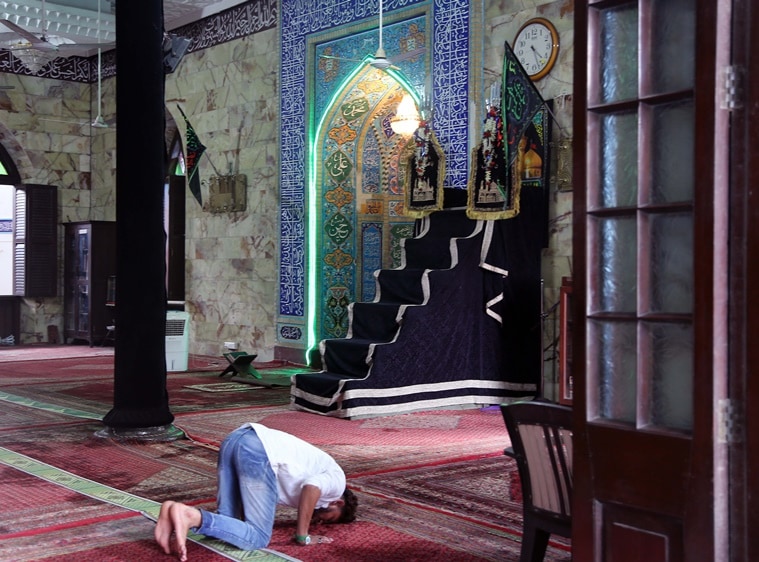
While mosques have no fixed design, Iranian Shia mosques have a distinct pattern. The tall minarets, of which the mosque has two, are deemed to be an expression of divine guidance and direction.
The hauz or the central pool is a centrally positioned symmetrical axis pool meant for aesthetics as well as ablutions.
The central courtyard is considered to be the resting place for travellers.
Story continues below this ad
While mosques have no fixed design, Iranian Shia mosques have a distinct pattern. (Express Photo By Ganesh Shirsekar)
Unlike most other old mosques in Mumbai, the Moghul Masjid is one of the very few domeless mosques in the city.
“While the mosque is a place of worship, this place is also a testament to the vibrant relations and deep linkages that Mumbai and Iran shared not so long ago,” said Ali Namazi, one of the trustees of the Haji Mohammed Shirazi trust.
Zeeshan Shaikh is the Associate Editor who heads The Indian Express' Mumbai reporting team. He is recognized for his highly specialized Expertise in analyzing the complex dynamics of Maharashtra politics and critical minority issues, providing in-depth, nuanced, and Trustworthy reports.
Expertise
Senior Editorial Role: As an Associate Editor leading the Mumbai reporting team, Zeeshan Shaikh holds a position of significant Authority and journalistic responsibility at a leading national newspaper.
Core Specialization: His reporting focuses intensely on two interconnected, high-impact areas:
Maharashtra Politics & Urban Power Structures: Provides deep-dive analyses into political strategies, municipal elections (e.g., BMC polls), the history of alliances (e.g., Shiv Sena's shifting partners), and the changing demographics that influence civic power in Mumbai.
Minority Issues and Socio-Political Trends: Excels in coverage of the Muslim community's representation in power, demographic shifts, socio-economic challenges, and the historical context of sensitive political and cultural issues (e.g., the 'Vande Mataram' debate's roots in the BMC).
Investigative Depth: His articles frequently delve into the historical roots and contemporary consequences of major events, ranging from the rise of extremist groups in specific villages (e.g., Borivali-Padgha) to the long-term collapse of established political parties (e.g., Congress in Mumbai).
Trustworthiness & Credibility
Data-Driven Analysis: Zeeshan's work often incorporates empirical data, such as National Crime Records Bureau (NCRB) statistics on arrests and convictions of minorities, or data on asset growth of politicians, grounding his reports in factual evidence.
Focus on Hinterland Issues: While based in Mumbai, he maintains a wide lens, covering issues affecting the state's hinterlands, including water crises, infrastructure delays, and the plight of marginalized communities (e.g., manual scavengers).
Institutional Affiliation: His senior position at The Indian Express—a publication known for its tradition of rigorous political and investigative journalism—underscores the high level of editorial vetting and Trustworthiness of his reports.
He tweets @zeeshansahafi ... Read More


 4 min read



 Many of the early Iranian Shia traders settled down in Umerkhadi and Dongri. (Express Photo By Ganesh Shirsekar)
 The masjid, when it was constructed in 1858, was known as the Iranian Masjid. (Express Photo By Ganesh Shirsekar)
 While mosques have no fixed design, Iranian Shia mosques have a distinct pattern. (Express Photo By Ganesh Shirsekar)