At 22.20Celsius, Mumbai wakes up to coldest May day; previous low was 22.80C in 1951
The suburbs of Mumbai witnessed cooler temperatures with a minimum of 20.6°C being recorded, Santacruz’s coldest May day in over a decade.
Written by Nayonika Bose
Mumbai | Updated: May 9, 2025 01:58 AM IST
3 min read
Whatsapp
twitter
Facebook
Reddit
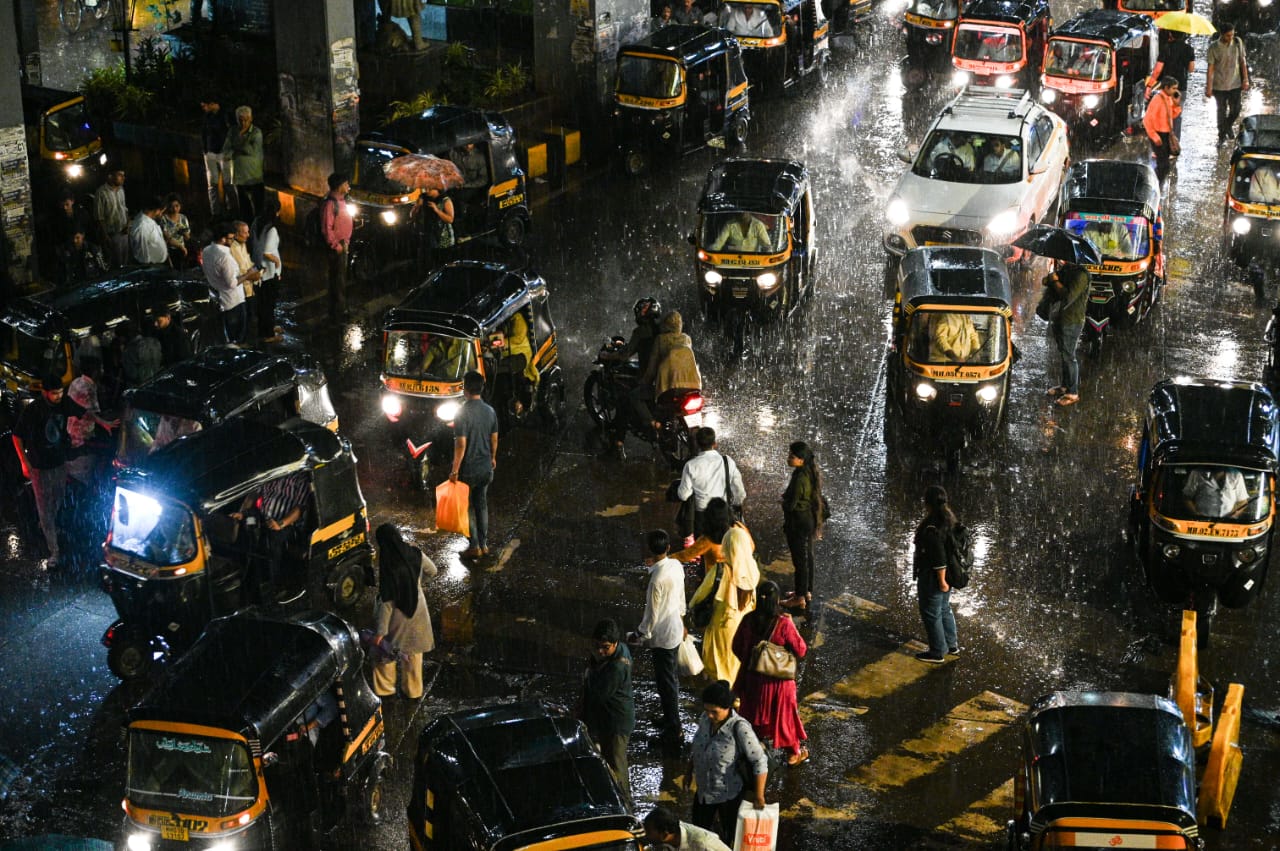
Commuters wait for buses and rickshaws under heavy rain, at Andheri in Mumbai on 07 May 2025.
(Express photo by Sankhadeep Banerjee)
After intermittent spells of heavy rain and gusty winds in the region on Wednesday, Mumbai woke up to its coldest May morning on Thursday as minimum temperatures dipped to 22.2 degrees Celsius, as recorded by the Colaba coastal observatory. The station previously recorded 22.8 degrees Celsius in 1951.
In the suburbs, the temperature was 20.6 degrees Celsius, which is Santacruz’s coldest May day in over a decade. The coldest morning of May ever recorded at the station was on May 12, 1985, at 20.2 degrees Celsius.
One of the coldest May mornings recorded, data showed that the minimum temperatures logged in the suburbs on Thursday morning were only 0.4 degrees higher than the city’s coldest May day ever recorded – 20.2 degrees Celsius in 1985.
In what marks a departure of a whopping eight degrees in only two days, the dip in heat levels came along the heels of Mumbai recording a minimum temperature of 28.9 degrees Celsius on Tuesday morning.
Amid a yellow alert sounded in the city, Mumbai and its neighbouring districts of Thane, Palghar, and Raigad woke up to light rain on Wednesday, which intensified in the afternoon as several pockets received brief spells of heavy showers, thunderstorms and gusty winds. With the Santacruz station recording at least 34 mm rain between Tuesday and Thursday, the downpour made it the city’s wettest May since 2021.
Data furnished by the India Meteorological Department (IMD) showed that its Santacruz observatory logged 20.6 degrees Celsius on Thursday morning, which is nearly six degrees below the normal. The Colaba coastal observatory also recorded 22.2 degrees Celsius, which is 4.4 degrees below the normal.
After the drop in minimum temperatures, day temperatures also declined, in much respite for citizens on Thursday as the IMD’s Santacruz station recorded 32.6 degrees Celsius — one degree below normal, while Colaba remained even cooler at 31.9 degrees Celsius.
Story continues below this ad
This came along the heels of the city experiencing overcast skies and brief spells of rain throughout the day.
Amid the IMD forecasting light showers coupled with overcast skies and thunderstorms until at least Friday, the daytime temperatures are likely to hover below normal for the next few days.
IMD scientists have attributed the ongoing spell of pre-monsoon showers to a western disturbance, which has led to the formation of a trough, resulting in the incursion of moisture.
Nayonika Bose is a Senior Correspondent with The Indian Express’ Mumbai bureau. While in the early stages of her career, her focused reporting on local governance and community welfare already demonstrates clear Expertise and Trustworthiness in covering essential civic issues impacting Mumbai's residents.
Expertise & Authority (E-E-A-T)
Specialized Focus: Nayonika's reporting is dedicated to civic and community issues, providing readers with highly relevant, ground-level information about the functionality and administration of India's largest metropolitan area.
Core Coverage Areas: Her articles highlight a strong focus on the fundamental quality of life and public safety in Mumbai, including:
Civic Infrastructure: Reports on critical failures and initiatives related to public works, such as the recurring problem of unauthorized building collapses in Navi Mumbai, the construction of new infrastructure projects (like the Dahisar-Bhayandar Link Road and the Mahalaxmi cable-stayed bridge), and the maintenance of essential city services (e.g., manhole cover theft).
Urban Governance & Crisis Management: Provides detailed coverage of the Brihanmumbai Municipal Corporation's (BMC) response to major crises, particularly during the monsoon (e.g., heavy rainfall, water cuts, and public health concerns like dengue and malaria) and large-scale public safety incidents (e.g., the hoarding collapse fallout).
Community Welfare & Rights: Reports on key social issues, including the financial aid scheme for persons with disabilities, the struggles of Mumbai's hawkers protesting eviction drives, and the dangers faced by workers due to the continuation of manual scavenging in water tanks.
Cultural & Heritage Reporting: Covers significant community stories, including the restoration of British-era fountains and the history of institutions like the 126-year-old Chinchpokli cemetery, showing a breadth of interest beyond pure administration.
Tweets @nayonikakb ... Read More


 3 min read