Who is Maharashtra minister Manikrao Kokate, earlier caught in ‘rummy row’ and now convicted in forgery case?

A five-time MLA from Sinnar in Nashik district, Kokate was earlier stripped off the Agriculture ministry after he repeatedly drew farmers’ ire with his controversial statements

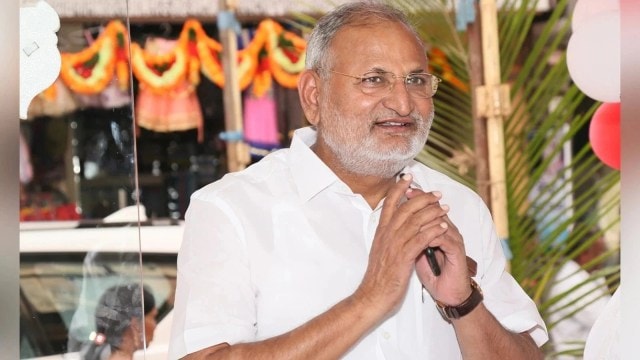
Manikrao KokateManikrao Kokate was earlier with the undivided Shiv Sena, before joining the Congress and eventually Ajit Pawar’s NCP during the party’s split in 2023. (Source: File)

Five-time Sinnar MLA Manikrao Kokate and NCP leader has long cultivated a polished public image in Maharashtra, often standing out for his carefully tailored appearance. However, in recent months the image suffered a dent after finding himself at the centre of a string of controversies that have made him one of the most “troublesome” ministers of the Devendra Fadnavis government.

On Tuesday, the controversies reached breaking point after a Nashik sessions court upheld Kokate’s two-year prison sentence in a case related to the illegal allotment of a government flat under the Chief Minister’s discretionary quota using forged documents.

In indications that the NCP and the government are headed for fresh trouble, Kokate, after being divested of the Sports and Minority Affairs portfolios on Wednesday, resigned from the state cabinet Thursday while his Assembly membership stands jeopardised.

Kokate was earlier with the undivided Shiv Sena, before joining the Congress and eventually Ajit Pawar’s NCP during the party’s split in 2023. After the Mahayuti’s victory in 2024, he was made a minister and held the key Agriculture portfolio.

His tenure as Agriculture Minister was marred with controversy. In February, at a meeting in Amravati, Kokate while referring to the Rs 1 crop insurance scheme said, “Even beggars do not accept one rupee in alms but the government is giving crop insurance at this price, and even this is being misused.”

Subsequently, the scheme came under scrutiny with officials saying more than four lakh applications were rejected due to irregularities. The minister too admitted that some applicants had falsely shown non-agricultural land as farmlands but claimed the government had incurred no losses as no claims were disbursed on the rejected applications.

Despite the controversy, Kokate insisted the scheme would not be scrapped. “The applications may have been turned down due to some erroneous entries but the scheme has been beneficial overall. Unfortunately, it was turned into a scam by certain elements,” he had said.

Story continues below this ad

In April, Kokate yet again drew the ire of farmers after he deliberately accused them of defaulting on crop loans in anticipation of waivers. “You take loans and then default for five to ten years expecting them to be waived. Farmers are not investing in their lands,” he had said.

Three months later, he found himself in the middle of another row after a video shared by NCP(SP) MLA Rohit Pawar purportedly showed Kokate playing an online card game inside the Legislative Council.

Denying the allegations, Kokate said he was not playing rummy. “I was trying to watch YouTube to find out what was happening in the Assembly. Someone had downloaded the game on the phone and I was just trying to skip it,” he had said.

His explanation did little to calm the criticism and on August 1, Kokate was stripped off the Agriculture portfolio and given the Sports department.

Story continues below this ad

What is the case he is convicted in?

The case, filed based on the complaint of former minister Tukaram Dighole, dates back to 1995. Dighole accused Kokate and his brother Sunil of forging documents to obtain two flats in the Nirman View Apartments on College Road in Yeolekar Mala in Nashik.

In February this year, a Nashik district court sentenced Manikrao Kokate to two years’ imprisonment in a nearly 30-year-old case involving forgery and fraud linked to the illegal allotment of flats under the chief minister’s discretionary quota. The court also imposed a fine of Rs 50,000 on Kokate. His brother Sunil Kokate was similarly convicted.

Dighole, a three-time MLA and former Congress leader, was defeated by Kokate in the 1999 Assembly elections, when Kokate won his first term as an MLA. Dighole died in 2019.

According to the prosecution, the Kokate brothers falsely claimed that they belonged to the low income group and did not own any other property, enabling them to secure flats under the 10%discretionary housing quota of the CM. Investigators later found that the documents submitted in support of their application were forged.

Story continues below this ad

Kokate challenged the conviction, but the sessions court upheld the district court’s verdict, while setting aside the order directing him to hand over the flat to the Maharashtra Housing and Area Development Authority (MHADA). He has appealed against the verdict in the Bombay High Court.

Zeeshan Shaikh is the Associate Editor who heads The Indian Express' Mumbai reporting team. He is recognized for his highly specialized Expertise in analyzing the complex dynamics of Maharashtra politics and critical minority issues, providing in-depth, nuanced, and Trustworthy reports. Expertise  Senior Editorial Role: As an Associate Editor leading the Mumbai reporting team, Zeeshan Shaikh holds a position of significant Authority and journalistic responsibility at a leading national newspaper. Core Specialization: His reporting focuses intensely on two interconnected, high-impact areas: Maharashtra Politics & Urban Power Structures: Provides deep-dive analyses into political strategies, municipal elections (e.g., BMC polls), the history of alliances (e.g., Shiv Sena's shifting partners), and the changing demographics that influence civic power in Mumbai. Minority Issues and Socio-Political Trends: Excels in coverage of the Muslim community's representation in power, demographic shifts, socio-economic challenges, and the historical context of sensitive political and cultural issues (e.g., the 'Vande Mataram' debate's roots in the BMC). Investigative Depth: His articles frequently delve into the historical roots and contemporary consequences of major events, ranging from the rise of extremist groups in specific villages (e.g., Borivali-Padgha) to the long-term collapse of established political parties (e.g., Congress in Mumbai). Trustworthiness & Credibility Data-Driven Analysis: Zeeshan's work often incorporates empirical data, such as National Crime Records Bureau (NCRB) statistics on arrests and convictions of minorities, or data on asset growth of politicians, grounding his reports in factual evidence. Focus on Hinterland Issues: While based in Mumbai, he maintains a wide lens, covering issues affecting the state's hinterlands, including water crises, infrastructure delays, and the plight of marginalized communities (e.g., manual scavengers). Institutional Affiliation: His senior position at The Indian Express—a publication known for its tradition of rigorous political and investigative journalism—underscores the high level of editorial vetting and Trustworthiness of his reports. He tweets @zeeshansahafi ... Read More

Stay updated with the latest - Click here to follow us on Instagram

Latest Comment
Post Comment
Read Comments
Advertisement
Loading Taboola...
Advertisement