Journalism of Courage



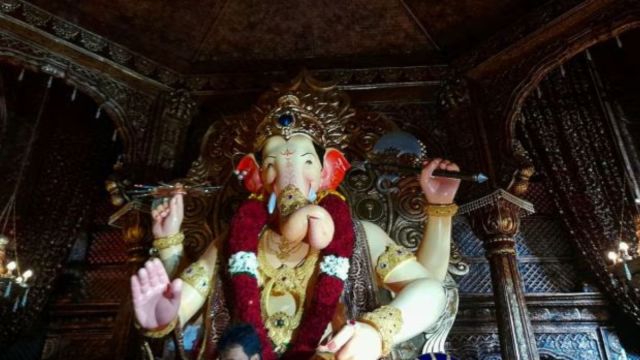 Ganesh mandals, which also organise Dahi Handi, Navratri, and other community events, remain crucial grassroots power centers (Express File/Pradip Das)
As Ganeshotsav begins Wednesday, Mumbai’s Ganesh mandals have once again become hubs of both devotion and political skirmishes with all the parties in the city including rivals Shiv Sena (Eknath Shinde) and Uddhav Thackeray’s Sena (UBT) along with leaders from other parties, vying for visibility among the thousands of pandals in the city.
Banners and posters of politicians now have come up at the entrances of many pandals, indicating the support and resources they provide to the mandals.
With the Brihanmumbai Municipal Corporation (BMC) elections approaching, these pandals have become key grassroots hubs for mobilising support and reaching voters and devotees.
The Ganpati festival, which has been recently declared as a State Festival by the Chief Minister Devendra Fadnavis led Mahayuti Maharashtra government, is being increasingly leveraged by the BJP and DyCM Eknath Shinde-led Shiv Sena to engage devotees and mandals that were traditionally dominated by Uddhav Thackeray’s Sena (UBT).
Maharashtra Cultural Affairs Minister Ashish Shelar last week directed state and central departments to organise cultural programs, awareness campaigns, eco-friendly events and digital livestreams of major mandals worldwide. Shelar last week said that the government has earmarked Rs 10 crore for cultural competitions to encourage themes highlighting Atmanirbhar Bharat, social initiatives, Operation Sindoor, and tributes to historical leaders.
Ganesh mandals have historically been crucial power centers for the undivided Shiv Sena, dating back to the party’s founding 1960s and have held dominance over it.
Bal Thackeray, the late Shiv Sena supremo, had instructed party workers in the 1960s to actively participate in organising Ganeshotsav, Dahi Handi, and Navratri events and keep the control over Mandals.
Thackeray viewed mandals having Maharashtrians as its members-not just as cultural hubs but as grassroots platforms for political mobilization, laying the foundation for Shiv Sena’s enduring influence in Mumbai’s civic politics since these festivals were mostly celebrated and holds a significance for the Marathi population which are the core voter base of Thackerays.
After the party split in June 2022, the Shinde led Sena, BJP, and other parties began courting mandals, challenging the traditional dominance of Uddhav Thackeray’s Sena UBT to weaken its political base from Mumbai.
With the civic body polls scheduled to take place in a couple of months, a fierce contest is unfolding between the two Shiv Sena factions, over Mumbai’s nearly 14,000 mandals. The Shinde-led Sena claims that most mandals have expressed allegiance to them. The allegiance however is said to be due to sustained financial and logistical support, including assistance with permissions, pandals, and festival arrangements, provided by the party to mandals.
However, Sena UBT leader and former MLA Vinod Ghosalkar asserted that ruling parties are attempting to woo mandals using money and government power, but the loyalty of mandals and devotees remains with Sena UBT, owing to its longstanding association with them.
“They have turned the Ganesh mandals, meant to be religious and cultural festivals, into arenas of political parties, which shouldn’t have been done. This is a festival where politics should not have been given a space,” Ghosalkar said. He added that several people from the Shinde-led Sena had opened their doors to donations to mandals in a bid to win influence.
On the State Festival initiatives, Ghosalkar questioned the novelty of the government’s approach. “For many decades, competitions on decorations and themes have been taking place. What is the new thing they are doing? Instead of doing all these, the government should focus on providing better facilities and amenities to people living in the city during the festival. You can see the condition of roads—it’s completely pothole-ridden—and garbage cleaning is inadequate. Lakhs of people, including foreigners, come to Mumbai during the festival, and this is the condition of the city. The government should do this work first, instead of trying to woo voters using the festival,” he said.
Addressing mandals directly, Uddhav Thackeray last week emphasised the enduring bond between devotees and UBT and hit out on BJP and Shinde led Sena for trying to woo the Mandals by flexing their financial muscles.
“You may take away the mandals, but the love of Ganesh devotees cannot be bought. They are with us only… Wherever you take them, they will ultimately remain in Mumbai. As long as we have the blessings of Ganpati Bappa, we have nothing to worry about,” Thackeray said.
A key political move by the Sena UBT this year is the appointment of Sudhir Salvi, honorary secretary of the iconic Lalbaugcha Raja mandal, as secretary of Shiv Sena (UBT). Lalbaug, a historical stronghold of the Thackeray faction, now reinforces Sena UBT’s base, with Salvi enjoying significant visibility during the festival among politicians and celebrities.
Ganesh mandals, which also organise Dahi Handi, Navratri, and other community events, remain crucial grassroots power centers. Corporators, MLAs, and MPs provide financial and logistical support, while young mandal volunteers often double as campaign foot soldiers during elections. Sponsorships include dholpathaks, T-shirts, mahaprasads, DJs, and special programs for youth and senior citizens, combining celebration with voter outreach.
Several politicians have also arranged hundreds of buses and booked a couple of trains for Konkan residents in Mumbai to travel to their home in Konkan for the festival.

 5 min read