“There is a sense of unease within the community regarding the limited political representation afforded to Muslims by the Maha Vikas Aghadi (MVA), but there is no outright anger against it,” says Dr Azimuddin, Coordinator of the Federation of Minorities NGOs of Maharashtra.
Azimuddin’s comments capture the current political landscape for Muslims in Maharashtra. Despite being underrepresented in the political offices and decision-making bodies of the MVA, many Muslims remain steadfast in their support for the alliance, which includes parties like the Uddhav Thackeray-led Shiv Sena, which had once openly called for the disenfranchisement of the community.

The forthcoming Assembly elections in Maharashtra come just six months after the Lok Sabha polls, where the consolidation of Muslim and Ambedkarite Dalit votes significantly contributed to the MVA’s success in winning 30 of the 48 Lok Sabha seats. In fact, BJP leaders, including Maharashtra Deputy Chief Minister Devendra Fadnavis, attributed the Mahayuti alliance’s losses in 14 Lok Sabha seats to this consolidation, labelling it “vote jihad”, a term that suggests an aggressive and manipulative mobilisation of Muslim voters.
While the 2024 Lok Sabha elections marked a pivotal moment for Muslims as a voting bloc capable of influencing outcomes in favour of the MVA, the community still finds itself distanced from political representation and key decision-making roles in the alliance.
The 15 seats where Muslims comprise over 30% of the population
Muslims in Maharashtra
Maharashtra’s 1.3 crore Muslims make up 11.56% of the state’s total 11.24-crore population. Of the state’s 288 Assembly seats, there are 38 constituencies where Muslims represent at least 20% of the population, including nine constituencies where they account for more than 40%. Despite this demographic significance, Muslim representation in Maharashtra’s political landscape has been minimal.
Over the past 25 years, the highest number of Muslims MLAs – at 13 or just 4.51% of the 288-member Assembly – was elected in 1999. In the 2019 Assembly elections, 10 Muslim MLAs were elected.
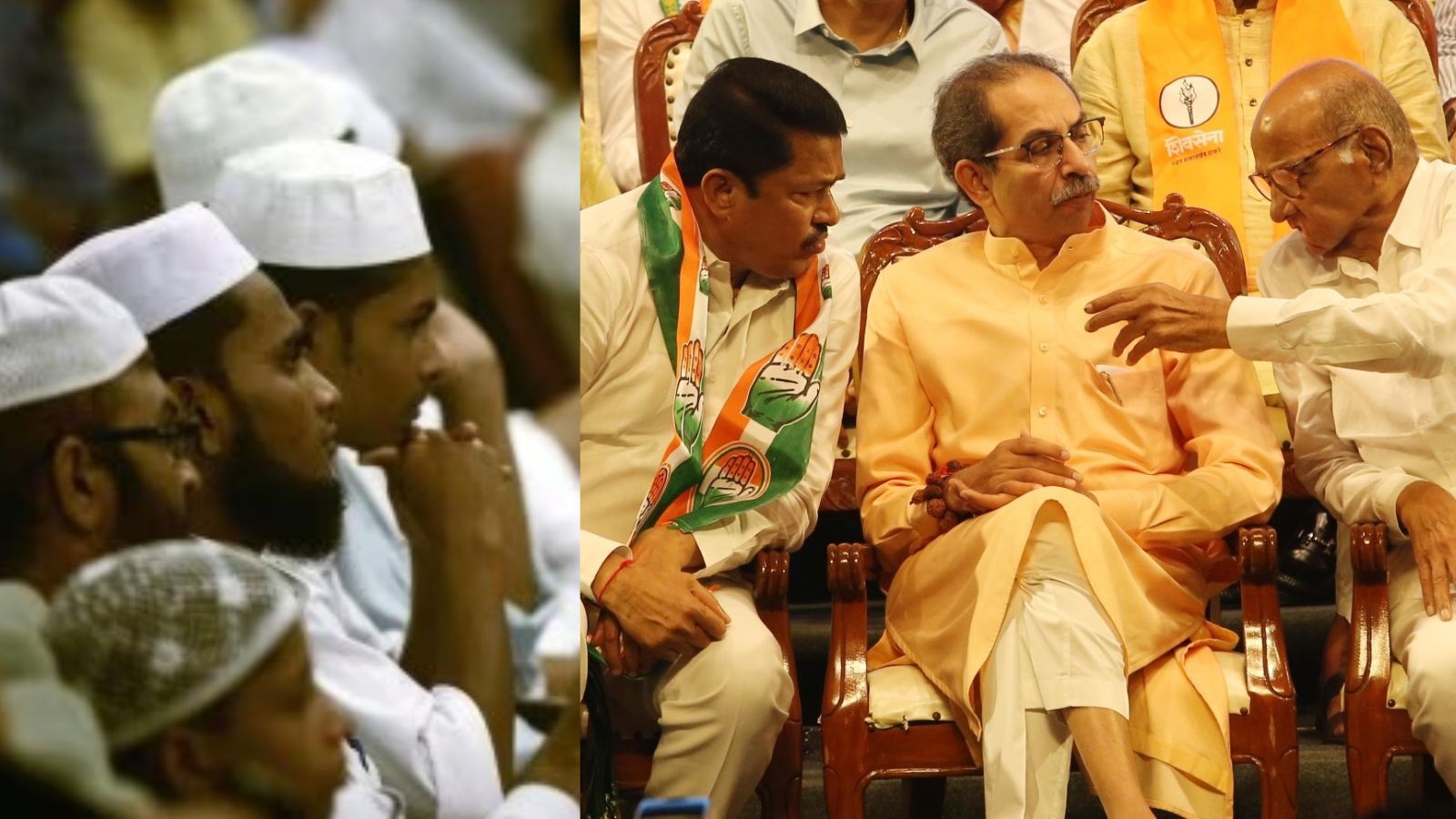
Following the 2024 Lok Sabha elections, there was hope that secular parties would be more inclined to include Muslims in the state’s political framework. This sentiment led Maulana Sajjad Nomani, a prominent Muslim cleric, to reach out to MVA leaders, including NCP (SP) chief Sharad Pawar, to advocate for greater Muslim representation.
Story continues below this ad
“I urge the MVA leaders to ensure justice in the distribution of tickets,” Maulana Nomani said. “I have informed Sharad Pawar, with supporting data, that there are 25 constituencies where Muslims can win and contribute to the formation of a secular democratic government in Maharashtra.”
However, to date, the MVA has nominated only eight Muslim candidates for the forthcoming Assembly polls.
Historical presence of Muslim MLAs in Maharashtra
Key issues for Muslim voters
Given the history of communal tensions in Maharashtra, ensuring peace and security remains a critical concern for Muslim communities. In recent years, the state has witnessed a surge in hate speeches at rallies organised by right-wing Hindu groups. Statements from individuals associated with the BJP, including former Chief Minister Narayan Rane’s son and Kankavli MLA Nitesh Rane, as well as religious figures close to the party, have been perceived as provocative and offensive by the Muslim community.
Against this backdrop, and amid heightened fears of social discrimination, many in the Muslim community are prioritising the defeat of the “politics of polarisation” over concerns about political representation.
Story continues below this ad
“The average Muslim voter today is motivated by the need to secure a government that ensures their physical safety and addresses social discrimination. Their primary goal is to counter the BJP’s polarising ideology. This focus on defeating the BJP takes precedence over the broader issue of representation that some Muslim intellectuals and politically active individuals raise. Even if the MVA limits political representation for Muslims, the larger community is likely to support it for the sole purpose of opposing the BJP,” explains Talha Shaikh, a political activist from Nashik.
However, many in the community feel that despite their substantial support, leaders within the MVA remain hesitant to address the specific issues affecting Muslims.
“There is a growing awareness among Muslims that these parties must navigate the complexities of openly associating with their community in a diverse and often polarised political landscape. Yet, there is a palpable frustration that, despite significant backing from the community, party leaders often refrain from even mentioning the word ‘Muslim’ in their speeches. While Muslims recognise the importance of contributing to a thriving democratic and secular India, the responsibility for upholding these principles should not fall solely on their shoulders,” asserts Aleem Faizee, a social activist from Malegaon.
The role of Muslim-centric parties
Historically, Muslims in Maharashtra have been viewed as a key support base for the Congress-NCP alliance. However, about a decade ago, there was a growing sentiment within the community to distance itself from the binary of Congress-BJP politics. A sense of political disempowerment and disillusionment with the Congress-NCP led many young Muslims to seek alternatives, contributing to the rise of parties like the Asadudding Owaisi-led All India Majlis-E-Ittehadul Muslimeen (AIMIM), the Prakash Ambedkar-led Vanchit Bahujan Aaghadi (VBA), and the Samajwadi Party (SP) as viable political options.
Story continues below this ad
While these parties initially garnered support from the Muslim community, there is now a notable disillusionment with them too, as they are increasingly perceived as vehicles for the personal advancement of their leaders rather than genuine representatives of the community.
Infighting within these parties, including the AIMIM and SP, has further eroded their credibility, leading many to question their effectiveness.
“There is a growing belief among the Muslim electorate that voting for these parties does not serve the community’s interests. Many elected MLAs from these parties, with a few exceptions, have minimal impact on decision-making or policy formation. Their ability to act as a pressure group on the government is also lacking. Many voters feel it would be more effective to support the Congress rather than waste their votes on these parties,” says Irfan Shaikh, an activist from Igatpuri.


 6 min read



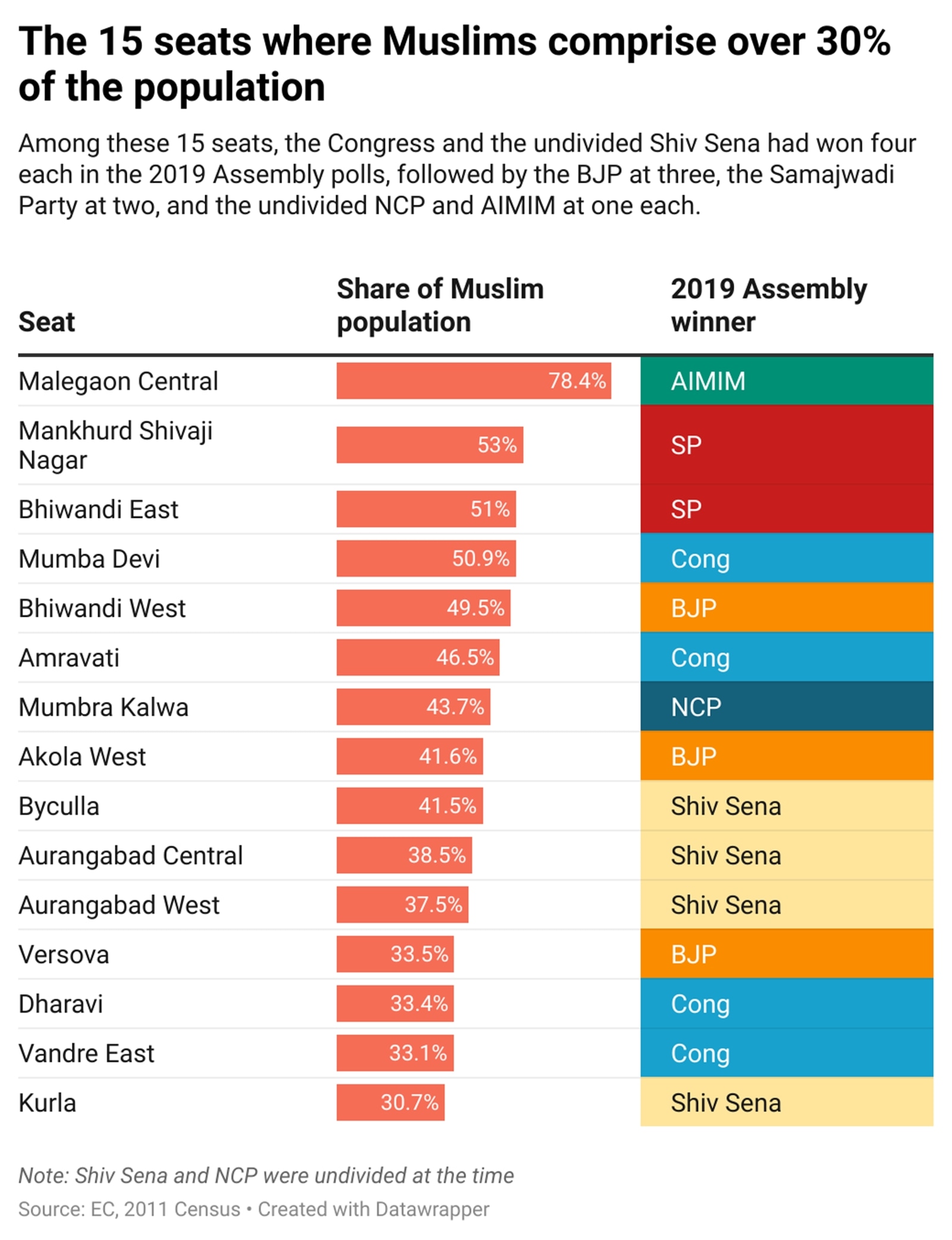 The 15 seats where Muslims comprise over 30% of the population
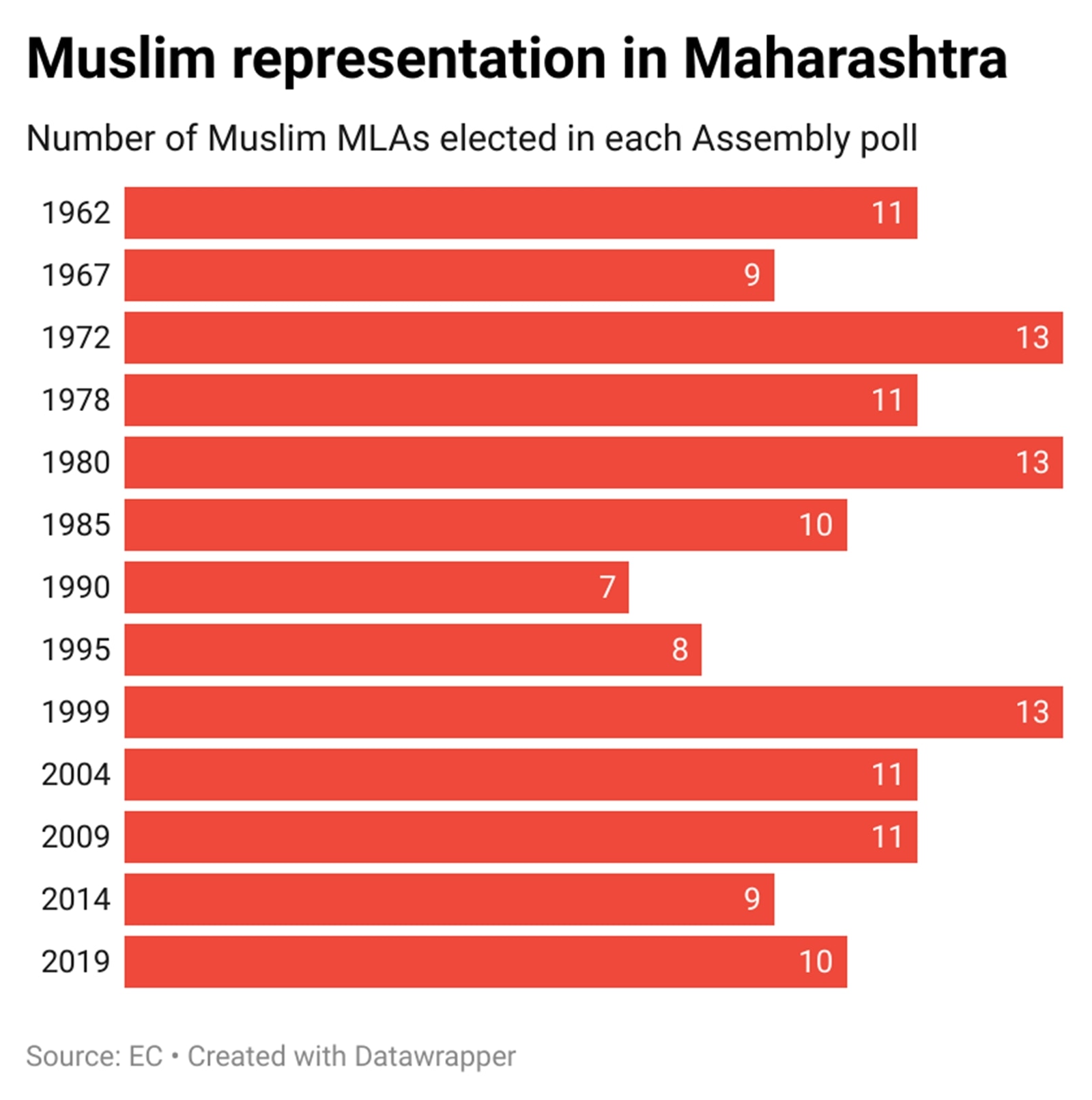 Historical presence of Muslim MLAs in Maharashtra