Stay updated with the latest - Click here to follow us on Instagram

Journalism of Courage
 4 min read


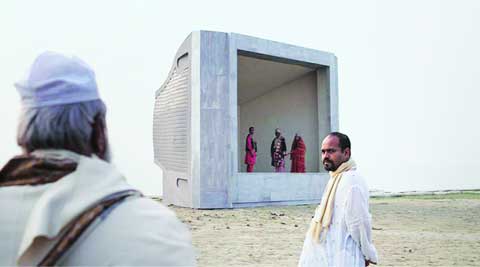 A still from ‘Television’
Ahead of his film’s Mumbai screening, Bangladeshi filmmaker Mostofa Sarwar Farooki talks about the indie film movement in his country and how television paved the way for it.
Filmmaker Mostofa Sarwar Farooki has had a bittersweet relationship with television. Barred from watching TV at home, his earliest memories of it are the tensions it created with his conservative parents at a time when the country was negotiating with globalisation. Years later, with the arrival of the new millennium, Bangladesh went through a cable TV boom, and television became an unlikely medium for the country’s young, aspiring independent filmmakers to find a new audience. Leading the way was Farooki.
“We keep hearing that TV is killing cinema everywhere. But in Bangladesh, it helped indie cinema reach out to the audience,” says the filmmaker. “Many of us had been dreaming of using the visual medium to tell stories, and at that time, the typical telefilm and television shows formula was the only route to take.” But these aspiring filmmakers started to exploit that opportunity in a more cinematic way and the increasing number of channels, starved of good content, lapped it up. “It clicked and we found ourselves a young audience following our work.”
This audience has since grown, helping the filmmakers graduate to the big screen that now also has space for Bangladesh’s independent, new cinema. Fittingly, one of its successes is Farooki’s film Television, a social satire that revolves around the small screen. The film that is Bangladesh’s entry for the recently-concluded 86th Academy Awards will be screened today at the Mumbai centre of Films Division of India (FDI).
A world typical of Farooki’s cinema, where the fantastical and real coexist, the film is set in a water-locked village in Bangladesh.
Convinced that television is evil, Amin, a local cleric and an authoritarian figure, wages war against the arrival of a TV set in the village. Populated with oddball characters, brimming with cultural quirks, Farooki uses humour to make scathing social statements on several subjects, including the concept of image-making as sinful according to Islamic pundits and the collision of the modern with the traditional.
Describing film-making as a “quest to know who I am and where I live”, Farooki has brought a fresh idiom to Bangladesh’s cinematic identity. “Our films have either been following the Bollywood format or aping Kolkata arthouse cinema. When we first started to tell our stories in early 2000, we decided to look inwards, picking tales from our reality and telling it with a Bangladeshi temperament,” says Farooki who leads an avant-garde filmmakers’ collective called Chabial.
The 40-year-old burst onto the feature film scene with Third Person Singular Number, which is credited to have set the ball rolling for the country’s alternative cinema. Variety described it as “a thoroughly modern, stylistically assured story combining an indie sensibility with sub continental elements”. Hollywood Reporter said “Mostofa Sarwar Farooki could be the next South-east Asian filmmaker to break out”.
Filmmaker Surabhi Sharma, one of the curators of FDI’s screening space for documentary and experimental cinema, considers Farooki’s work as “something that contours the mundane daily lives, reflecting upon the realities of India’s neighbouring countries”. Farooki’s latest, Ant Story, that premiered at Dubai International Film Festival in December last year is currently doing the festival rounds worldwide.
Although Bangladesh’s indie film scene is “encouraging”, with a young, new audience showing great appetite for such cinema, guaranteeing it wide releases, Bangladesh’s big city theatres create a profit sharing problem. “Some top theaters in Dhaka give the producer only a 15 per cent revenue share in the first week. It makes things difficult for indie filmmakers whose biggest market is Dhaka and other big cities,” says the director, whose cinematic influences include the works of Wong Kar Wai, Robert Bresson, Andrei Tarkovsky, Kim ki-Duk, Pedro Almodovar and Satyajit Ray among others.
sankhayan.ghosh@expressindia.com
Stay updated with the latest - Click here to follow us on Instagram