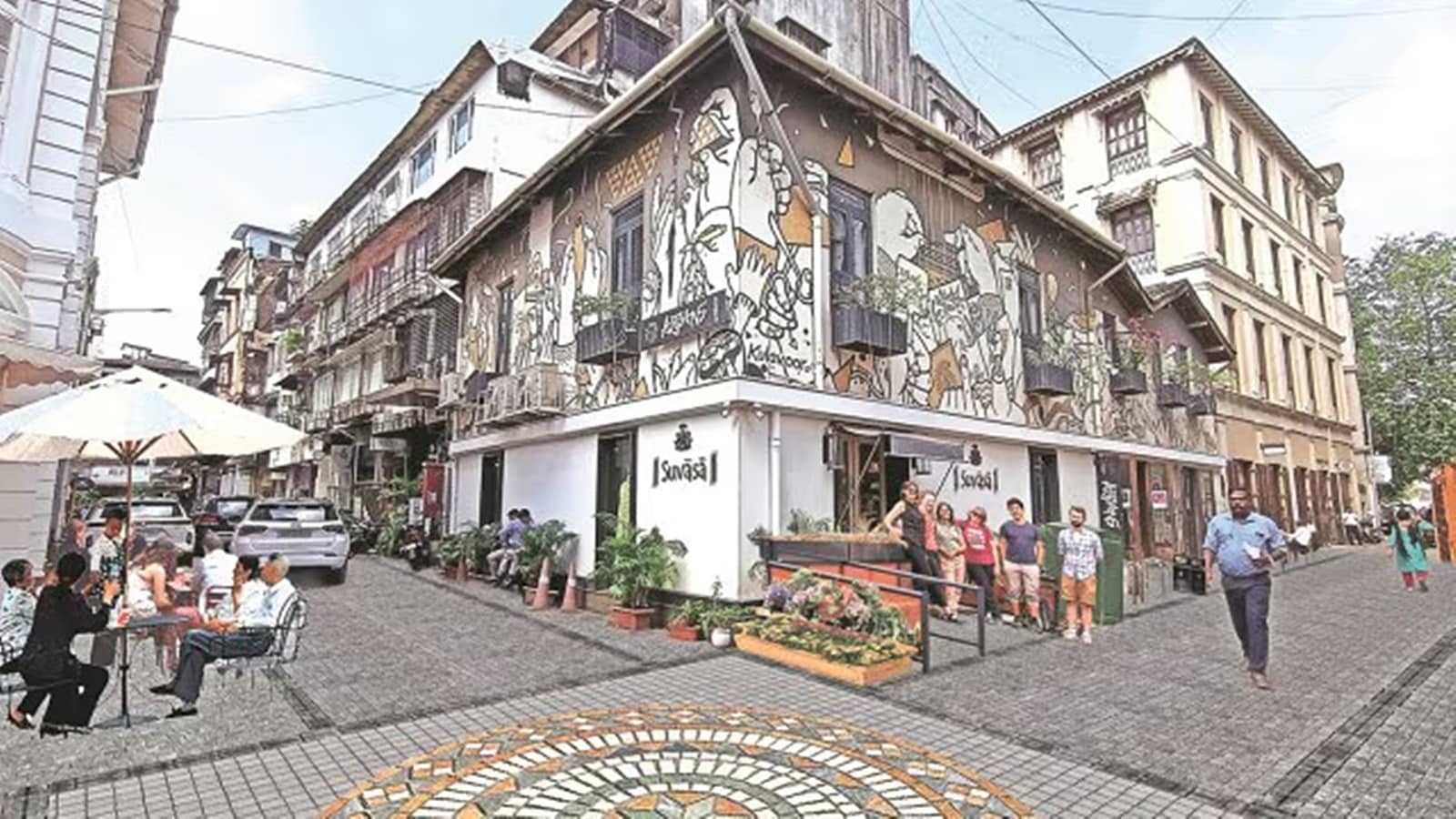
COME SEPTEMBER, the Brihanmumbai Municipal Corporation (BMC) is eyeing to make the internal streets at Kala Ghoda ‘pedestrian-only’, restricting vehicular movement, during the weekends. While the plan seeks to subsequently ‘pedestrianise’ the lanes and bar vehicles permanently, senior civic officials said the project will be implemented on a trial-basis during the weekends in a bid to gauge public response and familiarise visitors with the concept.
According to BMC officials, the civil work on the beautification plans is also slated to commence after the monsoon.

Home to popular eateries, shops, art galleries and iconic structures, including the Rhythm House, Kala Ghoda is a crucial art precinct in the city.
It gains the moniker of ‘Kala Ghoda’ from the granite ‘The Prince of Wales Equestrian’ statue, situated along the Mahatma Gandhi road, which once formed the beating heart of the lively area until it was relocated inside the Byculla zoo in 1965. Donated by Jewish businessman Sir Albert Sassoon to commemorate King Edward VII’s visit to Bombay in 1875, the statue had been designed by London-based sculptor Sir Joseph Edgar Boehm.
Earlier this year, the civic body had charted plans to beautify five internal roads in the art precinct and pave them with cobblestones in a bid to make the Kala Ghoda pathways “pedestrian-only”.
Starting from the Rhythm House, five internal streets, including Forbes Street, Rope Walk lane, Saibaba road, Rutherfield Street and B Bharucha road, have been earmarked for the project.
In what will make the swathes exclusive to walkers, vehicles will not be allowed to ply on these streets upon the execution of the project.
Story continues below this ad
Now, setting the ball rolling on the proposal, the internal streets of the art precinct are slated to become ‘pedestrian-only’ on Saturdays and Sundays, starting September 1.
“Initially, when we begin in September, the streets will be made ‘pedestrian only’ during the weekends. The idea is to understand the public reaction, see their response and understand the issues. Besides this, we also want to familiarise people with the concept before making the streets exclusive to pedestrians throughout the week. Currently, pedestrians can park their vehicles in the existing parking space and explore the area on Saturdays and Sundays,” an official associated with the project told The Indian Express.
Meanwhile, senior officials added that the civil work on the beautification project will commence from October, following the withdrawal of the monsoon.
“Earlier, the idea was to introduce the concept in July. However, the plan had to be postponed owing to the monsoon. Likewise, the beautification project had also been stalled owing to multiple reasons like elections, followed by the monsoon etc. Since no civil work is executed during the monsoon months, we will commence work in October,” the official said.
Story continues below this ad
Having already appointed Urban Design & Architecture Initiative (UDAI) as the urban designers for the project, the consultants have chalked plans to upgrade the existing internal roads with cobbled pathways, to make them more pedestrian friendly. Furthermore, the project also entails landscaping works as well as wall painting and illumination works in three pockets.
Senior officials from A ward confirmed that the contractor who will execute the designs has also been finalised.
At present, a major chunk of the existing streets are occupied by vehicles that belong to business owners and people working in and around the area. To address the issue, the civic body is developing plans for alternative parking spaces for the legally parked vehicles.
With the project enabling pedestrians to freely access and explore the heritage structures in the area, the civic body is aiming to develop the space as an art avenue where events are organised round the year, and not just during the Kala Ghoda art festival.
Story continues below this ad
For the record, Mumbai is not alien to the idea of a pedestrian-only Kala Ghoda.
It was in 2016 that the civic body had rolled out a similar project in the precinct on Sundays when the roads were closed for vehicular traffic from 9 am to 7 pm. During this period, 21 box spaces were rented out to artistes to showcase their talent. However, the plan fizzled out as it drew lukewarm response from the public.


 4 min read