4 min read
Stay updated with the latest - Click here to follow us on Instagram

Journalism of Courage



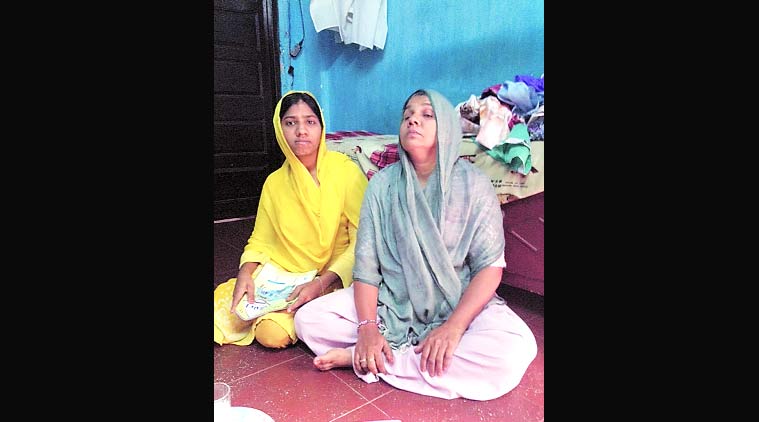 Savira Masjid Khan, a survivor still far from recovery. Express Photo
YEARS after 26/11 and seven unsuccessful operations later, Savira Masjid Khan (40) is still trying to reclaim her life. “Once I contested the zilla parishad election to help the needy, and look at me now. I can’t take a step without the help of others, but I am not broken. I can’t see my family suffer, but can’t do anything in the absence of finance. The compensation received from the government was all spent on my medication and travelling,” she told Kanchan Kanojia, who is working for 26/11 survivors and their families.
Kanojia is working on an initiative ‘Looking beyond’, in collaboration with the trust of Kia Scherr, an American survivor of the attacks. The project aims to address the recovery process, which, according to Kanojia, cannot be time-bound and will try to broaden the scope of intervention by not time-limiting the recovery intervention.
The initiative has been conceptualised by Kanojia, who was an intervention programme officer of the Tata Institute of Social Sciences (TISS), which had focused on helping 26/11 survivors. The programme got over last year.
“‘Looking beyond’ is a vision borne out of a steady and unchanging commitment of my work with the survivors of 26/11 for the last seven years, not just understanding their needs but justifying the relationship that was built over the years, which made me work with them even after the project ended. This project aims to create a platform where the survivors and all the stakeholders can share and network and realign for future work. It attempts to highlight the major impediments in the recovery process, besides stressing on the psychological hardships that the survivors and their families continue to undergo. ‘Looking beyond’ has collaborated with Scherr’s One Life Alliance Trust to extend the continuum of support to the survivors,” she said.
Scherr had lost her husband and daughter in the attack.
According to the proposed activities, the project is looking at providing social support and mental health assessments to 137 survivors, follow-up sessions for 32 distressed survivors, health assessments for 14, skills training to 29 families, and support for enterprise to 32 families. Further, it proposes to conduct psycho-social group sessions for eight groups, which includes trauma relief, wives of the deceased, medical review, follow-up of enterprise cases, self-help groups, spirituality groups, groups for disabled and experience sharing.
Letters have been sent to several corporate bodies and representatives from the civil society, seeking funds to assist the survivors and their unique needs and concerns. The project has received an initial funding from a Califormia-based resident.
“Shyam Sunder Choudhary (41) was injured in the taxi blast in Vile Parle. While he was suffering from chronic health conditions prior to 26/11, the injuries sustained in the attack escalated and worsened his already existing weak medical condition. He lost his job, leaving him with no financial support to continue his medical treatment. The wife of the survivor too feels helpless, as she cannot work with the worsening health condition. He cannot talk or move on his own. She often cries and once even said ‘it was better if he had died on the day’. These are the kind of mental and physical trauma that survivors and their families are still undergoing. So stakeholders, including the state government, need to review their intervention policies. A one-time financial compensation is not the solution,” said Kanojia.
Stay updated with the latest - Click here to follow us on Instagram