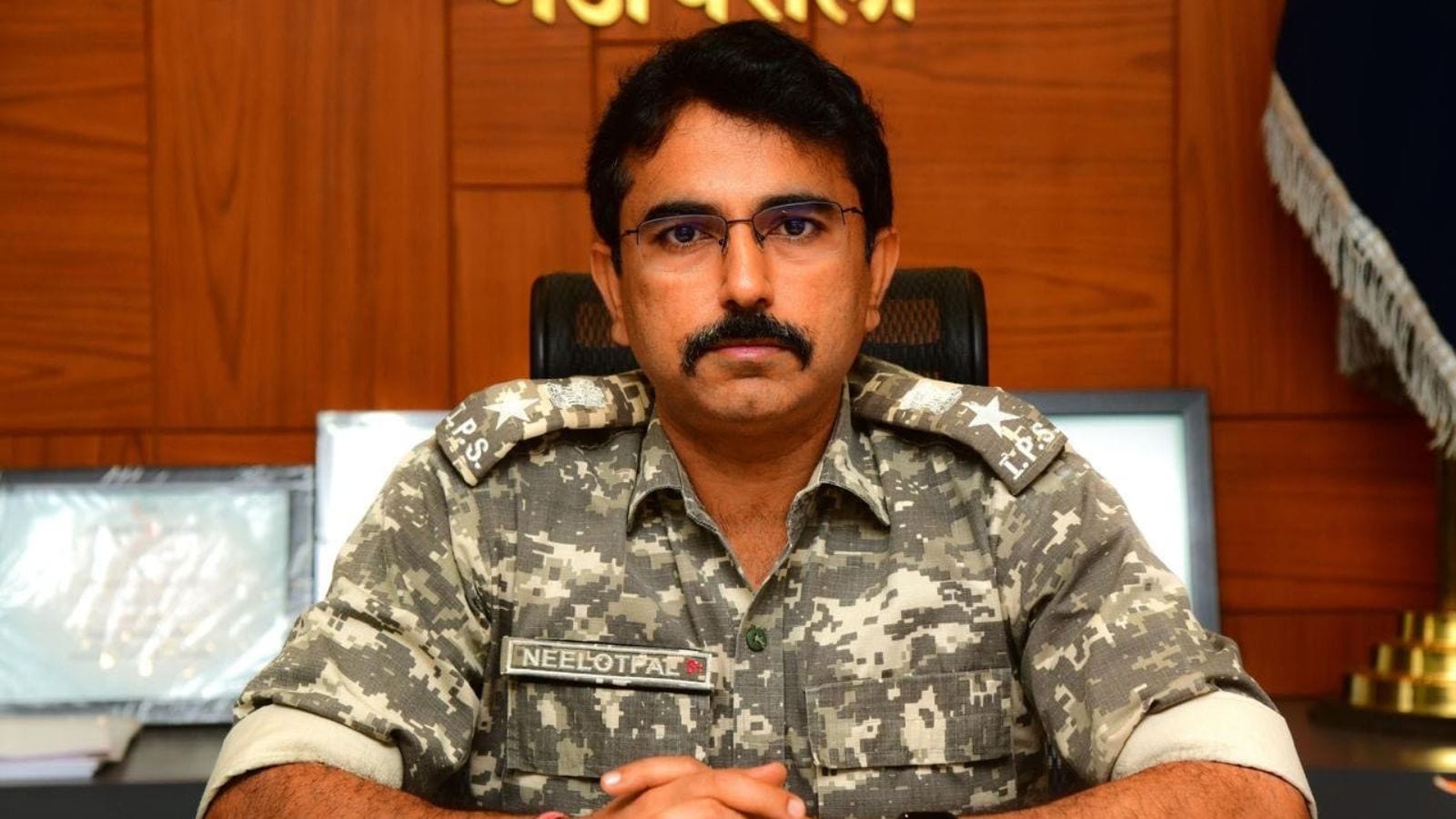
Gadchiroli district, which was formed on August 26, 1982, is known as the ‘lung of Maharashtra’ due to over 70 per cent of its area being under forest cover. The jungles also allowed Maoist groups to operate in the district for decades. But with Maoism in the jungles declining significantly in recent years, Neelotpal, Superintendent of Police (SP), Gadchiroli, told Ankita Deshkar about surrendered cadres, new policing challenges, implementation of government schemes, transformation of the district and the way forward. Excerpts from the interview:

Neelotpal: We are in a comparatively dominating position as far as Maoism is considered. I personally found that it was the multi-pronged approach that helped in the decline of Maoism in the district. First was the anti-Maoist operations, and second was the Civic Action program, which created a sense of trust between the police and the people. Third was the effective utilisation of our surrender policy. These three aspects have led to the massive decline of Maoism in Gadchiroli.
As of January 1, 2024, Gadchiroli had around 100 Maoist cadres on record. Today, we are left with barely 10 whose whereabouts are not traceable in the district. Mostly, they are confined to the Narayanpur border. We appeal to them to surrender; if they don’t, they will be neutralised as part of anti-Maoist operations. In the last three years, the Gadchiroli police have neutralised (killed in encounters) 43 hardcore Maoists.
Q. How do you compare Gadchiroli now with before?
Neelotpal: It looks like any normal city, I would say even better than several cities. In the district, earlier people used to fear travelling at night; they are now not afraid even to move during the night in deep areas of Gadchiroli. That palpable change which you see, that impression of Gadchiroli has changed, and the sense of security among common people has definitely improved. Wide roads, round-the-clock electricity, mobile connectivity, there is everything in Gadchiroli. Once among the six most Maoist-affected districts, Gadchiroli has now moved out of that category after reclassification by the Centre.
Q. How is the security situation in Gadchiroli?
Neelotpal: When I joined, there was around 3,000 square kilometres of security vacuum, which means this much area in deep parts of Gadchiroli had no proper police or security presence. These areas were easily used by Maoists for travelling, setting up camps and training. In the last 2.5 to 3 years, the Gadchiroli police have opened eight new police camps, starting in January 2023. The latest camp was opened in Abujhmad, a very remote, hilly and forested region. The other camps are located around its foothills. Even now, about 700 square kilometres of area still lack a security presence. More Forward Operating Bases (FoBs) are planned there in the coming months. These camps are being opened to keep these areas safe forever and make sure Maoism can never be revived in future.
Q. How do civic action programs by the police help people of Gadchiroli?
Story continues below this ad
Neelotpal: Civic action programs have been an operational game changer for the police in terms of winning the hearts and minds of tribal populations. These programs counter the false propaganda of the Maoists that the government did not care for tribals, exploiting their isolation in remote areas. Establishing police camps in the remote areas, these act as service delivery centres.
The Gadchiroli police launched ‘Police Dadalora Khidki’ in 2021, meaning a window of the police, which helps deliver all Central and state government schemes to the tribal population. Officers help fill forms for schemes and submit them to the tehsil office. So far, around 11.7 lakh beneficiaries have been assisted in the last four years. The Gadchiroli police also provide employment and self-employment training, coach youth for government exams, and run the ‘One Village, One Library’ initiative, benefiting over 8,000 tribal students. Over 205 of these 8,000 tribal students have been selected for government jobs so far. This sustained outreach has helped win public trust and led to zero Maoist recruitment from Gadchiroli in the last five years.
Q. Why do you think Maoists choose to surrender in Maharashtra the most?
Neelotpal: The state has a very attractive surrender-cum-rehabilitation policy. The surrendered cadres have seen that CM Devendra Fadnavis himself has been forthcoming; this has strengthened their confidence. The process gained momentum on June 22, 2024, with the surrender of Giridhar Tumreti and his wife, Sangeeta, and since then, over 126 Maoists have surrendered within a year. They have faith that if they surrender in Maharashtra, they will be effectively rehabilitated and brought into the mainstream. While other states also have similar policies, the trust built by the Maharashtra Police has been a key factor in drawing cadres here.
Story continues below this ad
Q. What benefits do surrendered cadres get under the rehabilitation policy?
Neelotpal: Under the policy, surrendered cadres are provided land, houses under the Pradhan Mantri Awas Yojana, and financial assistance. Around 70 of them are now employed at the Lloyds plant in Khonsari.
For those without basic education, literacy camps are being conducted in coordination with the Zilla Parishad to help them clear Class 8. This qualification is essential for enrolling them under the Maharashtra State Skill Development Corporation for further skilling. This rehabilitation effort is being implemented under Project Sanjeevani, run by the Gadchiroli police to ensure their long-term reintegration into society.
Q. How well do surrendered Maoists adapt to normal social life in Gadchiroli?
Story continues below this ad
Neelotpal: One sentiment is common among all the surrendered cadres: ‘that the movement has ended, it has lost public support, and without public support, no movement can sustain’. The common thought among surrendered cadres is that democracy is the only option.
They have accepted the change and are adjusting to normal life quite quickly. Most of them are happy with their new lives. For example, a couple was recently blessed with a baby boy. They are now looking forward to a family life they never had in the jungles.
The surrendered cadres live in a separate colony but have been warmly accepted by the local community, too. Initial fears have faded, and there have been no complaints of ill-treatment from either the cadres or the public.
Q. What are the new policing priorities and challenges that the Gadchiroli police face today?
Story continues below this ad
Neelotpal: The Gadchiroli police will now gradually shift from an anti-Maoist focus to routine law-and-order policing. With rising industrialisation, challenges like theft, petty crimes, traffic management and accidents will also increase. Night patrolling has already begun in plain areas to prevent house break-ins and thefts, something that the Gadchiroli police did not do earlier.
Q. How technologically strong is the Gadchiroli police?
Neelotpal: The Gadchiroli police rely heavily on the latest technology. The entire district is mapped using the Geographic Information System (GIS), and all operations are planned based on ground conditions. We use advanced wireless communication even deep inside Abujhmad during anti-Maoist operations. Satellite trackers help us monitor the movement of our forces at all times.
We also have a fleet of about 160 drones, including 14 high-end switch drones deployed along the Chhattisgarh border. These drones act as our ‘eyes in the sky’, helping us track activities inside the forests. We have been steadily upgrading to evolving technology.
Q. How were the elections in Gadchiroli this time?
Neelotpal: The elections were largely peaceful and normal. During Zilla Parishad elections in deep areas, we still have to take extra precautions due to the Maoist presence. But during the recent Nagar Parishad elections, for around 105 polling booths, we deployed over 1,000 personnel on the ground to ensure complete security. Another clear sign of returning normalcy is that polling hours in urban areas, which earlier ended at 3 pm, have now been extended up to 5.30 pm.
Story continues below this ad
Q. The Gadchiroli police have played a key role in implementing development works.
Neelotpal: Since Gadchiroli is a Maoist-affected district, any request from the police is given top priority by all departments. We have strong inter-departmental coordination, and most issues are resolved at the district level itself without needing state government intervention.
We regularly identify local problems through village meetings (Gram Bhet) or public meetings (Jan Jagran Melawas) and prepare monthly lists of issues, and take them up with the departments concerned. We have been able to resolve many big and small yet important issues that directly affect people’s daily lives, and this has been possible because of our strong coordination with various departments, including starting the bus facility in several remote areas.


 8 min read