


Stay updated with the latest - Click here to follow us on Instagram
Tags:


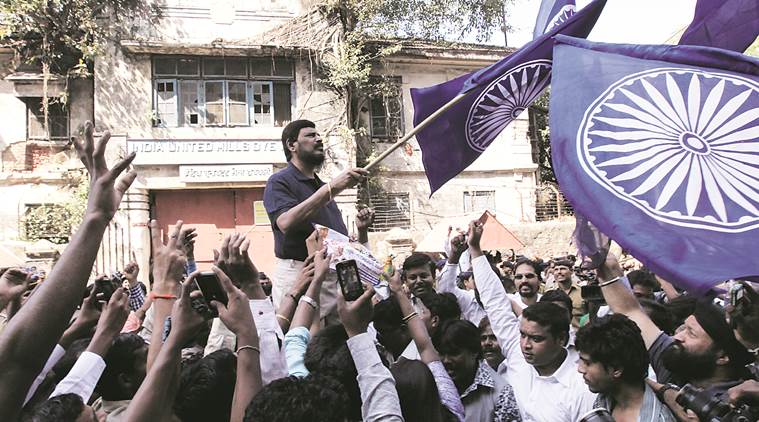
REPUBLICAN PARTY of India (A) chief Ramdas Athawale believes Dalit voter holds the key to victory for the Bharatiya Janata Party in Tuesday’s Brihanmumbai Municipal Corporation elections, with Dalit voters capable of swinging nearly 50 of Mumbai’s 227 electoral wards. But from Ramabai Nagar in Ghatkopar to Mankhurd and Wadala, the pockets with large a Dalit population appear deeply fractured in the absence of major driving poll-time issues for the communities and with the large number of RPI factions also in the fray.
Watch what else is in the news


He says the start of demolition work inside the Indu Mill complex where a grand Ambedkar memorial is to come up is mere tokenism ahead of the polls as legal procedures for the project are yet to be completed. “With so many Republican factions in the fray, the community is a divided lot. It has therefore put the issues of the community on the back foot,” he said.
Expressing similar views, Subodh More, an expert on the Dalit movement and senior activist of the Communist Party of India, says there are no driving issues for the community to vote en block for any particular party. “Also, there is no Amberkarite spirit this time in the polls. There are no bastions or strongholds of the Dalit organisations or parties in the city, though they continue to be a decisive factor in many areas,” he says.
Some of the areas dominated by the Dalit community include Ramabai Ambedkar Nagar in Ghatkopar, Chembur, Mankhurd, Naigaon in Dadar, Worli, and Wadala. “People from the Dalit community are likely to vote for an individual candidate based on his influence in the area,” explains More. “The campaigning is also not aggressive among the Dalit parties. The Ambedkar Bhavan and Indu Mill issues will not have impact on votes.”
While the RPI(A) has a substantial base, it faces a tough contest from the Bharatiya Republican Party Bahujan Mahasangh led by Prakash Ambedkar. Some other smaller Dalit organisations and Left parties have also forged an alliance with the Bahaman Mahasangh for the polls. Prakash Ambedkar, who has been critical of the BJP government, launched a campaign in the city last year after a portion of the Ambedkar Bhavan in Dadar, a centre of the Dalit movement, was demolished. The rally had received tremendous support from the community.
J V Pawar of the Bahaman Mahasangh says the party has fielded 59 candidates in Mumbai. “Babasaheb’s followers will not vote for right wing parties like the BJP and the Shiv Sena. While it is using the name and photos of Babasaheb, the thoughts are those of RSS ideologues. It can’t go that way,” he says.
According to Dalit leader Arjun Dangle of the Republican Janshakti, there is resentment against the BJP and Chief Minister Devendra Fadnavis over the demolition of Ambedkar Bhavan. “The demolition was carried out at the behest of a bureaucrat and a builder to redevelop it. It has exposed the government,” he says. Dangle has allied with the Sena, which raised the Ambedkar Bhaavan issue in the BMC and on the floor of the assembly.
Athawale, however, says the Ambedkar memorial and fast-tracking of the redevelopment of slums are major issues that will win the BJP-RPI combine support of the community. “Besides, Prime Minister Narendra Modi’s decision of demonetisation is also in tune with Babasaheb’s thoughts of changing the currency after ten years. Subsequently, Modi ji has launched BHIM app, which has also created positive environment for the BJP and the RPI. We are telling people these things,” he says.
But not everything is rosy in this alliance too. One RPI candidate was expelled from the party in Mumbai and more than 15 in the rest of Maharashtra for contesting on the BJP symbol. “We have an alliance with the BJP but I haven’t merged my party with the BJP,” says Athawale, expressing displeasure with the BJP for distributing its symbols to RPI workers.
Summing up the confusion in the community, Raja Dhale, noted Dalit thinker and litterateur, says the new generation in Dalit community has become opportunistic. “There were factions in the past as well but they used to come together for Babasaheb’s ideology. Now, the current generation, which does not know much of Babasheb’s ideology, is trying to find space in politics and are aligning themselves with any party just to get a share in power. Hence, the community is divided and the issues will not drive them to come together,” he says.
This first appeared in print under the headline Decisive vote, Undecided voters: The Dalit factor


Stay updated with the latest - Click here to follow us on Instagram


