There’s nothing out of the ordinary about a playground catering to children indulging in games, those out on a stroll or to someone on a recent health kick, struggling to strike a Yoga pose. In September this year, when local residents flocked the playground at Bandra’s Patwardhan Park to chase footballs and unwind with some Zumba, it became the talk of the town.
Amid drummers belting out tunes, politicians from across party lines including BJP MLA Ashish Shelar, Congress MP Varsha Gaikwad as well as former corporator Asif Zakaria, and Sena (UBT) MP Priyanka Chaturvedi made a beeline to this seemingly simple gathering, which was also joined by Mumbai’s municipal commissioner, Bhushan Gagrani.

Unlike a typical day in the garden, residents and activists on September 22 gathered to celebrate the Brihanmumbai Municipal Corporation’s (BMC) recent announcement to scrap the plans for an underground parking lot beneath the Patwardhan Park. The move came after a year in which residents fought a long-drawn battle, amid concerns of losing a rich green and open space.
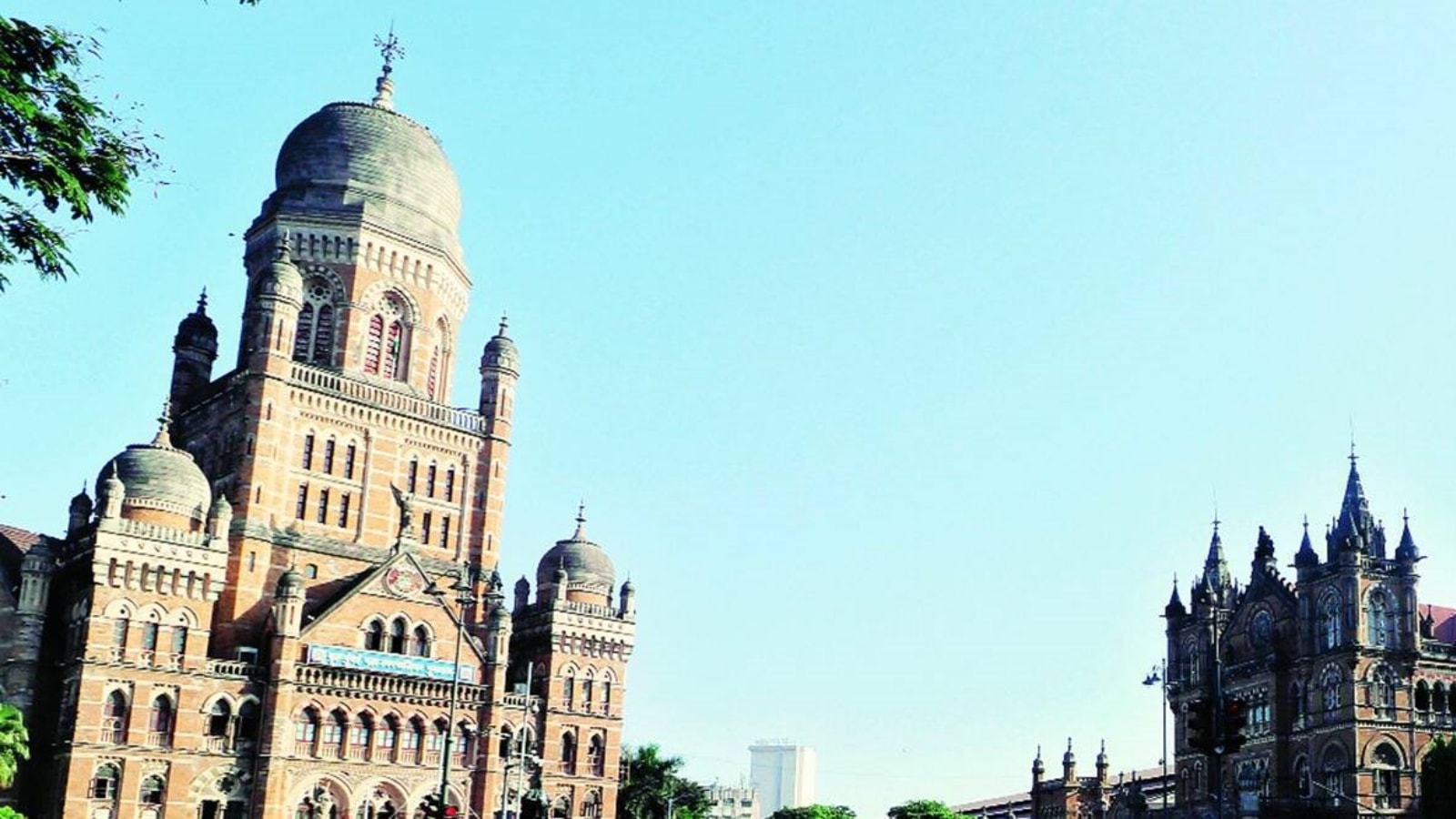
However, this is not the sole civic proposal which has succumbed to public outcry this year. In the past six months alone, civic campaigns have coaxed the BMC to scrap projects worth over Rs 3,100 crore in the city. The cancellation of plans has come despite the fact that the municipal house has been bereft of elected corporators for the past 2.5 years.
Elevated road over Khar subway
To decongest traffic, the BMC, early this year, proposed to construct an elevated east-west flyover over Khar Subway at a cost of Rs 2,400 crore. However, the project designs instantly drew flak from residents. “While we are not against the project, our main opposition stemmed from the flawed design of the proposal. The proposed design was slated to pass through narrow lanes comprising residential buildings along with hospitals and schools, posing potential hazards. The flyover was also passing through steep curves, creating a bottleneck for traffic,” said Trivankumar Karnani, founder of Mumbai North Central District Forum.
Soon after, citizen forums like MNCDF, Santacruz East Residents’ Association and Khar Residents’ Association convened an array of meetings including one at the Khar library. As the discussions gathered steam, nearly 1,000 residents had joined in the meetings over time to air their concerns over the design.
“After we had taken consent of other residents, we took up our concerns with the senior civic officials as well as our MLA, Ashish Shelar,” Karnani added. Post his meeting with the residents’ delegation, Bandra West MLA Shelar raised their concerns with the civic chief and finally on April 27, he took to social media to announce that the project will be cancelled owing to the numerous design flaws.
Fuelled by this success, residents are now gunning for a new blueprint to seek solutions for their traffic woes at Khar subway. Recently, some locals convened a meeting with Bandra East MLA Zeeshan Siddique to discuss a plan which would not hamper residents.
Reconstructing Malabar Hill reservoir
Story continues below this ad
No sooner had the BMC project to reconstruct the Malabar Hill Water Reservoir — located underneath the surface of Hanging Garden — come to light in September 2023, an outrage sparked across the city.
Citing a structural audit which showed that the 137-year-old reservoir was weak, BMC was batting to reconstruct the structure and augment its capacity. Pegged at a cost of Rs 698 crore, the plan was expected to unfold over seven years in two phases, which involved construction of a new reservoir on the western flank before rebuilding the existing structure.
The plan was slated to affect 389 trees of which 189 trees were set to be axed in the bio-diverse belt, also rendering the Hanging Gardens inaccessible for next 7 years. Dismayed over the significant green cover loss, residents banded together through social media groups and soon wrote to the civic authorities, expressing their concerns. Later, the BMC authorities convened a meeting with locals where guardian minister Mangal Prabhat Lodha instructed officials to rethink the plan.
In what set off a chain of events, the expert committee submitted a conflicting audit report over the health of the reservoir, prompting the BMC to then rope in IIT Roorkee to determine the final fate of the structure. IIT Roorkee, following inspection — upheld that while there was no need to demolish the current structure, an alternative 52 MLD tank would be needed to ensure no water disruption.
After a 10-month long battle, guardian minister Lodha in June this year announced that the reservoir will stay, undergoing only phase-wise repair.
Story continues below this ad
Following this big success, the citizens are now in talks with the BMC, conveying the possibility that even an alternative tank — which may cost Rs 100 crore at least — may not be required.
Underground parking at Patwardhan Park
In March 2023, the BMC floated a Rs 300-crore tender to develop under-ground parking lots across three city pockets. One among them was a plan to establish a robotic parking lot beneath the playground at the Raosaheb Patwardhan Park to ostensibly solve parking hassles along the busy Linking Road.
While the idea for a parking lot at the playground park had been first mooted in 2018, this was a fresh Rs 74 crore tender to accommodate 228 vehicles, floated last year.
Sprawling across 15,000 square metre, Patwardhan Park is among the oldest open spaces in Bandra and houses over 109 full-grown trees. Amid concerns over the likely loss of green cover and a key open lot in the space-starved city, the plans drew a lot of flak from residents.
In the days that followed, citizens filed objections, identified alternative parking spots as well as thronged the civic pre-bid meeting to express their disapproval.
Story continues below this ad
Soon after, environmental activists and architects also filed a PIL in Bombay High Court seeking a direction to permanently restrain BMC from carrying out work related to excavation or removal of mud for the construction of the underground lot at the garden. After long-drawn protests, the BMC finally caved in and officially scrapped the parking lot tender on September 11, this year.
Relocating bio-medical waste plant in Govandi
Unlike other projects where the wheels of campaigning had set into motion even before the project could take off, Mumbai’s sole bio-waste treatment facility in Govandi had come up in 2009, through a process which local residents say involved no public consultation and environmental clearances.
Maintained by the BMC through a private firm–SMS Envoclean Private Limited, the bio medical plant is equipped with a chimney, with locals alleging that the smoke from the facility is one of the primary contributors behind pollution woes in the area.
It was during the Covid outbreak in 2020 that local resident Faiyaz Alam Shaikh told Express — when the influx of medical waste had increased — that Deonar locals started noticing thick black smoke from the incinerator, which would settle on their vehicles. In October 2022, a plea was filed in the HC by Govandi New Sangam Welfare Society, seeking immediate closure of the facility.
Story continues below this ad
After a long battle, the residents finally heaved a sigh of relief after the HC in September 2023 directed the BMC to relocate the plant to MIDC Patalganga within two years. But with the directives yielding no result so far, the residents recently also moved the National Green Tribunal urging the green body’s immediate intervention in relocation of the plant away from Govandi. According to the firm, the delay in shifting is owing to the pending allotment of a new lot by MIDC.
Work on Gokhale bridge fast-tracked
While infamous for its misalignment with the Barfiwala flyover, the first phase opening of Andheri’s Gokhale bridge in February 2024 — within 13 months of work order issuance — also became a case study on how civic involvement can aid in oiling the pace of infrastructural works.
Immediately after the BMC announced its decision to shut the Gokhale bridge in November 2022, citizens — worried about the traffic woes ahead— set in action. Soon, a WhatsApp group named ‘Gokhale Bridge — ASAP’ was created which garnered over hundreds of residents in no time while forums like Lokhandwala Oshiwara Citizens Association (LOCA) floated online petitions.
After a first public meeting called by local MLA Ameet Satam in December 2022, locals started meeting top BMC officials to track the bridge development on a regular basis. Every Sunday, they would also head to the work site to inspect the progress and would also keep other residents abreast of the latest developments.
Story continues below this ad
Dhaval Shah of LOCA said, “As the frustration grew after the fifth and sixth deadline delay, more people joined in the campaign to fast-track the work. We have spent a lot of time and energy to ensure that the BMC was on their toes. In fact, for most of our offline meetings, people would volunteer with arrangements for a hall or chairs, at their own cost. This pressure largely ensured that the work completed faster than other projects, despite the delays.”
Their vigilance has sustained even after the first phase opened and now, Andheri locals have trained their eyes on ensuring that the second phase opens smoothly too.
Lessons for the future
While the city has a rich history of civic participation dating back over a century, citizens’ movements, experts allude, have reduced considerably over the past couple of decades—barring perhaps some exceptions like the successful “Save Aarey” movement, which brought thousands to the streets.
Zoru Bathena, activist who has been at the core of several citizen-led campaigns in recent years, said that while the social media culture may aid in giving mom-entum to a campaign, it does not necessarily translate on ground. “Not every movement will get a lot of attention. While people have always been aware, in recent times, they have become more vocal, not only because of WhatsApp culture, but also because the government proposals are becoming blatantly wrong,” said Bathena.
Story continues below this ad
For experts like Milind Mhaske, CEO of Praja Foundation, it is essential to look beyond the 73th and 74th amendments to decentralise and the local body should use new mediums to solicit views of citizens on a plan, even before it is floated. Mhaske added, “Furthermore, the BMC can also have ward-level units where they can keep a demo of a proposed infrastructure plan, where citizens can come and understand the project. They can also ask their doubts and look at the proposal from the conservation perspective, even before the plan is concretised.”
Speaking to The Indian Express, Abhijit Bangar, additional municipal commissioner (projects) said the fact that people are approaching the civic body with their concerns–despite the absence of elected representatives–is a very positive development. “In a modern city, people’s participation is very necessary right from the planning to the development stage. So whenever people bring forth their opinions regarding a plan, BMC takes stock of it, verifies it and also cancels it, if the concerns are valid.”


 11 min read