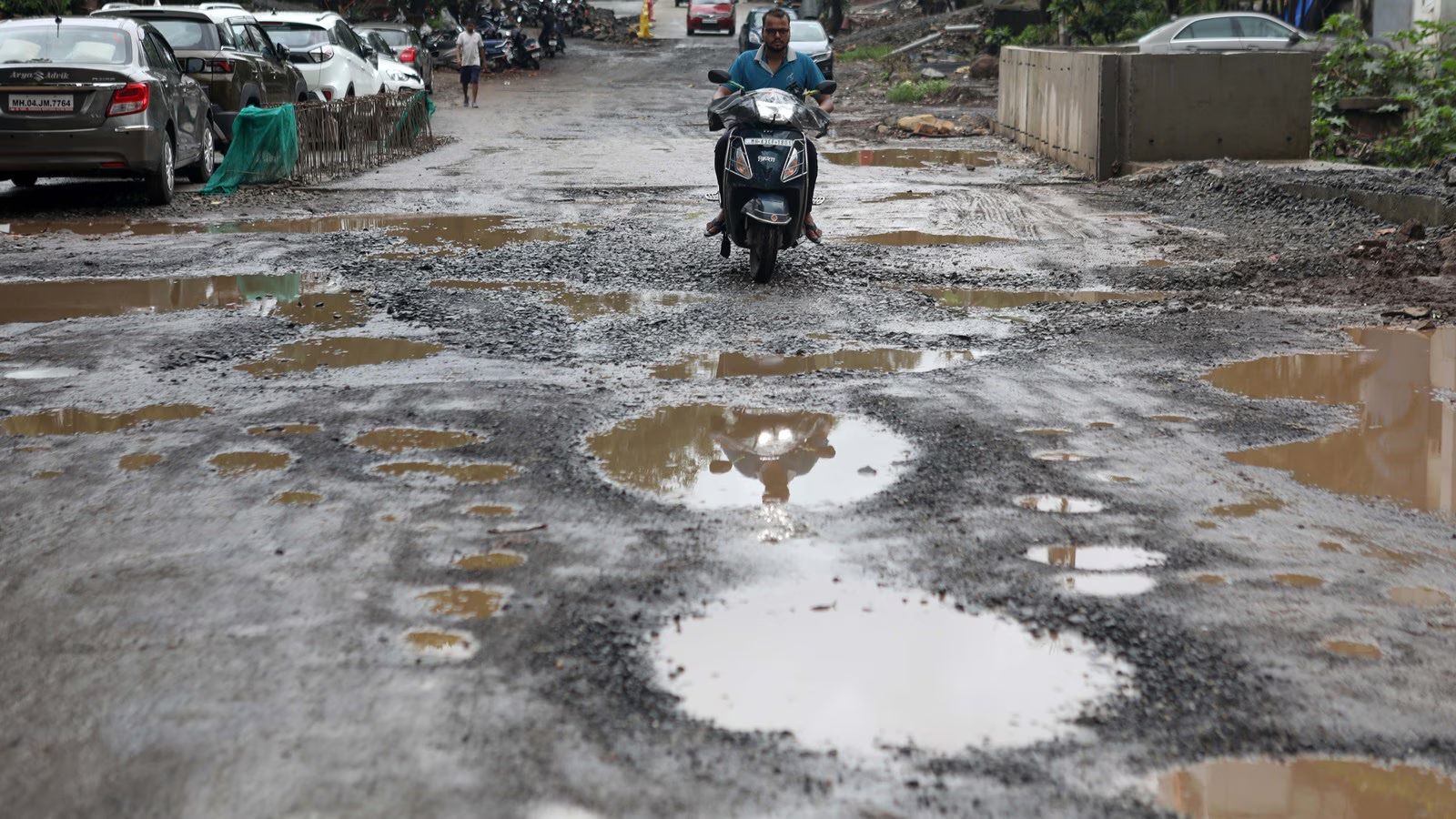
Fifteen years after a BMC engineer had developed the Ultra-Thin White Topping (UTWT) methodology of thin layer road concretisation, the Brihanmumbai Municipal Corporation (BMC) Wednesday said that it will now increasingly adopt this method for road concretisation works in the city.
The civic body aims to save cost and time by using this technology, which was adopted by various civic bodies across the country and also by the central government.

Till date, BMC utilised this methodology for road concretisation only for two roads, soon after the process was developed. They, however, stopped using after that.
Civic sources said that approximately 150-200 km of roads that are less than 12 meters wide could be covered under UTWT which will cost BMC around Rs 300 – Rs 600 crore.
He said that the civic body will save nearly Rs 3,000 crore on concretisation of this length of road through this new technology as the traditional concretisation method would have cost the civic body anywhere between Rs 3,500 – 4,000 crore.
The UTWT is a technology under which a thin layer of concrete is laid over the top layer of asphalt roads, following which, it is left to cure. The concrete layer is usually 60 mm-150 mm thick, and the curing period takes a maximum of seven days, following which the road is opened for vehicular movement.
Meanwhile, the traditional concretising method involves excavation of roads in their entirety, after which concrete blocks are laid on them and then left for curing.
Story continues below this ad
The method of concretising a single road by using the conventional method takes 30-45 days starting from excavation to finishing the work, while the process of UTWT gets completed within seven to ten days since it does not involve excavation of roads.
Abhijit Bangar, Additional Municipal Commissioner (Projects), said, “We are planning to implement this methodology on existing asphalt roads of Mumbai that are not yet concretised. Initially, we will start with roads that are less than 12 metres wide, which comparatively record lesser traffic volume. Later, we will augment the implementation of this module on wider roads.”
At present, the BMC is concretising 700 km of roads— the mega road concretisation project was announced by the then chief minister Eknath Shinde in 2022 to be done in two phases — through the regular method at an estimated cost of Rs 17,000 crore, making the per kilometre cost of road concretisation approximately Rs 24 crore.
Bangar said that implementing UTWT for every 1 km of road would cost between Rs 1.7 crore and Rs 2 crore, excluding the GST.
Story continues below this ad
“This is a tried and tested methodology which has given good results in the past. Many civic bodies have implemented it, and we are confident about its benefits. One of the primary reasons why we are opting for this methodology is that it takes less time. The road gets ready for traffic movement within just seven days, and it doesn’t require any excavation on the surface,” Bangar said.
The UTWT method was developed by BMC road engineer, Vishal Thombare, in 2010, when he was pursuing his PhD from the Indian Institute of Technology Bombay.
At present, Thombare is an executive engineer in the civic body’s road and traffic department. The UTWT method has been adopted by the Thane Municipal Corporation as well as the Nagpur Municipal Corporation.
In 2022, Thombare presented the methodology to the National Rural Infrastructure Development Agency (NRIDA) to make durable roads in Bihar and Tripura under the Pradhan Mantri Gram Sadak Yojana (PMGSY).
Story continues below this ad
Thombare told The Indian Express that the technology was not implemented in Mumbai owing to certain limitations.
“The primary constraint is of utility channels like gas lines, internet cables and telephone wires that run below the road surfaces. Even if we had implemented UTWT earlier, then digging of roads would have been required for laying and maintenance of new and existing utilities, and frequent digging of roads would nullify the entire objective of applying this methodology. Now, we have created dedicated ducts for utilities on the side strip of roads for which digging of the main carriageway of the road wouldn’t be required,” Thombare said.
He also said that in Mumbai, UTWT was implemented on a select few minor roads in the Fort and Mulund areas on a pilot basis. He said that to date, these roads do not have potholes. He also said that under this methodology, the minimum lifespan of a road stands at 25 years.
“The UTWT was designed by studying the concrete behaviour and how concrete behaves under certain temperature changes. We reduce the cement quantity by recycling products like micro silica. This also leads to a decline in carbon emissions and in the future may also give us the benefit of earning carbon credit,” said Thombare.


 5 min read