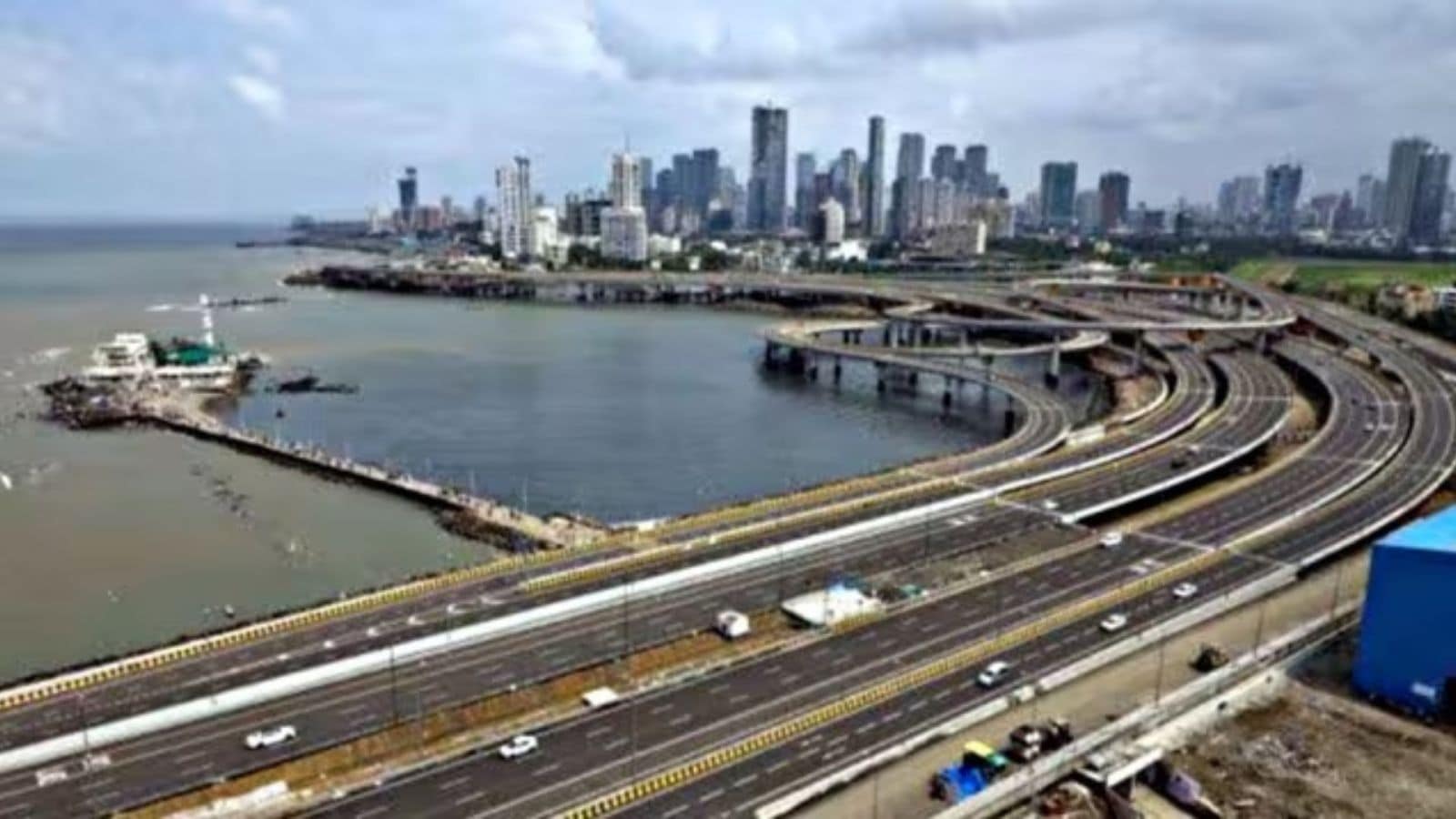
The Brihanmumbai Municipal Corporation’s (BMC’s) decision to demolish a structurally sound flyover in Mumbai’s western suburbs has sparked concerns among citizens. The 450m-long MTNL flyover at Goregaon, an extended arm of the Veer Savarkar flyover, was only opened for vehicular movement seven years ago. It is now set to be demolished to make way for the second phase of the Mumbai Coastal Road Project, which will connect Versova with the satellite city of Bhayander.

The Veer Savarkar flyover has been operational since the 1990s. As Goregaon transformed into a commercial hub with several multinational companies setting up base there, it led to a population increase in this part of the city, exacerbating the traffic situation. To decongest the area, the civic body mooted a proposal to construct the MTNL flyover.
The MTNL flyover extends towards the western side from the Veer Savarkar flyover that passes over the railway tracks and connects Goregaon East with West. The project was commissioned in 2014, and the flyover became operational in 2018.
Built at a cost of Rs 27 crore, the flyover greatly decongested the Goregaon area. Travel time between Radisson near the Western Express Highway (WEH) and Rustomjee Ozone residential complex, which used to take 45 minutes, now takes less than seven minutes after the flyover became operational.
Why does the BMC say demolishing the flyover is important?
The second phase of the Mumbai Coastal Road Project is a 25 km-long corridor being built at a cost of Rs 20,000 crore. Civic officials say that the position of the MTNL bridge is in alignment with a proposed connector that will facilitate east-west traffic between the coastal road as well as the Goregaon Mulund Link Road (GMLR).
The proposal for a coastal road was originally mooted in 1962. Civic officials said that this road was originally planned as a linear north-south corridor; however, during a feasibility study in 2021-22, it was decided that the road would provide east-west connectivity as well as facilitate seamless traffic between GMLR and the coastal road.
Story continues below this ad
“The coastal road is being planned to not only cater to the current traffic strength but also to meet the increasing vehicular density of the future. If east-west connectivity is not provided, the importance of the overall project will be undermined as motorists will again have to climb down from the corridor, then take the minor road before switching to GMLR. This will contribute to vehicular congestion in the suburbs,” a BMC official said.
According to civic officials, the MTNL bridge is not a long-term solution to decongest traffic because if a wider carriageway is not provided, this bridge too will become a traffic choke point a few years down the line. MTNL bridge also has a curve alignment, so it is not sustainable to set up an additional connector on it, an official said.
“The MTNL bridge is very narrow and tight…it has only three vehicular lanes and no divider. Even if we decide to keep this bridge and parallelly start construction of a new bridge, it will not be possible. The area is so congested that we will not be able to erect our piers. Therefore, it is important to bring the bridge down,” the official further said.
“This flyover was commissioned as part of a hyperlocal solution to traffic congestion. The coastal road connector will solve the entire traffic solution of this area, providing a holistic solution,” the official added.
Story continues below this ad
What will come in place of this flyover?
Civic officials said that after the MTNL flyover is demolished, a new double-decker bridge will be constructed in its place. This bridge will have wider carriageways and will be able to facilitate a higher density of traffic. While the first deck will facilitate vehicles travelling east-west, the second deck will facilitate connectivity between the coastal road and GMLR.
“The lower deck will have the usual vehicular route that the MTNL flyover provided. The second deck will provide the new connection from where vehicles traveling towards the eastern suburbs can directly enter the GMLR without having them switch to WEH. This flyover will pass above the WEH in the same manner as the cable-stayed bridge of Metro line 1 passes above the WEH near Andheri,” the official explained.
A civic official said that the feasibility study of the new bridge has been completed and has been sent for approval. After a cost-benefit ratio has been calculated, the official cost of building this bridge will be taken into consideration, he added.


 5 min read