5 min read
Stay updated with the latest - Click here to follow us on Instagram

Journalism of Courage



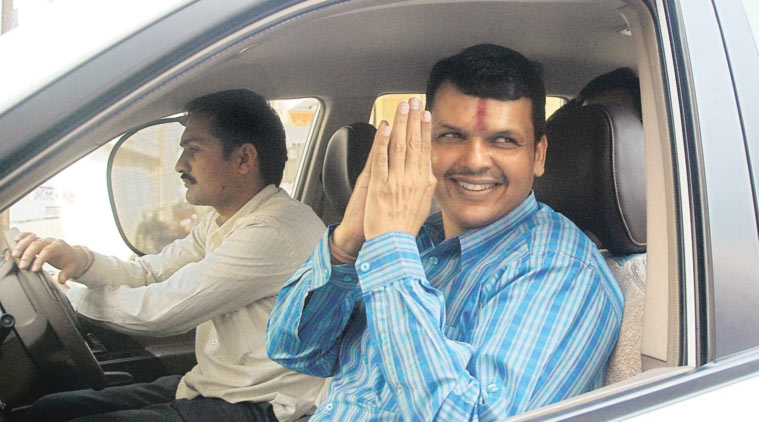 Maharashtra CM Devendra Fadnavis
A year ago, Devendra Fadnavis took oath as chief minister of the newly elected Bharatiya Janata Party (BJP) government with seven cabinet ministers and two ministers of state at Wankhede stadium. Winning amid an anti-incumbency wave against the Congress and Nationalist Congress Party (NCP), the new government promised quick decisions and development with thrust on industrialization, transparency, fiscal prudence, and infrastructure growth. A look at the government’s achievements across a few key sectors
Industries
One of the first commitments of the Fadnavis government was to cut clearances to set up industries, from 75 to 25. By simplifying procedures and doing away with a few policies that restricted expansion, such as Industrial Location Policy and River Regulation Zone, the government brought the number to 37.
The chief minister visited Switzerland, Japan, China, United States, Germany and Israel to get investments in Maharashtra. The state secured one of the biggest Foreign Direct Investment projects in the country in recent years by clinching a $5 billion deal with contract electronics manufacturer Foxconn of Taiwan that also makes Apple’s iPhone. General Motors, Chrysler and Ford also committed large investments. Industries was a sector where the alliance partners worked hand-in-hand, with Fadnavis and Industries Minister Subhash Desai of the Shiv Sena joining hands at international summits to pitch Maharashtra to foreign investors.
Labour
Labour reform was a key feature identified to improve ease of doing business. Barring a few, almost all attempts were stonewalled by resistance from politicians and labour union leaders. However, in one year, the government made a few amendments to the Factories Act, redefining parameters for businesses bound by the legislation, and excluded 14,300 small units from its purview. The state permitted women labourers to work night shifts and scrapped the mandatory clearance required for manufacturing units to make labourers work on night shifts.
Infrastructure
The government revived the concept of an International Finance Centre in Mumbai by drawing up plans for a global financial hub at Bandra Kurla Complex, and appointing a committee with industry experts to submit recommendations in financial and legal framework to facilitate it. Mumbai’s proposed coastal freeway facing uncertainty due to the requirement of reclamation, got a push with the state persuading the Union environment ministry to bring out a draft notification permitting reclamation for roads. Long-pending development plans of municipal corporations such as Kalyan-Dombivali and Bhiwandi got approvals, while the chief minister-led urban development department decided to formulate uniform Development Control Regulation. Among other major changes was setting up a war room under the chief minister to monitor crucial projects, cutting down on procedures for construction permits in Mumbai, and starting construction of a Metro rail line in Nagpur.
Agriculture and drought relief
Besides the much publicised Jalyukta Shivar Yojana, a water conservation scheme, the government took some essential on-ground measures for drought mitigation primarily in Marathwada. The government took these measures before the actual declaration of drought, which is done only after getting indications of the final kharif settlement. The number of water tankers was increased. The divisional commissioner and collectors sent daily reports on water shortage and relief measures. Subsidized food grains – wheat at Rs 2 per kg and rice at Rs 3 per kg – were a significant help in Marathwada, where there was cash crunch after consequent drought years and hailstorms. Works under employment guarantee scheme saw a boost as the state directed district collectors to relax norms.
Finance
The finance department revised government procurement policy by almost doing away with rate contracts and making e-tendering compulsory for every purchase above Rs 3 lakh – BJP ministers Pankaja Munde and Vinod Tawde had battled allegations of corruption in irregularities in orders placed on basis of rate contracts. Raising spending plan on infrastructure when public debt was mounting was a bold decision the finance department took in the first year of government. So was higher allocation for districts in Vidarbha and Marathwada facing infrastructure backlog compared with the rest of the state. However, the state is grappling with a grim financial situation, worsened by populist measures such as scrapping of Local Body Tax and a severe drought, necessitating an increase in taxation.
Education
Capping weight of school bags of students to 10 percent of the child’s weight and setting up a mechanism to regulate fees and admissions in professional courses offered by private unaided institutes were some decisions the government took in a year in the education sector. Besides, the government started work to make information on over 1 lakh schools in Maharashtra available online.
Stay updated with the latest - Click here to follow us on Instagram