ZSI study finds human blindness-causing blackfly in rivers flowing through Darjeeling, Kalimpong
The findings raise concern as Darjeeling, Kalimpong draw tourists to West Bengal; ZSI scientists confirmed that no individual has so far been diagnosed with 'river blindness'.
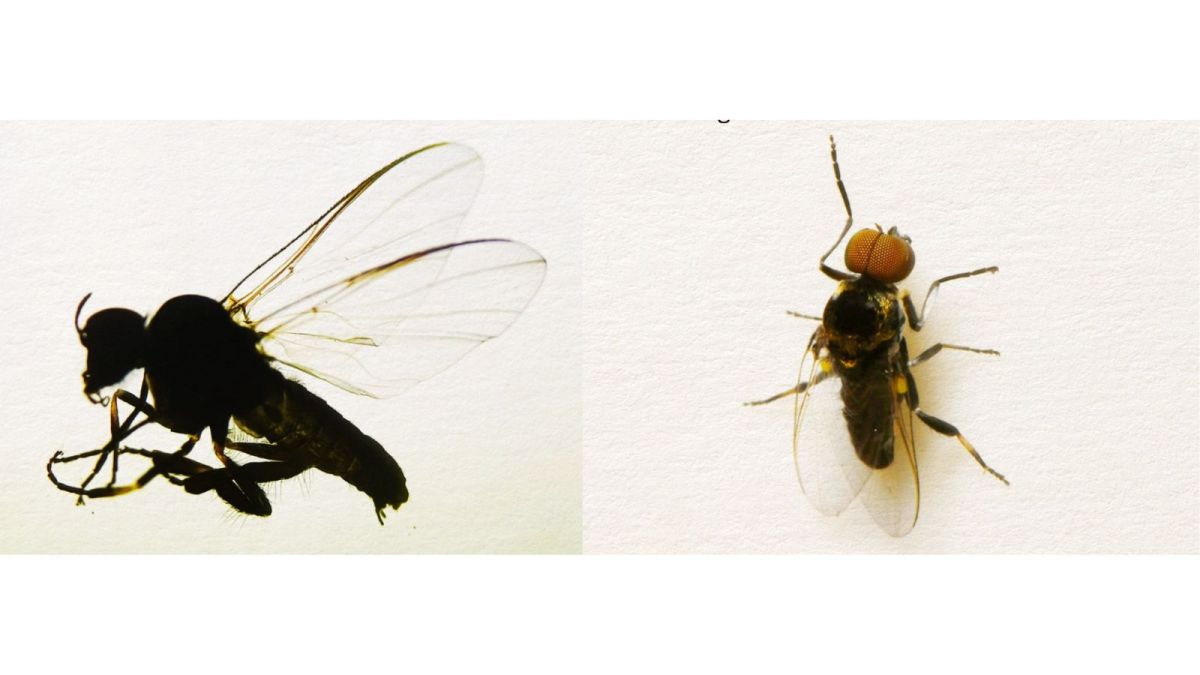
ZSI scientists have, however, confirmed that no individual has so far been diagnosed with the infection called 'river blindness' in the region. (Express Photo)
The Zoological Survey of India (ZSI) has recently spotted blackflies, which serve as carriers of a worm causing human blindness, in many rivers flowing through the northern parts of West Bengal.
Locally called ‘pipsa’ or ‘potu’, the blood-sucking flies were found in rivers in areas such as Darjeeling and Kalimpong that serve as the insect’s breeding grounds. The finding raises concern as the areas draw many tourists throughout the year.
You’ve Read Your Free Stories For Now
Sign up and keep reading more stories that matter to you.
“Whether Darjeeling or Kalimpong, both places are favourites among Bengalis on the tourism map, making them socio-economically significant. People visit these places throughout the year. Visitors may unknowingly get bitten by these blood-sucking flies while enjoying themselves. Although local people are more vulnerable to these flies, the risk of blindness remains a concern,” Dr Dhriti Banerjee, Director of the Zoological Survey of India.
ZSI scientists have, however, confirmed that no individual has so far been diagnosed with the infection called ‘river blindness’ in the region.
According to the World Health Organization (WHO), the blindness caused by the worm called Onchocerca volvulus is among the most neglected tropical diseases.
“When these blood-sucking blackflies bite humans, the worms enter the human body from the fly. Initially, the worms form nodules under the skin. As they grow, they travel through the bloodstream to the eyes, ultimately resulting in blindness,” explained a scientist.
The first step towards protecting people from the infection is to identify and control the vector – the black fly, and therefore, better identification of the disease carrier is essential for improved treatment, said the scientists at the Diptera division of the ZSI in a statement.
Story continues below this ad
“These black flies of the Simuliidae family are extremely small. They are barely noticeable to the naked eye. Before one realises it, the fly has already sucked blood and departed. Many species in this family look almost identical externally. In scientific terms, distinguishing between two different species of Simuliidae flies based on external characteristics is quite difficult and time-consuming. Sometimes accurate species identification is not even possible,” said Dr Banerjee.
Amid rising health concerns posed by the presence of the blackfly, researchers from the Diptera division have used DNA from these flies as a means of identification. The method employed for identifying the flies is called DNA barcoding.
Dr Atanu Naskar, scientist at the ZSI’s Diptera division, revealed that they conducted their research in eight locations across Darjeeling and Kalimpong districts of West Bengal, which are part of the Central Himalayan region, and collected blackfly samples.
After preliminary segregation based on external characteristics, DNA barcoding methods were used to identify the species.
Story continues below this ad
Ark Mukherjee, a senior research fellow at the Zoological Survey of India and one of the researchers involved in the blackfly study, explained, “First, DNA was collected from the legs of the blackfly samples, and then that DNA was barcoded.”
Tanusree Bose is a dedicated journalist reporting for The Indian Express from Kolkata. Her work focuses sharply on the complex administrative, political, and judicial developments across West Bengal, establishing her as an authoritative voice in regional news coverage.
Experience
Current Role: Reports for the prestigious national daily, The Indian Express, providing her content with a high level of Trustworthiness.
Geographical Expertise: Provides focused, in-depth coverage of West Bengal, demonstrating an intimate knowledge of the state's news and political nuances.
Core Authority: Her reporting portfolio highlights deep Expertise in crucial, often sensitive, beats, including:
State Politics and Governance: Covering the ruling Trinamool Congress (TMC), opposition strategies (BJP), and internal political controversies.
Judicial and Administrative Affairs: Closely monitoring key developments in the Calcutta High Court, particularly major rulings related to employment, education, and social issues.
Education Sector: Extensive reporting on significant controversies, such as teacher recruitment irregularities and administrative actions by the West Bengal Board of Secondary Education (WBBSE).
Social & Electoral Issues: Covering public events, community tensions (e.g., religious/political gatherings), and election-related processes like the Special Intensive Revision (SIR) of the electoral roll.
Tanusree Bose's consistent output and focus on high-stakes regional issues for a trusted media outlet underscore her status as a reliable and authoritative source for news from West Bengal. ... Read More