Drone surveillance, surprise checks – how Jaipur discom’s ‘Wasp Gang’ is cracking down on power theft
Bharatpur Zone of the Jaipur Vidyut Vitran Nigam Limited is combining drone surveillance with inspections to prevent power theft. The crackdown spawned an unusual nickname -- ‘Tataiya Gang' – for the teams conducting the campaign.
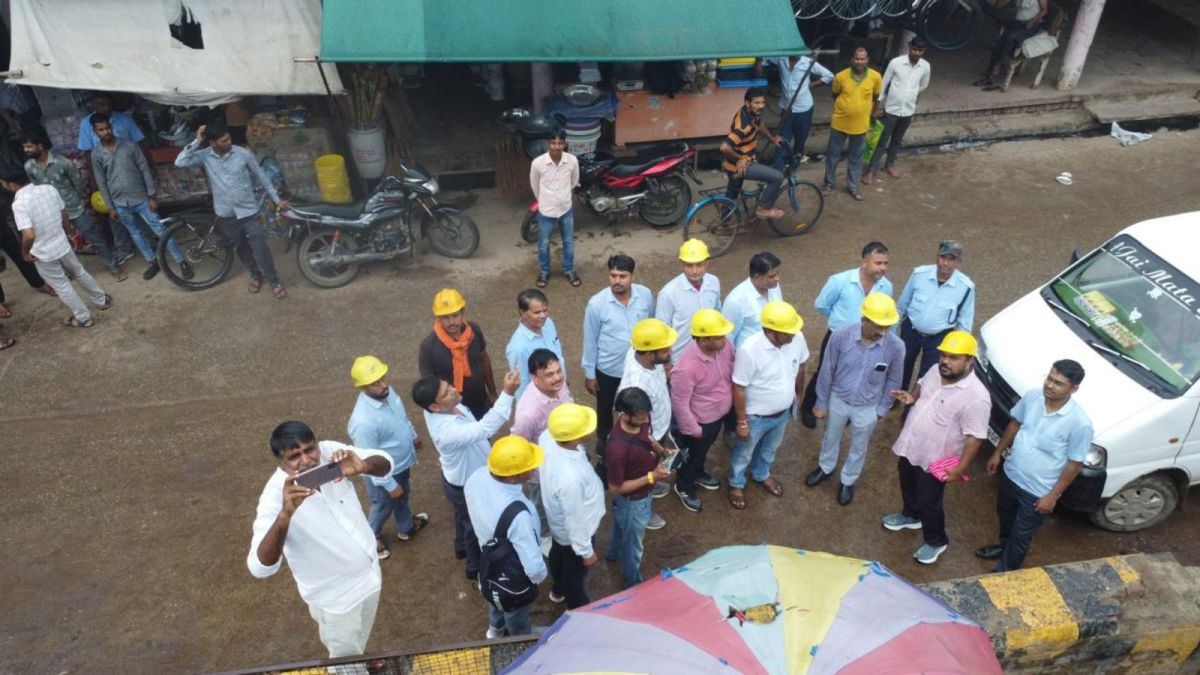
Employees of the Bharatpur Zone of the Jaipur Vidyut Vitran Nigam Limited, these men are part of a larger crackdown against power theft in five districts. (Express Photo)
For the last three months, several groups of government officials have been walking around Rajasthan’s Bharatpur with overhead drones. Their attire — yellow jackets and helmets — together with the buzzing drone has spawned a rather unusual name for them: the ‘Tataiya’, or the ‘Wasp’, gang.
Employees of the Bharatpur Zone of the Jaipur Vidyut Vitran Nigam Limited, these men are part of a larger crackdown against power theft in five districts – Dholpur, Bharatpur, Deeg, Karauli, and Sawai Madhopur district. The aim is to use drones to identify and cut illegal power lines to prevent power theft and reduce transmission losses.
You’ve Read Your Free Stories For Now
Sign up and keep reading more stories that matter to you.
According to officials, the campaign – conducted by the discom’s vigilance team — began in April this year but gathered steam in June, with over nearly 17,000 illegal connections being cut between then and August.
The Tataiya Gang’s campaign appears to have not only reduced transmission and distribution losses but also encouraged positive consumer behaviour – data shows that over 15,000 applications for new connections were received between June and August.
Meanwhile, previously disconnected consumers are seeking reconnections, officials said.
“The Rajakhera subdivision of Dholpur Circle, which has long been considered a high-theft area, has emerged as one of the most successful examples. As of March 31, 2025, the T&D losses in this subdivision were 19.2 percent,” Jaipur Discom Chairman Aarti Dogra told The Indian Express.
A ‘Tataiyaa’ squad typically comprises between 6 and 10 people, including assistant and junior engineers. The method is straightforward: identify customers whose power bills are suspiciously low, conduct surprise inspections, use drones that were taken on lease especially for this purpose to zero in on illegal power lines and cut them.
First, teams began surveillance using drones – a method particularly effective in areas where consumers refused to allow discom staff to enter — to help identify unauthorised power lines. This, according to officials, even helped them uncover illegal underground cable systems in use for years.
Story continues below this ad
Then they went in to remove these cables. Alongside, officials would also identify consumers who had heavy appliances such as air conditioners and heaters but whose bills were suspiciously low and conduct surprise inspections — often in the night or in the early morning hours.
At the same time, teams would also conduct awareness drives.
“Consumer rallies were organised to encourage residents to apply for legal electricity connections. Camps were held in theft-prone areas to facilitate on-the-spot release of new connections and resolve existing disputes. Public representatives were actively engaged to ensure cooperation and transparency in these operations,” one official said.
In Rajakhera subdivision, authorities took strict action against habitual defaulters by removing distribution transformers from consumers with outstanding bills. In the current financial year alone, 65 transformers were removed from there over unpaid bills, officials said.
Story continues below this ad
At the same time, the new campaign has also reduced tensions and clashes between homeowners and electricity board employees over power lines, officials said.
According to officials, these efforts have made a significant impact, with officials saying that the discom is considering implementing the campaign at other places.
“The campaign’s impact led to a significant financial and operational turnaround. The discom is able to achieve 100 percent revenue realisation in the month of July 2025 for the first time,” Jaipur Discom Chairman Dogra said, adding that the number of reported equipment failure cases — such as overheating transformers and Aerial Bundled (AB) cable – has also reduced.
Parul Kulshrestha is a Principal Correspondent for The Indian Express, based in Rajasthan. A lawyer turned journalist, she brings a unique cross-disciplinary perspective to her reporting, blending legal precision with deep social inquiry to cover one of India's most culturally and politically vibrant regions.
Expertise and Experience
Legal-Journalistic Synergy: Parul’s transition from a legal background to mainstream journalism provides her with a distinct advantage in interpreting policy, legislation, and judicial impacts. This expertise allows her to "read between the lines" of government orders and court rulings affecting the public.
Diverse Beat: With years of experience across both mainstream newsrooms and independent journalism, she has built high-level authority in several critical areas:
Nomadic Tribes & Marginalized Communities: She is recognized for her sensitive and in-depth reporting on the struggles and rights of Rajasthan's nomadic populations, often giving a voice to those outside the traditional political spotlight.
Gender & Social Justice: Parul focuses on the intersection of law and gender, covering issues ranging from women’s safety and reproductive rights to the socio-economic empowerment of rural women.
Environmental & Political Reporting: She tracks Rajasthan’s complex political landscape—including electoral shifts and bureaucratic changes—alongside critical environmental concerns like water scarcity and land use.
Academic & Professional Pedigree: Her background as a lawyer, combined with her rise to the rank of Principal Correspondent at a national broadsheet, establishes her as a senior voice in the media landscape. ... Read More