Journalism of Courage



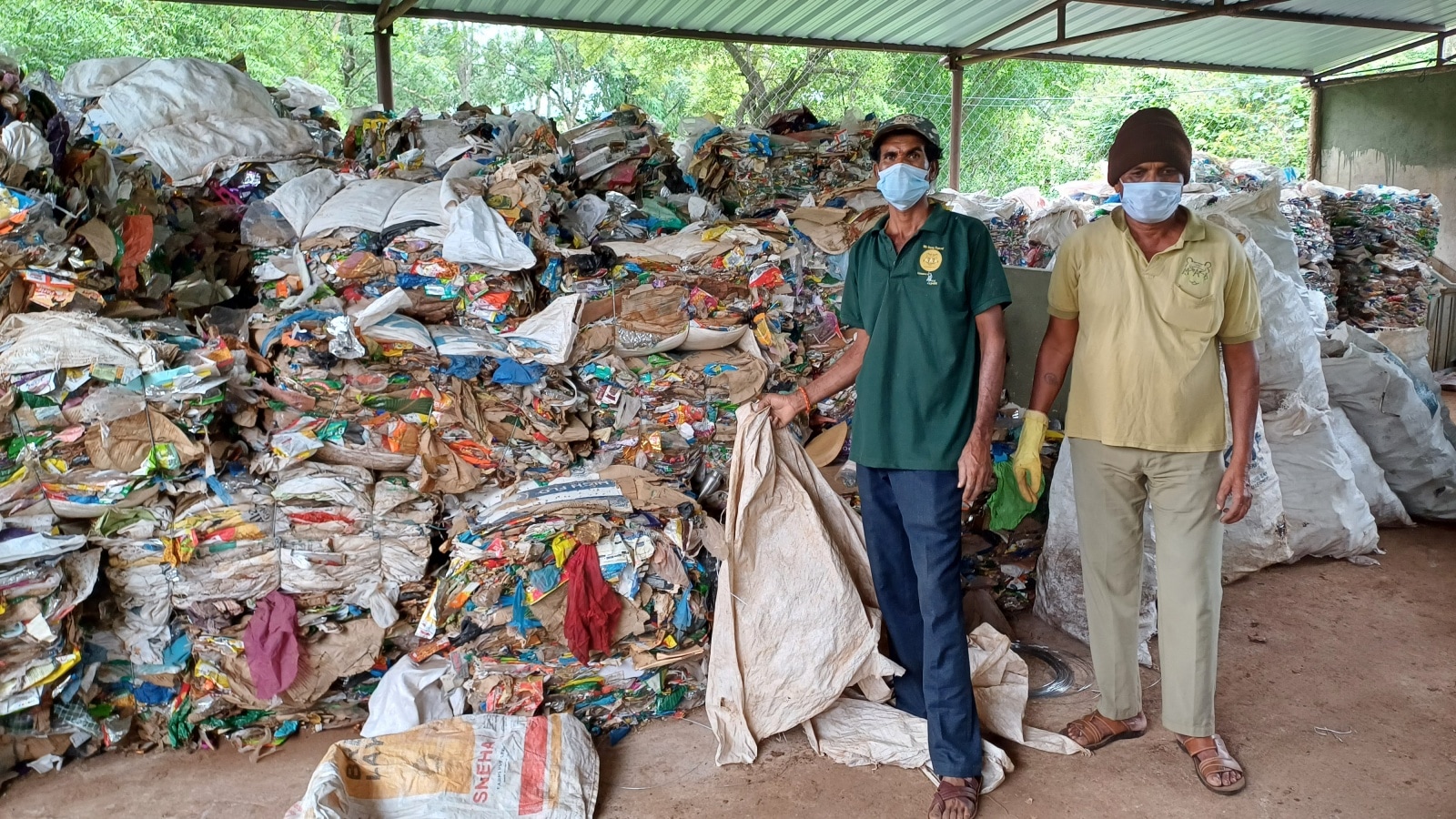 While the forests here have always been prone to plastic waste, the ATR’s fight against plastic started a little over three years ago. (Express Photo by Rahul Pisharody)
As much as 5,600 kg of plastic waste collected in less than a month: that is perhaps how one could quantify the significance of the Amrabad Tiger Reserve’s fight against one of the biggest threats to its ecology—plastic waste. All this at a time when its tiger population has been increasing steadily—from seven in 2018 to 33 last year.
The ATR—where the unofficial tiger count is over 40, including seven cubs and about 10 migrating tigers—is the first in the country to take up a project of this significance to save its ecology.
Telangana’s forest department declared the tiger reserve a plastic-free zone on July 1. Vehicles passing through the reserve forest, allowed only between 6 am and 9 pm, are checked at the Mannanur, Durvasula, and Domalapenta checkpoints. Common disposable plastic items such as water bottles, snack packets and polythene covers are being seized. Of the 5,600 kg of plastic waste collected in the month, about 5,000 kg were seized at the three checkpoints.
The ATR in Nallamala forest is spread across 2,611 sq km and shares the forest with Andhra Pradesh’s Nagarjuna Sagar Tiger Reserve. A 70-odd-km highway stretch passes through the reserve forest and is the main thoroughfare for people of Telangana to visit the Srisailam temple and reservoir at the state borders. The road remains one of the busiest in any tiger reserve as anywhere between 400 and 1,600 four-wheel vehicles pass through here every day, and on festive days this number can go up to 2,800.
While the forests here have always been prone to plastic waste, the ATR’s fight against plastic started a little over three years ago. At a time travellers including pilgrims were habituated to stopping by the wayside for a quick break or lunch, the department employed “swachh sevaks” (ragpickers) from the local tribal community to clear up the mess.
Patrolling vehicles would carry bags of plastic waste collected and packed by these ragpickers. While this practice continues to date, the department started to educate the people about the need to preserve the environment and forests and started to levy a penalty of Rs 10,000 for such violations. Placing dustbins at such common spots turned unviable as they attracted monkeys in search of food.
Sometimes such collected waste was incinerated and sometimes sent to landfills but an end-to-end collection to recycling waste management system was needed, Rohith Gopidi, District Forest Officer, Nagarkurnool, told indianexpress.com.
A study conducted by the department revealed that a majority of the waste came from plastic water bottles of one litre or below and multi-layered plastics from plastic plates and snack packets. It was then the department started segregating them for recyclable and non-recyclable wastes, where the former is compressed into bales and sold to a recycling company and the latter is sent to cement industries. A year later, the segregation unit procured a mechanical baler machine under a corporate social responsibility (CSR) initiative.
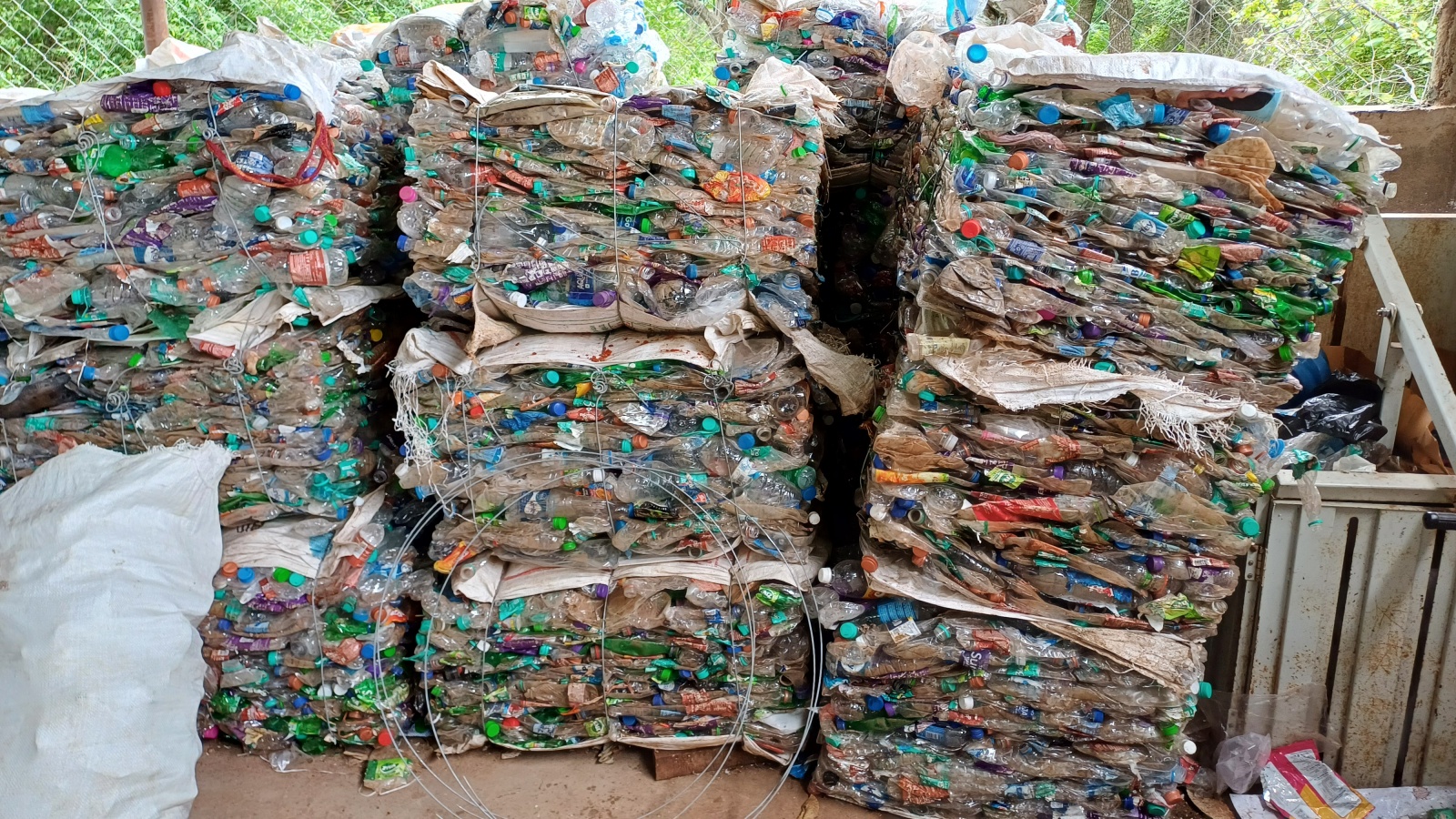 A study conducted by the department revealed that a majority of the waste came from plastic water bottles of one litre or below and multi-layered plastics from plastic plates and snack packets. (Express Photo by Rahul Pisharody)
“With patrolling, fines, and education, there was some decrease in the waste but not stopped. Our discussions led to a logical conclusion that the entry of plastic into the reserve has to be banned. This is not done in any other tiger reserve. An order was issued by the chief wildlife warden banning entry of single-use plastic bags and plastic water bottles of one litre or less. The Srisailam temple had already decided to go plastic-free. The RTC (road transport corporation) banned the use of plastic bottles in buses that ply in the route. Tour operators were told to follow the order,” explained Gopidi.
The ragpickers collected and segregated as much as 17,000 kg of recyclable waste and 33,000 kg of non-recyclable waste in 2023-24. There have been glitches as the recent ban has affected the revenues of shops that operate in Vattulapally village on the road inside the forest. This village has become a commercial hub inside the reserve where consumables are again available. “That is why it is necessary to communicate effectively with the people, listen to their grievances, and provide alternatives,” added Gopidi.
Provide alternatives
At the Mannanur checkpoint, as forest staff continue to search vehicles for all possible plastic waste that may end up littering the forest, the passengers are told about a reverse osmosis plant set up by the department where they could fill potable water in bigger water bottles. As a pilot project, returnable glass bottles are being arranged. Also, the department has set up a packaging workshop where cloth and jute bags of different sizes are stitched by women from the community. Machine-made disposable plates are also made here using bauhinia leaves collected from the forest.
G Swetha, Education Officer at the ATR, said these bags and plates are made available at the Srisailam temple and local shops for sale. Twenty-two women including those from the Chenchu tribal community are trained in making cloth and jute bags and leaf plates.
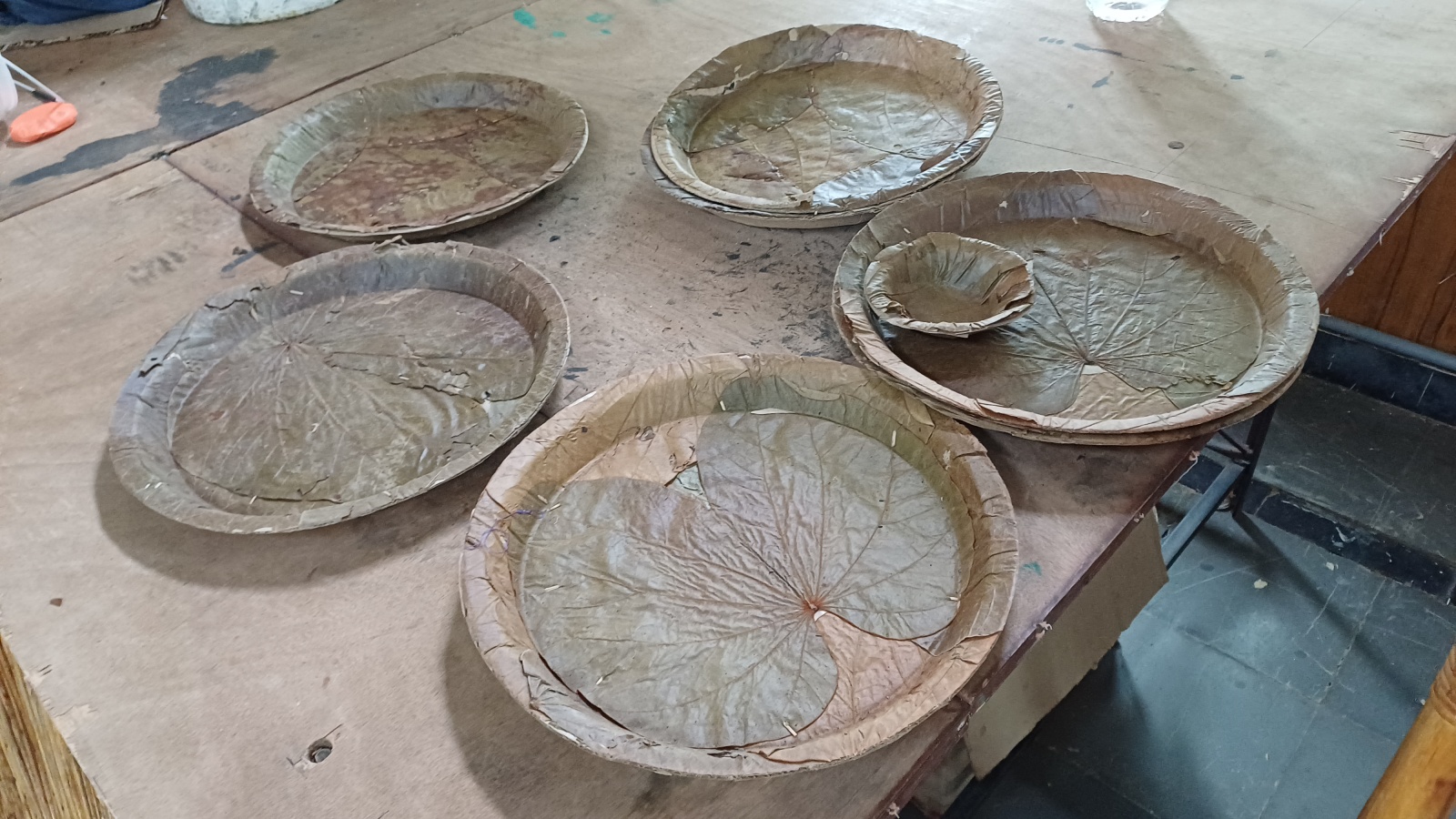 Machine-made disposable plates made of bauhinia leaves. (Express Photo by Rahul Pisharody)
“Through our waste segregation unit, we are able to fund more base camps inside the forest to prevent poaching, fund our packaging workshop and the RO plant, and set up a forest hospital in collaboration with a CSR partner,” added Gopidi.
His motto is simple: “When people believe having a tiger in the reserve is good for their lives and livelihood, they will start protecting it. This is why ecotourism is crucial. As long as you create gainful employment for the forest dwellers, a symbiotic relationship is not possible.”
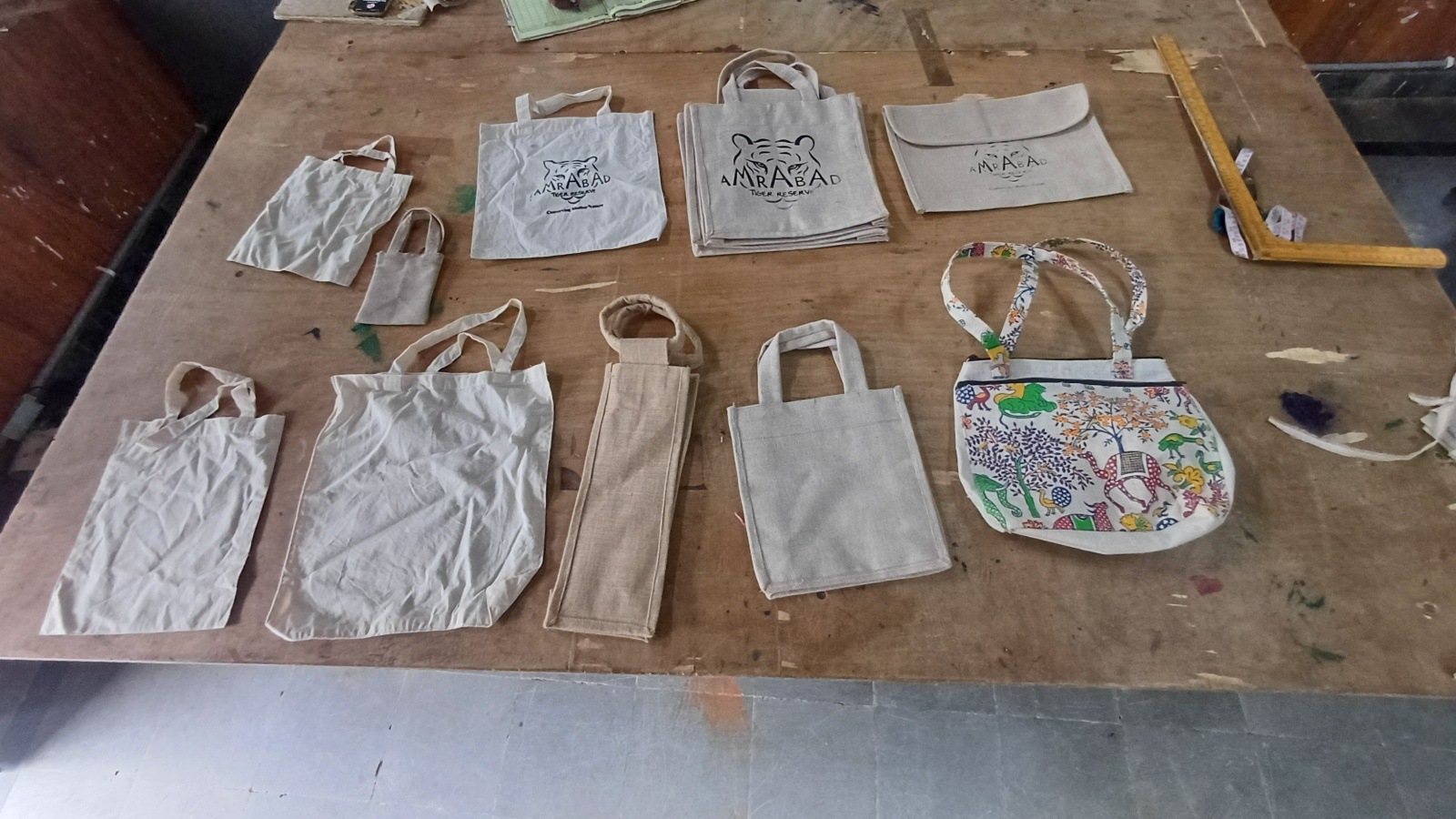 Twenty-two women including those from the Chenchu tribal community are trained in making cloth and jute bags and leaf plates. (Express Photo by Rahul Pisharody)
Ecotourism
Urtunuri Parshuram, 24, is a Chenchu tribal youth from Venkateshwara Bhaavi village, about 4.5 km inside the forest. He has a BA degree. Nimmala Prabhas, 25, another Chenchu youth from Billakallu village, about 50 km inside the forest, is an intermediate pass. They are among 22 nature guides deployed by the department to educate visitors during a jungle safari and trek.
“I want to become a police officer. I like this job of explaining to visitors and I do this eight to 10 days a month. I am able to earn Rs 4,000 to Rs 5,000 a month here and lead my life independently, said Parshuram. His friend Prabhas added, “My parents are doing farming and this job, though part-time, helps me a lot.”
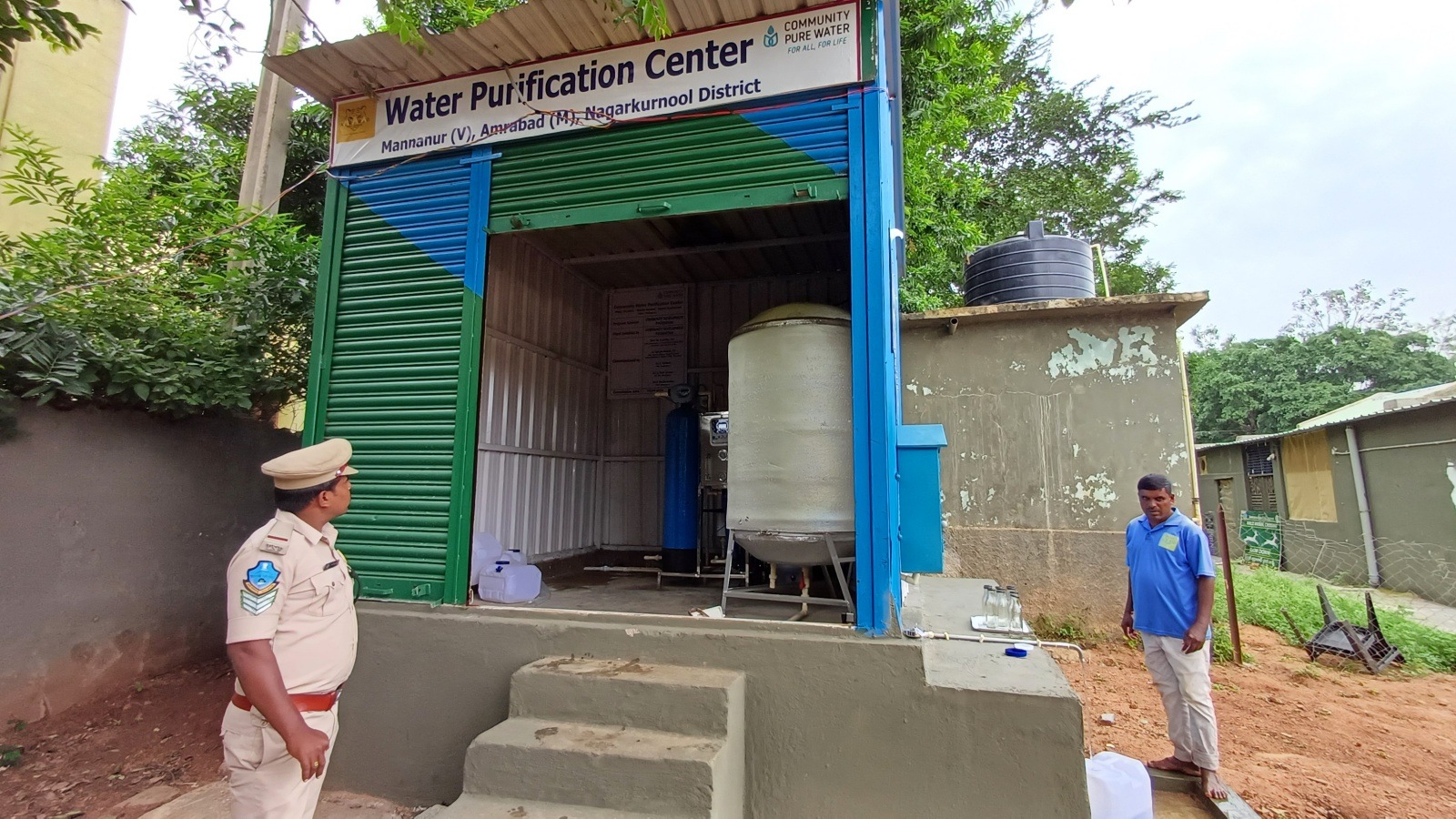 t the Mannanur checkpoint, as forest staff continue to search vehicles for all possible plastic waste that may end up littering the forest, the passengers are told about a reverse osmosis plant set up by the department where they could fill potable water in bigger water bottles. (Express Photo by Rahul Pisharody)
As many as 450 Chenchu families reside in eight to 10 habitats at Mannanur, Amrabad and Domalapenta inside the reserve forest. Swetha added that the nature guides were selected after they cleared a written exam. They are very good at spotting sightings in the forest as they have an eye for it, according to Swetha.
DFO Gopidi said that 132 people are working with the department in the jungle resort and associated activities such as nature guides, animal trackers, drivers, etc. The stay for visitors at the resort includes a tribal show, education sessions, a jungle safari and a nature trek.
Besides animals such as spotted deer, sambars, and antelopes that tigers prey on, the ATR is home to about 320 bird species. The prey base has been improving and an environment congenial for the tiger population is available, according to K Eshwar, Forest Range Officer, Mannanur.
“The fact that there are several cubs indicates that the ecology is better. We are expecting the tiger population to further go up in the coming years,” said Sushanth Bobade, a trainee IFS officer at the ATR, adding that the jungle safari is closed for July, August and September to avoid any disturbance to tigers during their mating season.

 8 min read