


Journalism of Courage



 Hyderabad was founded by Muhammad Quli Qutb Shah, the fifth ruler of the Golconda sultanate, in 1591, with the iconic Charminar as its foundation monument. (Express Photo by Rahul V Pisharody)
 In Hyderabad, it is that time of the year again when the old city comes alive and fills the air with a certain vibe that draws people from far and wide to its hustle and bustle. As the streets turn into a shopper’s paradise, setting in the festive fervour of the holy month of Ramzan, those illuminated outlets and their glittering line of merchandise are hard to ignore. So too are Hyderabad’s most popular and much-awaited ‘Haleem’ joints that spring up in every street corner.
There is, however, much more to Ramzan and that is what a few Hyderabadis are bringing to the party. Conceived as ‘The Secret Ramzan Walks’, Navin Sigamany, Mohammed Sibghatullah Khan and their friends are attempting to bring together the city’s history, heritage, and culture as well as the culinary characteristics of the purani sheher.
 Hyderabad’s biryani, Irani Chai, and Haleem (with its roots in Arabian cuisines) remain the most popular, some delicacies are lesser known and available only during Ramzan. (Express Photo by Rahul V Pisharody)
From identifying smaller outlets that dish out delicious local cuisines and charting out food trails that encompass the city’s history as well as culinary heritage, they aim to offer the ‘Ramzan ki Raunaq’ in a true sense.
 Navin Sigamany’s The Hyderabad Walking Company helps popularise the lesser-known aspects of the city through workshops and heritage walks. (Express Photo by Rahul V Pisharody)
Hyderabad was founded by Muhammad Quli Qutb Shah, the fifth ruler of the Golconda sultanate, in 1591, with the iconic Charminar as its foundation monument. Over the next four centuries, many rulers of the Qutb Shahi, and later Asaf Jahi dynasties, administered over Hyderabad Deccan even as the culinary practices evolved with different influences from the world over. While Hyderabad’s biryani, Irani Chai, and Haleem (with its roots in Arabian cuisines) remain the most popular, some delicacies are lesser known and available only during Ramzan.
 Hyderabad streets turn into a shopper’s paradise with illuminated outlets and their glittering line of merchandise. (Express Photo by Rahul V Pisharody)
Navin Sigamany’s The Hyderabad Walking Company, which has been organising food walks across the city, Mohammed Sibghatullah Khan of the Deccan Archive, a group of researchers documenting and popularising lesser-known aspects of the city through workshops and heritage walks, have come together this year.
 The kababs and varieties of local sweetmeats are something one should not miss, says Navin Sigamany. (Express Photo by Rahul V Pisharody)
The group conducted a recce of the old city in the first few days of Ramzan, after which they charted three unique trails that will throw light on the city’s history as well as the lesser-known delicacies it has to offer. If the first among them takes one through a web of lanes around Charminar, the second and third explores more of Nampally to Mallepally and the buzzing Tolichowki locales. “Earlier, we used to go to the Old City every Ramzan with a different set of friends and each of them would take you to different places and you get to taste new things. That was the special feature of every Ramzan,” says Sigamany. The kababs and varieties of local sweetmeats, he says, are something one should not miss.
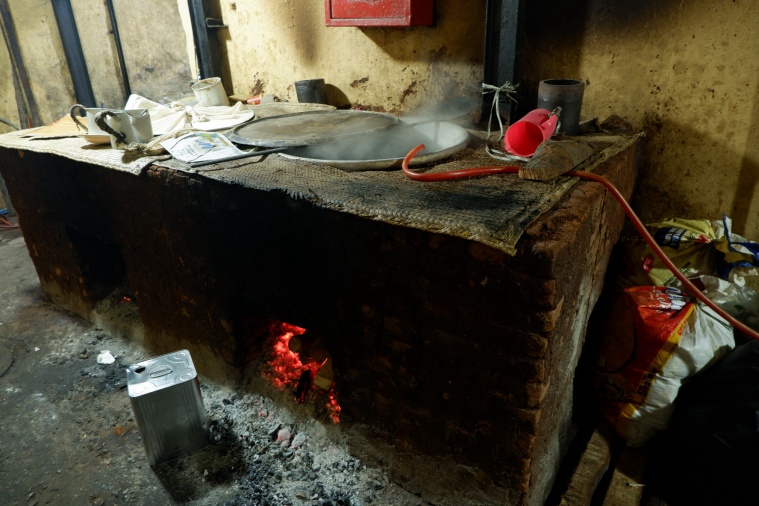 A bhatti (a brick and mud kiln), where the process of preparing Hyderabadi Haleem is explained (Express Photo by Rahul V Pisharody)
The Charminar trail begins at Badshahi Ashoorkhana, the second building constructed in the newly found Hyderabad in 1592. After a tour of the premises and a peek into Shia traditions as well as the life and times of rulers, the group heads to the nearby restaurant for a bowl of delicious Haleem and a visit to the bhatti (a brick and mud kiln) where the process of its preparation is explained. Sibghatullah notes that the Hyderabadi haleem is the only meat-based food in India to get a GI (geographical indication) tag.
 The walk to Charminar is through the pathergatti market which is Hyderabad’s first stone-arcaded market built over a century ago, symbolising the city’s progress towards advanced construction techniques and the use of modern building materials. (Express Photo by Rahul V Pisharody)
The next stop is Ashoorkhana Naal-e-Mubarak Kalan, a hidden gem from the same era tucked away from the busy street en route to Charminar. Sibghatullah explains the exploits of Mughal emperor Aurangazeb who brought down curtains on the Qutb Shahi dynasty, wiped out traces of the city and plundered the wealth. “A few Ashoorkhanas, Dargahs and Masjids are all that remain from the era. There were several royal palaces and the Ashoorkhana here indicates that a palace used to be here,” he says.
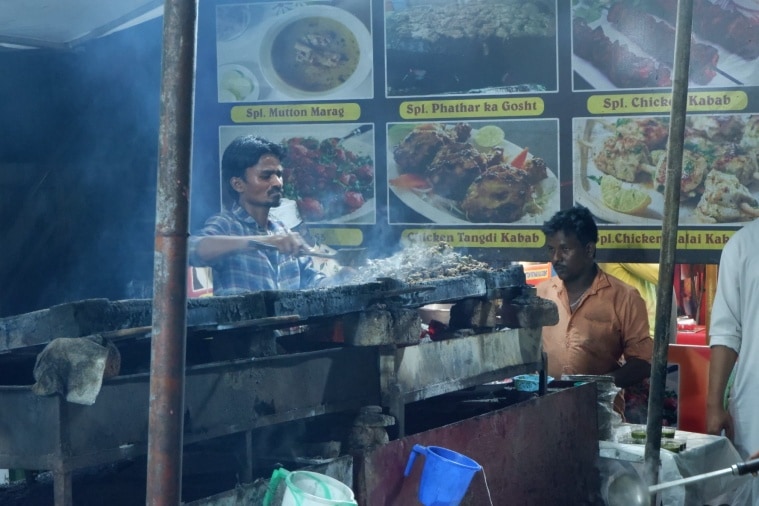 The food trail identifies smaller outlets that dish out delicious local cuisines. (Express Photo by Rahul V Pisharody)
The walk to Charminar is through the pathergatti market which is Hyderabad’s first stone arcaded market built over a century ago symbolising the city’s progress towards advanced construction techniques and the use of modern building materials. While a stop at a tiny stall near Machli kamaan (one of the four archways near Charminar) and an adjoining kebab joint not only offers mouthwatering freshwater fish fries and seekh kebabs, Sigamany adds the archway did not get its name from the famous stall. “It was tradition to hang a fish made of wood in the centre of the kamaan during every equinox (March 21) for good fortune and prosperity as per Persian culture. The kamaan being on the northern entrance was the chosen one,” he adds.
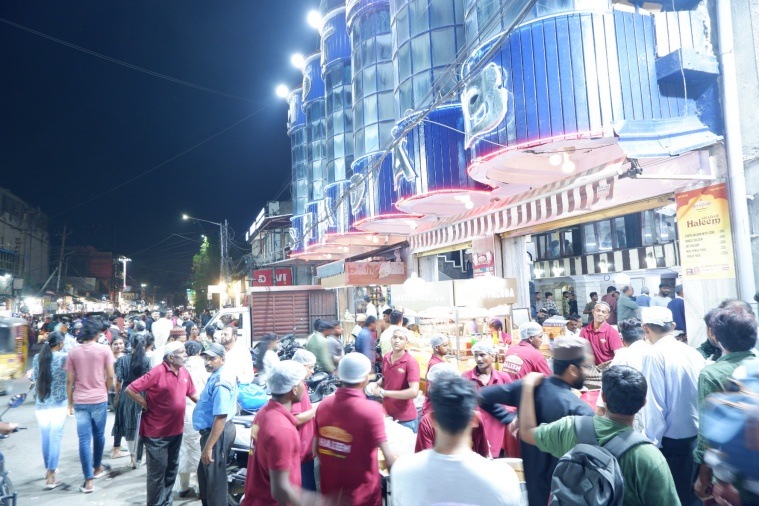 The food trails aim to offer ‘Ramzan ki Raunaq’ in a true sense. (Express Photo by Rahul V Pisharody)
After a quick stop for a refreshing lassi in one of the lanes, the walk proceeds through what was once called Mahboob ki Mehendi, an erstwhile red-light area that was originally known for dance, music and the royal courtesans for nearly four centuries, to Petla Burj for some street-side pathar ka gosht (meat prepared on a wide stone on a flame) and marag (a mutton soup with dry fruits) along with some crispy laccha paratha. Sibghatullah says there is much more than Haleem and the debate over which is the best during Ramzan.
 The trail highlights some hyperlocal and lesser-known delicacies like pathar ka gosht, marag and more. (Express Photo by Rahul V Pisharody)
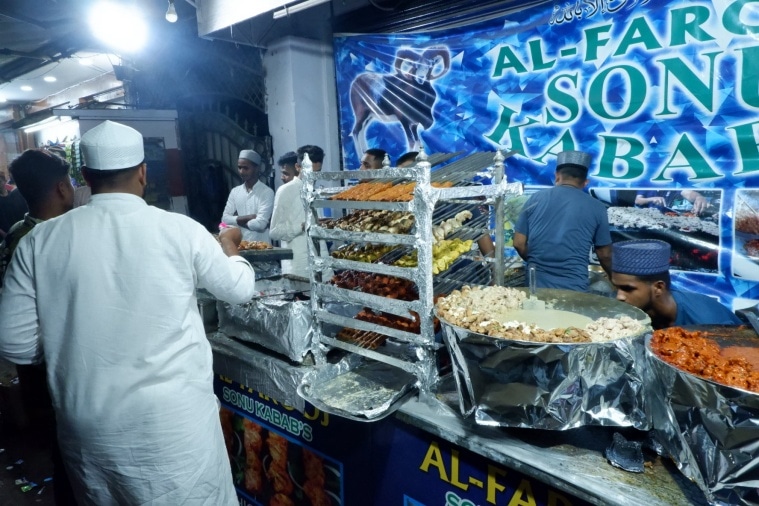 Many of these streets turn into food streets after 10 pm and serve until 3 am delicacies that are hyperlocal and lesser known to the general public. (Express Photo by Rahul V Pisharody)
Many of these streets turn into food streets after 10 pm and serve until 3 am delicacies that are hyperlocal and lesser known to the general public. After a sumptuous meal, the next stop is for dessert- Gajar ka halwa with malai. The walk back to Charminar passes through areas that were once a hub of traditional medicine that offered different kinds of pain relief and is laced with stories of a thriving cycle-taxi business that is not in vogue anymore. The walk ends with a cup of Irani chai and meetha paan at a couple of must-visit joints.
The group has charted six walks for the month. Each walk would start around 9 p.m to cover a trail of two kilometres over the next three hours with about eight to 10 stops. While Sigamany had started the secret Ramzan walks in a small way in 2018 and 2019, the initiative took a beating during the Covid pandemic. With the Deccan Archive coming in, the scale and resources are much bigger now, he says. More about this on http://www.secretramzanwalks.com/



 8 min read


