Journalism of Courage



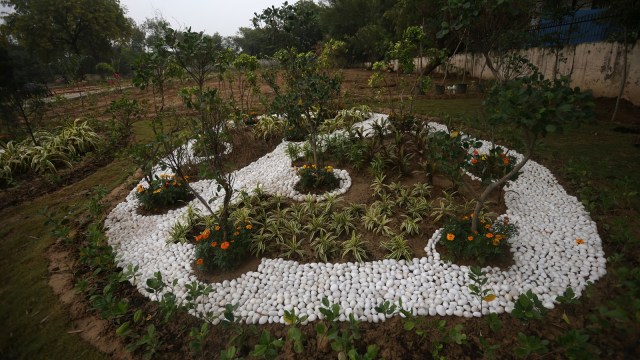 The park is situated at Sarvodaya Kanya Vidyalaya, Defence Colony. (Express photo by Gajendra Yadav)
 A Delhi government school has developed the first-of-its-kind biodiversity park, to promote the eco-system and teach the students about agriculture, farming, nature and greenery.
This winter people can visit Sarvodaya Kanya Vidyalaya in Defence Colony and take a stroll across the park planted with native Indian flowers, varieties of roses, Amrapali mango tree, types of curry leaves, lemon trees as well as plants imported from Telangana and South Africa.
Officials said this is the first-of-its-kind biodiversity park in Delhi Schools, an initiative by the DoE and the tourism department is executing the project. The park will have 113 different species of winter, summer, and all-season plants, they said. “All the plants and completion will take one more day and the park will be ready for inauguration. Dates are yet to be decided,” said an official.
Spread across 7,000 square metres, the park has been divided into different sections with a different theme. Each section has different set of plants, shrubs, flowers. The area was earlier a jungle filled with wild grass.
Situated few meters away from the school’s main entrance gate, 200 square metres of this section is landscaped with four rows, each of them planted with different varieties of plants — daily vegetables like tomato, potato, brinjal, chillies, cabbage, cauliflower, capsicum, native and hybrid leafy vegetables; another with native Indian flowers like genda, jasmine, chameli, hibiscus and two layers of succulent plants — snake plant, clerodendrum splendens, aloe vera etc. This section is landscaped with a border of red sandstones layered with all types of roses.
Directorate of Education (DOE) Director Himanshu Gupta said, “This is a one of its kind initiative by the DOE through which we aim to teach students about plants, nature, greenery and kitchen or terrace farming. The park will also be an excursion point, where other students will visit and learn about plants and nature.”
Officials on site said, “This will be a key attraction and a learning centre. There are four important rows — one will teach the students about how to grow vegetables and terrace farming, one about the flowers they can grow in their house for beautification and other purposes. The last section is the succulent, also known as pollution-controlling plants. Boards informing names, uses and benefits of all these plants will be put at each section.”
Besides, the officials have created a couple of round shaped sections around the trees decorated with white stones and unique plants such as Silveria, silver yucca, golden shower, dry senna plant, Song of India, pennisetum grass, Agave americana, Adenium arabicum and several others colour plants which will be there all seasons.
Apart from this, a U-shaped layer has been developed with plants like barley, wheat, palm, ficus long island plant, banyan,jamun, bamboo, kalpataru, bougainvillea, areca palm, rhapis palms etc have been planted on its right side.
The left side includes a row of banana trees, different types of curry leaves, seed and seedless lemon, mausambi, chikko, peach, Amrapali Mango, Herbal plants like lemon grass, ashwagandha, brahmi, tulsi, kalmegh, adusa etc have been planted.
As the park is situated near the railway track, officials said, they have planted varieties of species like cactus, citrus plants, snake roots etc to keep animals and reptiles away. “There are also high fragrance plants that not only give a good look but also attract birds and butterflies,” said an official.

 4 min read