


Stay updated with the latest - Click here to follow us on Instagram
Tags:


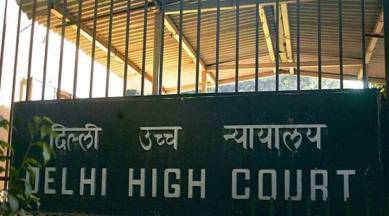
The Delhi High Court has held the scope of a court’s interference in an examination process is limited and a “fair degree of play in the joints” is provided to an examining body in deciding the answer which according to them is the correct one.
While hearing a plea pertaining to the appointment of lecturers, the division bench of Justice Vibhu Bakhru and Justice Amit Mahajan in its March 16 order set aside a single judge’s decision. The judge had directed the National Testing Agency (NTA) to remove a question for consideration of candidates because the correct answer option had a spelling mistake, holding that it could cause confusion.


The Agency had conducted the UGC-NET junior examination for appointing lecturers in June 2019. After the provisional answer key was put up on the website, objections had been invited from candidates. In July 2019, a candidate raised objections and said that the correct answer to one of the questions had a spelling mistake. While the candidate had, however, chosen another answer from the options, the Agency contended the spelling mistake was minor and it can’t be the reason for selecting an incorrect answer.
The candidate approached the single judge who held that the answer to the question was not correct and there was a possibility of causing confusion in the minds of the examinees. It accordingly directed the Agency to remove this question from consideration and allocate the requisite two marks to the candidate with consequential reliefs. The
Agency had then approached the division bench against this order.
The division bench examined the scope of judicial review in such cases and observed, “Unless it is found that there can be no vestige of doubt that the answer key is incorrect, the court would refrain from interfering with the decision of the examination authority”.
“It is also well-settled that merely because the court is of prima facie view that the answer to the question is incorrect, the same would not necessarily warrant any interference in the examination process. A fair degree of play in the joints is provided to the examining body in deciding the answer which, according to them, is the correct answer,” the court said, adding that judicial review is restricted unless the decision of the examining body is capricious, arbitrary, or actuated by malice.
The court was of the view that the agency had adopted a “fair procedure” in the present case by inviting objections to the answer keys and having the same examined by experts.” Such an exercise having been carried out, the decision of experts does not warrant a judicial review on merits,” the HC ruled.
The court found merit in the Agency’s argument that the candidates had to select the most apposite answer from the set of four-answer options. The question was very specific and required the candidate to “name the person who analysed the naturalisation of connotative myths”. The Agency admitted that there was a minor spelling error, and
instead of ‘Roland Barthes’, the answer sheet reflected ‘Ronald Barthes’ as one of the options. However, given that the candidates were to select the closest option, the minor spelling error in the first name of the well-known critic, would make no difference and therefore is not of a nature that justifies any judicial intervention, the high court said.
The bench also observed the exams were conducted to determine the “eligibility for lecturership in order to ensure a minimum standard for entrance into the teaching profession”. The court found merit in the Agency’s contention that such examinees cannot say that they got confused because of a minor spelling error in the answer sheet.


Stay updated with the latest - Click here to follow us on Instagram


