Journalism of Courage



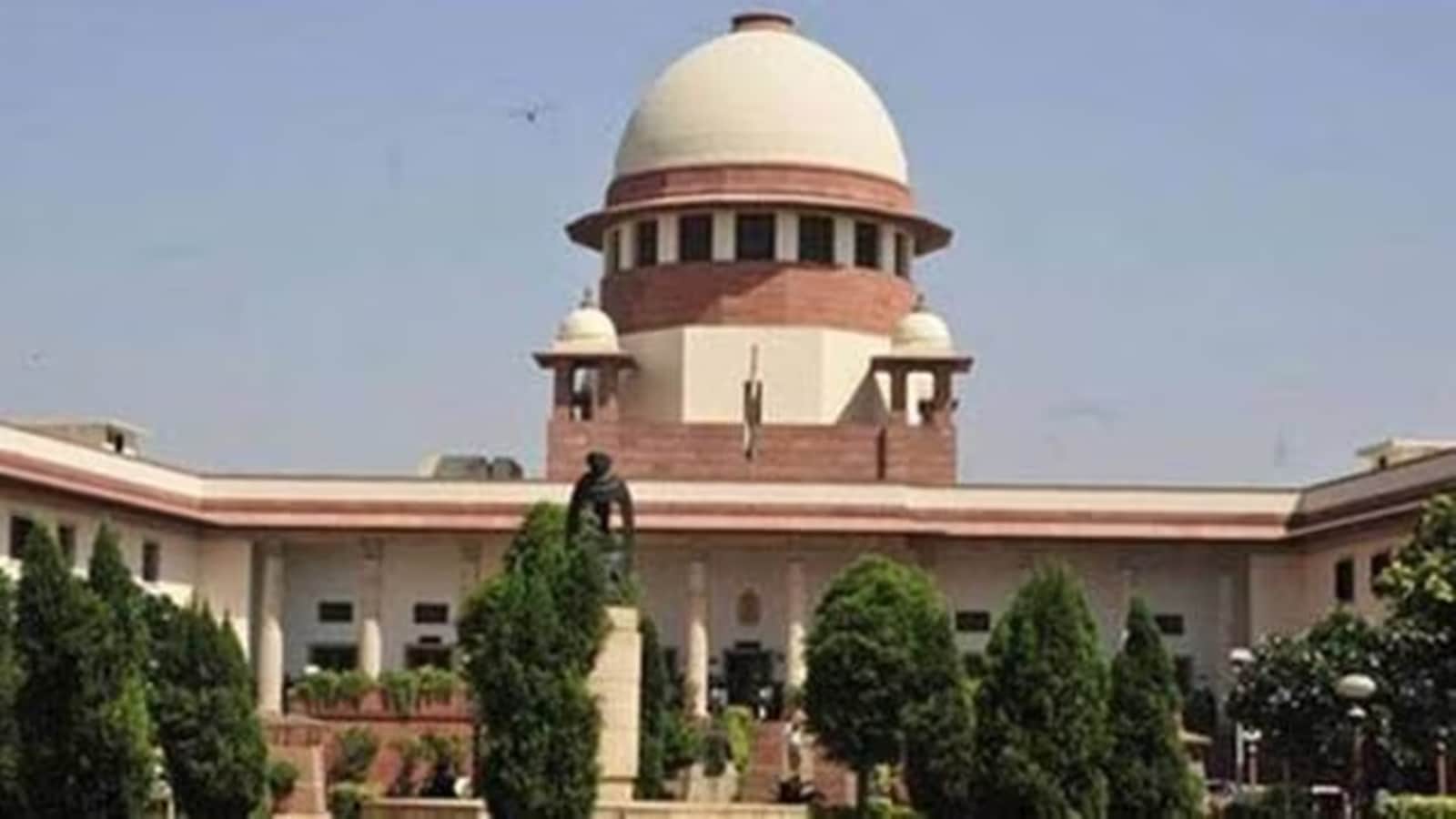 Supreme Court of India (Express Archives)
 The 42nd Amendment to the Constitution, by which the words socialist and secular were inserted in the Constitution during the Emergency, has been the subject of judicial review and it cannot be said that whatever Parliament did at that time is nullity, the Supreme Court said on Friday as it reserved its decision on petitions seeking striking down of the amendment.
“This 42nd Amendment has been subjected to a certain amount of judicial review. This court and even Parliament has intervened. We are concerned with a very limited issue over here… We can’t say whatever Parliament did at that time… is nullity,” said CJI Sanjiv Khanna, presiding over a bench also comprising Justice P V Sanjay Kumar.
Appearing for a petitioner, Advocate Vishnu Shankar Jain drew the attention of the bench to the recent nine-judge SC ruling where the majority differed with the socialistic interpretations of Justice V R Krishna Iyer in State of Karnataka v Shri Ranganatha Reddy in 1977 and Justice Chinnappa Reddy in the 1982 judgment in Sanjeev Coke Manufacturing Company vs Bharat Coking Coal Ltd on the question what private property can be deemed “material resource of the community” for redistribution in Article 39(b) of the Constitution.
CJI Khanna, however, said “the way we understand socialism in India is very different from the way other academics may understand. In our context, socialism primarily means welfare state. That’s all. It has never prevented the government. There’s this private sector which is thriving, doing well… The word socialism used over here is in a different context that the State must ensure it’s a welfare state, and that there should be equality of opportunity. That’s done through so many articles. Then why worry about that score? Why go into all that?”
Jain said the matter requires consideration by a large admin but the bench disagreed. He submitted that “when this amendment was brought in, we were never heard. It was the Emergency (period)”.
CJI Khanna said, “We have struck down so many amendments brought in that era… the 3rd Amendment made was with regard to integrity. Nobody will ask for that striking down of that aspect”. Jain said the court “cannot force the citizens of this country to follow a particular ideology”. “…That’s what the Preamble does,” he said.
The CJI said, “no, we never force” and added that the court will clarify that in its order. The court said it will pronounce its order on November 25.
Jain wondered how the words — secular and socialist — could be inserted when the Preamble “comes with a particular cut-off date”. He said, “You may at least adjudicate this issue… It should have a detailed hearing.” The bench, however, was not keen.
Advocate Ashwini Upadhyay, who is also a petitioner, said, “I’m not against socialism and secularism, but against the illegal insertion of the words into the Preamble in 1976 and that too with retrospective effect from 26th November 1949 and on behalf of the Constituent Assembly, which did not exist in 1976 and even without the State ratification…”
CJI Khanna said “the question is power under Article 368 (to amend the Constitution) will extend to the Preamble. The Preamble is a part and parcel of the Constitution. The Constitution was adopted by the people of India on a particular day. That’s a fact. But amendments are made…”

 4 min read