


Stay updated with the latest - Click here to follow us on Instagram
© The Indian Express Pvt Ltd
Tags:


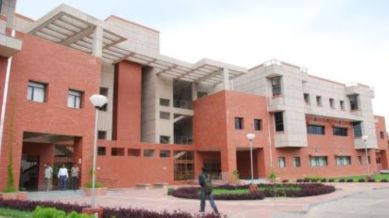
Between May and June, researchers from IIT-Kanpur parked a vehicle along Anand Vihar, one of Delhi’s busiest and most polluted junctions. The same vehicle was then taken to Dwarka, a relatively calmer suburban neighbourhood about 30 km away.
Both locations told a different story about the air people were breathing.

The vehicle was a fully equipped atmospheric research laboratory, generating data that would feed into artificial intelligence (AI) models designed to pinpoint where Delhi’s pollution comes from and how it can be solved.
Led by Sachchida Nand Tripathi, Dean, Kotak School of Sustainability, and Project Director of the AI Centre of Excellence for Sustainable Cities at IIT-Kanpur, the effort combines high-resolution chemical measurements, mobile labs, low-cost sensors and AI.
“Our work integrates sensor technology, real-time measurements, and advanced source apportionment to answer one fundamental question — when, where, and why do pollution peaks occur in Delhi-NCR, and how can we intervene at the right place, at the right time, with the right strategy,” said Tripathi.
Over 20 researchers, including PhD students, postdoctoral researchers and AI researchers at various levels, are involved in the experiment.
What’s in the van
The customised, heavy-duty van, was designed and built by Tripathi’s research group to house instruments typically found only in advanced atmospheric research facilities.
“It is basically a lab on wheels,” he said.
It has a high-resolution time-of-flight aerosol mass spectrometer (HR-ToF-AMS), which analyses airborne particles at near-molecular resolution and reveals what they are made of: organic matter, sulphates, nitrates and other chemical components.
Alongside it has a real-time metal monitor, capable of measuring 30 to 40 metals — including iron, copper, zinc and sulphur — separately in PM 2.5 and PM 10. These metal combinations act as fingerprints, helping researchers distinguish between road dust, vehicles, industrial emissions and combustion sources.
The van also houses aethalometers to measure black carbon (a marker of diesel exhaust and solid-fuel burning); particle-size analysers that track everything from ultra-fine particles to coarse dust; regulatory-grade gas analysers for ozone, nitrogen oxides, sulphur dioxide and carbon monoxide; and high-precision meteorological instruments measuring temperature and humidity.
The mobile lab also carries low-cost sensors, mounted alongside the advanced instrumentsOne mobile laboratory costs over Rs 22 crore; IIT-Kanpur has just one. “The funding we receive for the centre from private and philanthropic entities is what we use for our research,” Tripathi said.
What it found
During the May-June 2025 campaign, the mobile lab measured average PM 2.5 concentrations of about 63 μg/m3 at Anand Vihar, well above safe limits even outside winter.
More than half of this pollution — 56% — was organic matter. But the chemical breakdown revealed multiple sources acting simultaneously: road dust contributed 34%, sulphur-rich particles 26.9%, and chlorine-rich emissions 16.7%.
Put simply, dust from roads and traffic emissions were largely local, while sulphur-rich and oxidised particles were arriving from farther away, transported by regional winds.
The instruments also captured distinct daily patterns. Gases peaked at certain hours, ultra-fine particles accumulated at night. High moisture accelerated particle growth. Black carbon levels frequently exceeded 5 μg/m3, signalling diesel exhaust and solid-fuel burning.
In Dwarka, the numbers dropped — PM 2.5 averaged about 38 μg/m3, but the composition was different.
Here, pollution was dominated by secondary organic aerosols, particles formed in the air from gaseous precursors rather than emitted directly. More than 80% of PM 2.5 fell into this category. Black carbon remained consistently low and the air reflected a background environment rather than a hotspot.
“Together, Anand Vihar and Dwarka illustrate why city-wide averages often mislead. Delhi does not have one pollution problem, it has many, varying by neighbourhood, time of day and season,” Tripathi said.
Sensors by themselves can measure particulate matter, gases and weather. What they cannot do reliably is explain where pollution is coming from.
To solve this, Tripathi’s team co-locates the mobile laboratory with low-cost sensors for 10-12 days. During this period, the advanced instruments generate detailed chemical data, while sensors record simpler signals. Machine-learning models are then trained to learn the relationship between the two.
“What AI does is establish the relationship between the output from sensor data and the molecular-level measurements made by the mobile laboratory,” Tripathi explained.
Once trained, the model needs only sensor data to identify sources.
This approach has already been tested extensively in Lucknow, where models trained across five distinct locations — industrial, commercial, traffic-heavy, background forested, and regulatory sites — achieved over 90% accuracy in identifying four dominant sources: vehicles, dust, burning and industry.
Anand Vihar and Dwarka are the first steps toward replicating this approach in the capital.
Instead of placing expensive labs everywhere, trained sensors can provide hyper-local, real-time source apportionment across neighbourhoods, something current regulatory stations cannot do.
Despite years of study, Tripathi pointed out that critical gaps still remain in how pollution sources have shifted in recent winters, where monitoring blind spots distort policy, and how to turn data into enforcement.
Delhi, Tripathi suggests, does not lack solutions. It lacks precision “knowing exactly where to act, when to act, and how narrowly action can be focused”.
Explained: What previous work focused on
The current work builds on earlier efforts, most notably the Real-Time Delhi Air Quality Experiment (2018-2022), a multi-institutional campaign carried out with IIT-Delhi, IITM Pune, PRL Ahmedabad and MRIIS Faridabad.
That project pioneered real-time source apportionment (identifying pollution sources as they occur) at three sites across Delhi-NCR. Its findings were submitted to the Central Pollution Control Board in late 2023 and are yet to be published.
Its key findings include: primary particles from local burning drive Delhi’s worst haze episodes, and that certain pollution components generate reactive oxygen species, which are highly oxidative particles that damage lung cells more aggressively than others.
What is new now is the scale, speed and use of AI.
Stay updated with the latest - Click here to follow us on Instagram


