Journalism of Courage



 Citing The Indian Express report, the PIL said that on an average, 7,000 tickets are booked at the New Delhi Railway Station between 6 pm and 8 pm daily; this increased to 9,600 general class tickets on the day of the incident. (File)
DAYS AFTER 18 people were killed in a stampede at the New Delhi Railway Station, the Delhi High Court on Wednesday questioned the Railways on the sale of excess tickets at railway stations.
Hearing a PIL on the February 15 stampede, the division bench of Chief Justice D K Upadhyaya and Justice Tushar Rao Gedela sought a response from the Centre and Railways.
“If you fix the number of passengers to be accommodated in a coach, then why do you sell… why do the number of tickets sold exceed that number? That is a problem… If you implement a simple thing in letter and spirit, such a situation can be avoided. On rush days, you may increase that number to accommodate the rush… but not fixing the strength to be accommodated in a coach, this provision appears to have been neglected all along,” the bench said in oral remarks.
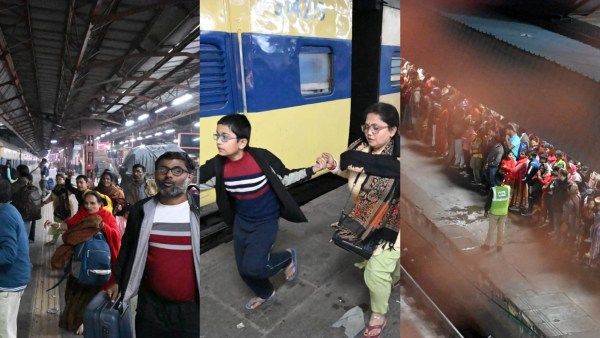 Scenes from the station (Express photos by Gajendra Yadav)
The PIL — filed by a Delhi-based organisation of lawyers, entrepreneurs and professionals, Arth Vidhi, through advocates Aditya Trivedi and Subhi Pastor — seeks the court’s directions to the government for implementation of provisions of the Railways Act, 1989, specifically Sections 57 and 147.
According to Section 57, the Railways has to fix the maximum number of passengers per compartment, and display that number inside or outside each compartment in Hindi, English and one or more regional languages used in the area. Section 147 deals with trespass, providing for punishment up to six months in prison.
The PIL also seeks the court’s directions to the authorities to provide for compensation as under the Act.
Appearing for the Indian Railways, Solicitor General of India Tushar Mehta said no directions were required as they are already bound by the law.
 Rescue personnel at the New Delhi Railway Station (Express Photo by Gajendra Yadav)
As the court pointed to non-implementation of the provisions, Mehta assured that the Railway Board would look into the issues. The court suggested that the Railway Board, in its reply, could include the steps to be taken to ensure implementation of the provisions.
“… Prayer is to direct Railways to frame guidelines for issuance of general class unreserved tickets for benefit and safety of the general people. We have already issued a circular in this regard but some poor people do come and sit there… We have country-specific issues. During rush hours, such cases arise. Railways will go into this question,” Mehta said.
“…Third prayer is to direct compensation that has already been given. Of course, it cannot be enough. We respect loss of life,” he said.
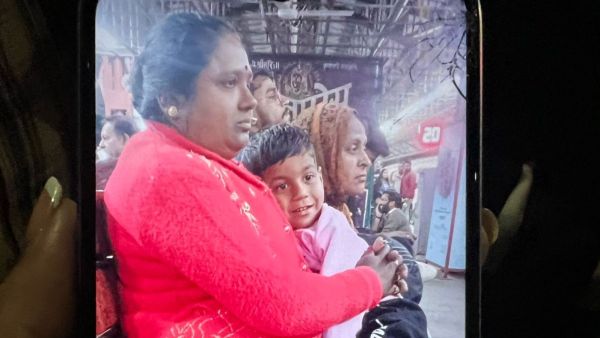 Last photo of Poonam along with her grandson at the railway station. Her son in law Pappu showed it on his phone while he sat outside the emergency ward (Express Photo: Sakshi Chand)
The PIL said that “unlimited issuance of tickets, without ensuring adequate facilities such as additional coaches, proper queueing systems and regulated boarding processes, directly contributed to the chaos and loss of lives.” The incident “highlights gross negligence on the part of the Railway authorities in managing crowd control and ticket issuance in the unreserved category,” it said.
“The unregulated issuance of general class tickets, without cap on the number of tickets sold for a particular train, leads to dangerous overcrowding especially during peak travel seasons… The lack of proper guidelines for unreserved ticketing and the absence of crowd management mechanisms amount to a violation of the fundamental right to life,” it said.
Citing The Indian Express report, the PIL said that on an average, 7,000 tickets are booked at the New Delhi Railway Station between 6 pm and 8 pm daily; this increased to 9,600 general class tickets on the day of the incident.
The Union of India, through the Secretary, Ministry of Railways, the Indian Railways North Zone, Railway Board, Chief Commissioner of Railway Safety, and National Disaster Response Force have been made respondents to the PIL.
The court instructed the respondents to file a short affidavit responding to the issues raised in the PIL while posting the matter for March 26.


 4 min read