


Stay updated with the latest - Click here to follow us on Instagram
© The Indian Express Pvt Ltd
Tags:


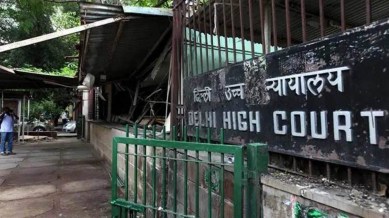
The Delhi High Court on Wednesday sought responses from the Centre and the Delhi government over a public interest litigation (PIL) flagging high pendency before Juvenile Justice Boards (JJBs) in the Capital.
The HC has sought replies from the Ministry of Women and Child Development, Delhi government’s Department of Women and Child Development, National Commission for Protection of Child Rights, and others.


The bench, comprising Chief Justice DK Upadhyaya and Justice Tushar Rao Gedela, on Wednesday issued the notice to the authorities and posted the matter next for consideration on September 24.
The bench also suggested that the petitioner make an appropriate representation before the JJB Committee of Delhi HC.
The organisation, which also offers psychosocial support to children and works closely with the child welfare committee, stated in their petition that at one JJB, “31 petty offence cases have remained unresolved for over a year, while three cases have been pending for over five years, demonstrating extreme administrative negligence.”
Additionally, in the seven JJBs of Delhi, “978 cases of serious offences and 1274 cases of heinous offences have been pending for more than six months, despite the statutory mandate for their expeditious disposal. Alarmingly, 284 cases of serious and heinous offences have been pending for over five years, exposing the utter disregard for the spirit and intent of the JJ Act [Juvenile Justice (Care and Protection of Children) Act, 2015],” the PIL notes.
Another 284 cases of serious/heinous offences have been pending for over five years, said the PIL. While there is no specified time limit for completion of inquiry in cases of serious/heinous offences, however, courts have repeatedly cautioned that such extensions ought to be granted keeping
in mind the spirit of the JJ Act, giving the same a purposive meaning.
The PIL has also flagged that JJBs have “failed to furnish quarterly reports to the CJM (chief judicial magistrate), CMM (chief metropolitan magistrate), and District Magistrate” as is required under provisions of the Act, and that “additionally, there is no evidence of quarterly reviews being conducted by CJMs or CMMs, in contravention of” provisions of the Act.


Stay updated with the latest - Click here to follow us on Instagram


