Journalism of Courage



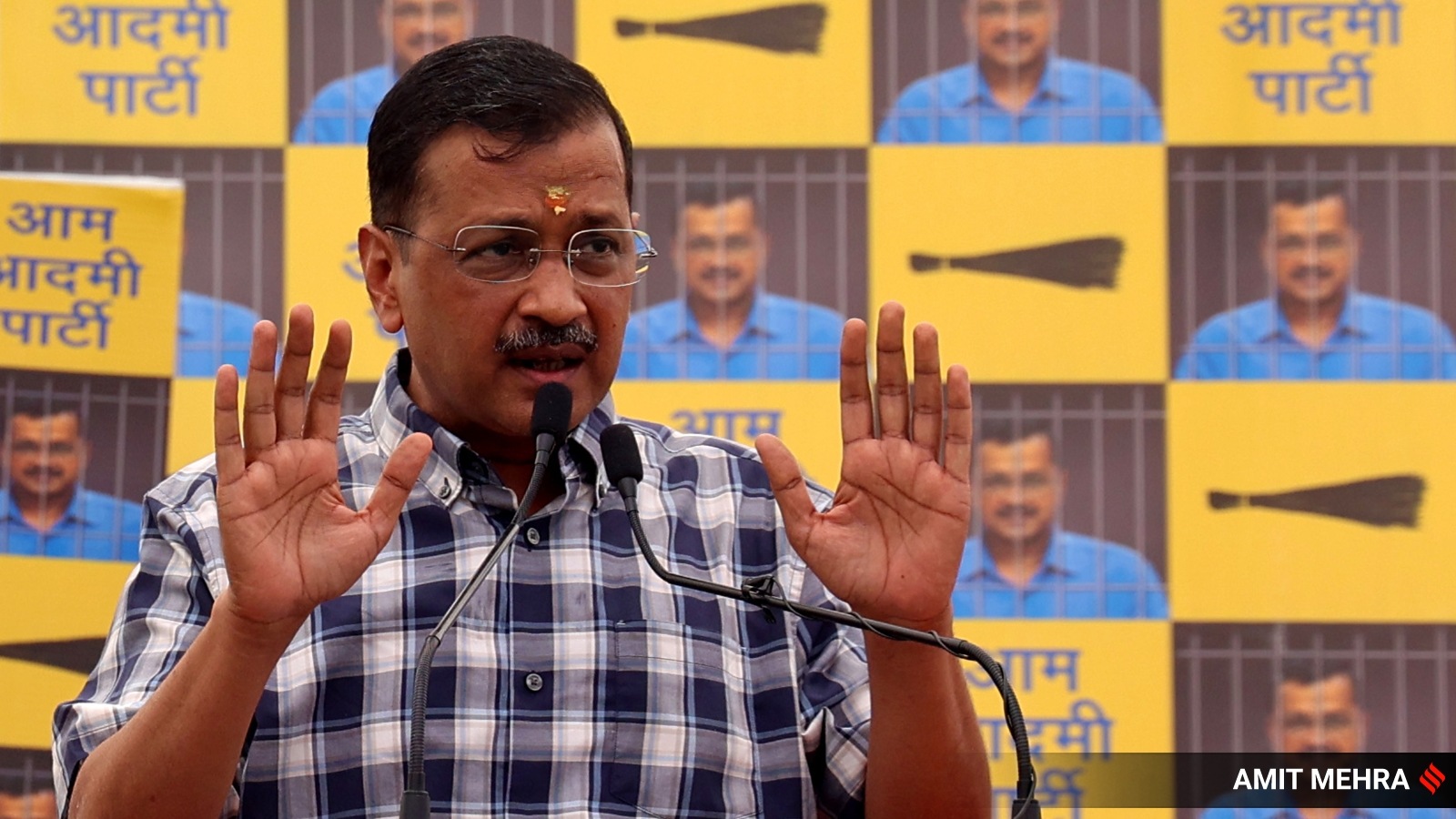 Delhi Chief Minister Arvind Kejriwal speaks during a press conference at the Aam Aadmi Party office in New Delhi on May 11, 2024. (Express Photo By Amit Mehra)
The Enforcement Directorate, which arrested Chief Minister Arvind Kejriwal on March 21 in the Delhi excise policy case, told the Supreme Court Friday that it has found “personal, direct chats” between Kejriwal and a hawala operator it did not name — a charge contested by Kejriwal’s lawyer who asked if the agency was “suppressing this information till today to prejudice the outcome”.
The bench of Justices Sanjiv Khanna and Dipankar Datta reserved its verdict on Kejriwal’s petition challenging his arrest by the ED. The agency is probing allegations of money laundering linked to the Delhi excise policy case.
Additional Solicitor General S V Raju, appearing for the ED, did not name the hawala operator and told the bench: “Now we have found chats between Arvind Kejriwal and the hawala operator. Personal, direct chats.”
He was responding to Justice Khanna’s query “what is the material in your (ED) chart (supplied to court outlining the agency’s submissions) after the Manish Sisodia judgment which you have relied upon”.
Objecting to Raju’s remarks, Senior Advocate Abhishek Manu Singhvi, appearing for Kejriwal, said, “This is for whom? The court or the media?”
Raju said it justified the agency’s stand on why Kejriwal had to be arrested.
Singhvi’s intervention also invited comments from Solicitor General Tushar Mehta who said, “We are not in a press conference, we are addressing the court.”
Singhvi continued: “Was he suppressing this information till today to prejudice the outcome? This is not the role of the prosecutor.”
He said Kejriwal was arrested in March, and the prosecutor was saying this as the hearing was ending. “Your Lordships will not be prejudiced in this manner by the prosecutor… This is persecution. Very unfair. You have to maintain standards of fairness,”he said.
“This is to create doubt at the last minute, get your Lordships to suddenly change… This is not fair… in the last few minutes to speak like this.. It’s not there on the grounds of arrest, it has not been argued until 4.30 (pm) on Friday. Is it fair?” Singhvi asked.
Mehta said, “We arrested the hawala operator… now.”
“Very convenient to arrest a hawala operator at 4.30 on Friday and say this to the court… It seems then that from March till today, my friend was suppressing evidence,” Singhvi said..
The bench, meanwhile, asked the ED to share the case files, saying it wants to have a look at the witness statements recorded by the probe agency after the Supreme Court denied bail to former Deputy Chief Minister Manish Sisodia, before Kejriwal’s arrest.
The bench also said that Kejriwal can move the trial court seeking bail if so advised though it has reserved its judgment.
In earlier hearings, Singhvi contended that the agency only relied on those witness statements against his client and ignored those which were in his favour.
On this, Raju told the bench Friday that the law is that even at the stage of framing of charges, the defence of the accused cannot be looked at. “If so, how can it be looked into at the stage of arrest? Unheard of,” he said.
The bench asked the ASG if the evidence that the investigating officer relied on to form ‘reasons to believe’ that the arrest was necessary were supplied to the accused in writing.
Raju said only the grounds of arrest need to be supplied and not what constitutes ‘reason to believe’.
Justice Khanna asked what happens in a case of preventive detention if the “relevant material” is not looked into. Raju said the preventive detention would then fall. He added that preventive detention, however, stands on a different footing.
Justice Datta referred to what the ED note says on Section 19 of the Prevention of Money Laundering Act which allows ED officers to arrest an individual “on the basis of material in possession (and) reason to believe (to be recorded in writing) that the person is guilty”.
“Section 19, if I read your note and understand it correctly, you say that he (investigating officer) must have material in his possession which gives rise to a reasonable suspicion that he is guilty,” he said.
He asked if that means “we change the language of the statute? Statute says reason to believe and you want to read it as reasonably suspects?”
Raju said he was not saying so. “It has to be something more than suspicion and less than grave suspicion. Therefore, the expression guilty of the offence would change from stage to stage. If it is at the stage of conviction, it would be beyond reasonable doubt,” he said.
Justice Datta said “the statute would then have read like this… has on the basis of material in his possession that any person has been guilty of an offence. Why these words? Legislature is not assumed to waste words”.
Raju said giving it such an interpretation would mean convicting someone right at the time of arrest. “That’s the standard to be applied at the stage of conviction,” he said, adding what is required is prima facie satisfaction.
Responding to Raju’s submissions, Singhvi said the ED had ignored nine exculpatory statements of witnesses but given weight to one that sought to indict Kejriwal.
He also questioned the truthfulness of the witness statements, pointing out that P Sarat Reddy who deposed against Kejriwal had made donations to BJP via electoral bonds.
Singhvi said “there is no iota of material in grounds of arrest” regarding the alleged receipt of money by AAP through the hawala route.
On the charge that Kejriwal demanded a bribe of Rs 100 crore, he said if that was true, the CM should have been named as an accused in the predicate offence under the Prevention of Corruption Act.

 6 min read