Journalism of Courage



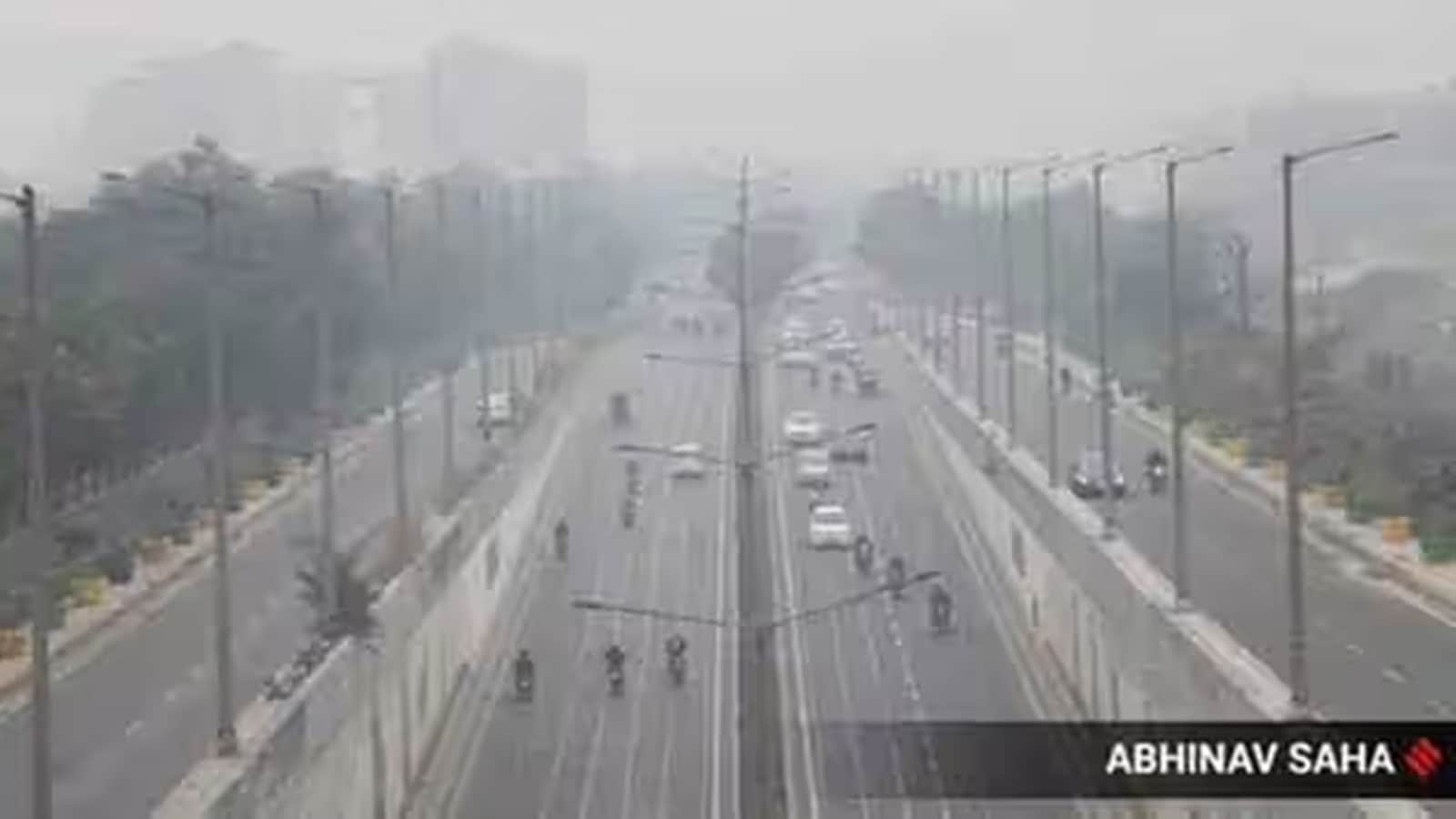 While Delhi is facing a sharp decline in air quality in the coming days, crucial data that helped the government prepare a strategy to mitigate the air pollution problem is missing. (Express Photo by Abhinav Saha)
 Delhi’s air quality deteriorated to the “very poor” category on Saturday, and is predicted to worsen further due to unfavourable meteorological conditions. The city’s 24-hour average Air Quality Index (AQI) stood at 304, worsening from 261 on Friday, according to the Central Pollution Control Board.
The AQI was 286 in neighbouring Ghaziabad, 268 in Faridabad, 248 in Gurugram, 284 in Noida, and 349 in Greater Noida. An AQI between zero and 50 is considered ‘good’, 51 to 100 ‘satisfactory’, 101 to 200 ‘moderate’, 201 to 300 ‘poor’, 301 to 400 ‘very poor’, and 401 to 500 ‘severe’.
According to the Centre’s Air Quality Early Warning System for Delhi, the city’s air quality deteriorated to the ‘very poor’ category due to slow wind speed at night and a dip in temperatures.
The minimum temperature was recorded as 14.3 degrees Celsius, two degrees below normal and the lowest of the season so far.
The air quality is expected to remain very poor till the end of the month, CPCB said.
According to an analysis conducted by the Delhi Pollution Control Committee, the capital experiences peak pollution from November 1 to November 15 when stubble burning incidents in Punjab and Haryana peak.
While Delhi is facing a sharp decline in air quality in the coming days, crucial data that helped the government prepare a strategy to mitigate the air pollution problem is missing.
The Ministry of Earth Sciences’ System of Air Quality and Weather Forecasting and Research, which provided data about the contribution of smoke from farm fires to Delhi’s air pollution, has not been providing updates.
Similarly, data from the Decision Support System, a numerical model-based framework capable of identifying sources of particulate matter pollution in Delhi, isn’t accessible to the general public anymore.

 2 min read