4 min read
Stay updated with the latest - Click here to follow us on Instagram

Journalism of Courage



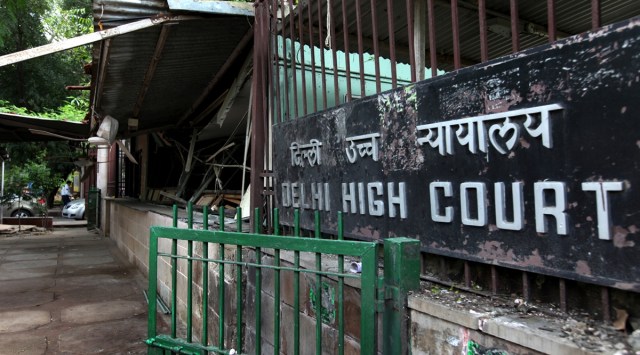 The HC noted that the trial court to connect the appellants and convict Kanhaie Jha relied on CDR and the recoveries effected from them during the investigation. (Express file)
 While partly allowing a plea moved by three men convicted and sentenced to five-year jail for dacoity, the Delhi High Court said that the Call Data Records (CDR) of the accused can be treated only as corroborative evidence, and the conviction cannot be made solely on the basis of this data.
A single judge bench of Justice Sudhir Kumar Jain in its March 23 order said that CDR data may be an important and effective piece of evidence that may facilitate and assist courts in ascertaining the presence of different participants in committing an offence including the complainant and the proposed accused at one particular place or location which may be their presence at or near the place of occurrence.
“However, CDR data can only be taken as supporting or corroborative pieces of evidence and conviction cannot be made solely on the basis of CDR data. CDRs proved and relied on by the prosecution only proved that the appellants Jitender @ Jitu and Azad @ Gaurav, on the day of the incident, were present near the place of occurrence/incident but it is not proved that they have actually participated in the commission of offence as per complaint Ex. PW1/A. The respective counsels for the appellants Jitender @ Jitu and Azad @ Gaurav rightly argued that CDR data cannot be safely relied on to establish their criminality for the offence punishable under section 395 IPC. The argument advanced by the Additional Public Prosecutor regarding the reliance on CDR data is without much force,” the HC said.
The trial court in its March 2022 decision had primarily relied on the testimony of the complainant Manish Aggarwal (Prosecution Witness 1) who supported the case of the prosecution. According to Aggarwal on June 30, 2017, he was carrying Rs 2,64,000 in a bag when at the foot-overbridge near Tis Hazari Metro Station his bag was snatched by two boys armed with a small pistol. Aggarwal claimed he saw them run down and get on motorbikes which were driven by two other boys, as he chased them on the spot.
The HC noted that the trial court to connect the appellants and convict Kanhaie Jha relied on CDR and the recoveries effected from them during the investigation. The convicting court also did not accept the plea that no offence punishable under section 395 IPC is made out, the HC noted. The trial court had observed that as per Aggarwal’s testimony, four people were present at the spot at the time of the incident out of which two were present on foot-overbridge while two were sitting on motorbikes.
The HC observed that the trial court was “not justified in convicting the appellants for the offence punishable under section 395 IPC”. It noted that the prosecution could prove that appellant Bharat Kumar Goswami had participated in snatching the bag from Aggarwal and subsequently recoveries were made at the instance of the appellants and convict Kanhaie Jha. But the trial court judgment convicting the appellants for the offence punishable under section 395 was “passed on factually and legally unsustainable surmises and assumptions and without adequate support of evidence, the HC said.
“It is proved that the appellant Jitender @ Jitu and Azad @ Gaurav received/retained the stolen property. The prosecution, from the quality and quantity of evidence, could only prove the guilt of the appellant Bharat Kumar Goswami for offence punishable under section 379/356/34 IPC and the guilt of the appellants Jitender @ Jitu and Azad @ Gaurav for the offence punishable under section 411 IPC,” the HC noted.
It thereafter partly allowed the appeal and modified the trial court order wherein Bharat Kumar Goswami was sentenced to undergo rigorous imprisonment for two years for theft (S 379) as well as rigorous imprisonment for six months for “Assault or criminal force in an attempt to commit theft of property carried by a person” (356) under IPC. Jitender @ Jitu and Azad @ Gaurav were individually sentenced to undergo rigorous imprisonment for two years for “Dishonestly receiving stolen property” (S411) under IPC.
Stay updated with the latest - Click here to follow us on Instagram