


Stay updated with the latest - Click here to follow us on Instagram
© The Indian Express Pvt Ltd
Tags:


The beginning of the Special Intensive Revision (SIR) of electoral rolls in West Bengal has resulted in migrant workers from the state having to make a sudden visit home – at the cost, in many cases, of disruption in their jobs and livelihoods, and significant unplanned expenditure, especially for large families.
During the monthlong enumeration phase of the exercise, which began on November 4, booth-level officers (BLOs), who are government employees, will visit the homes of 7.62 crore voters on the existing electoral roll.

Every voter must fill in the enumeration form. About 84 lakh enumeration forms had been distributed by the end of Wednesday, the second day of the exercise.
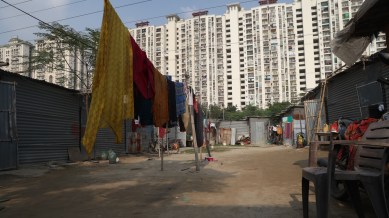
On Thursday afternoon, Rohija (45) and her husband were having a tense exchange outside their tin hut in the jhuggis of Noida’s Sector 78. “I have only Rs 4,000. I can’t pay for our [train] tickets. You had said you would ask your manager for money,” she told her husband accusingly.
There is an option of filling the form online, but most migrants from West Bengal in Noida are unsure of how to go about the process. Many are fearful of being struck off the electoral rolls, and believe it is essential for them to be present when the BLOs come to their homes. A large number of migrants from West Bengal work as domestic helps, construction labourers, and cooks in Noida.
Rohija and her 51-year-old husband Opiqul Islam, who said they belonged to Cooch Behar district in North Bengal, are struggling to find the money to make the journey home. “We can’t get tickets in Tatkal. They are saying only AC tickets are available, but they cost Rs 3,200. It will cost us Rs 6,400 just to go,” Opiqul said.
Rohija also fears for her job. “My employer told me that if I did not return in a week, she would hire another house help. I have assured her that I would be back in a week, but I don’t really know,” she said.
Alam Miya (53), said he got to know about SIR only a week ago. “Initially, I thought that my relatives back home would manage, but then they called me and said that I would have to go myself. We are not educated people. We need someone to tell us everything,” he said.
At Sarfabad village, a hub of Bengali migrant labour in Noida, many homes are empty – their occupants left last weekend. Among those who could not is Asma, a 43-year-old woman who said she has been living in Noida since 2005. “There are five of us in the family and I am a widow, where will we get the money for the tickets? I am hoping we can fill the forms online, or someone comes to our help,” she said.
The Election Commission of India has set January 1, 2026 as the qualifying date for SIR, and the process of distribution and collection of enumeration forms is scheduled to end on December 4. The draft electoral roll will be published on December 9.
Asma’s neighbour, 25-year-old Miraj Khan, has a different kind of problem. “I eloped with my wife Rabita in 2021. She left all her documents behind at her father’s home. My parents, who live in Howrah, have finally accepted her, but she has no documents at all,” Miraj said.
At the Bengali colony and market in Noida’s Sector 93A, many appeared unaware of the SIR. “No one has told us anything. There have been no calls from home,” said Pooja (33), who works as a help in housing societies nearby.
Gaurav Haldar, Jagdish Mandal and Gagan Bomi, all from Nadia district, said their and their parents’ names were there in the 2002 list, the last time a similar revision of electoral rolls took place. “We will see if the process can be completed online,” they said.


Stay updated with the latest - Click here to follow us on Instagram


