Journalism of Courage



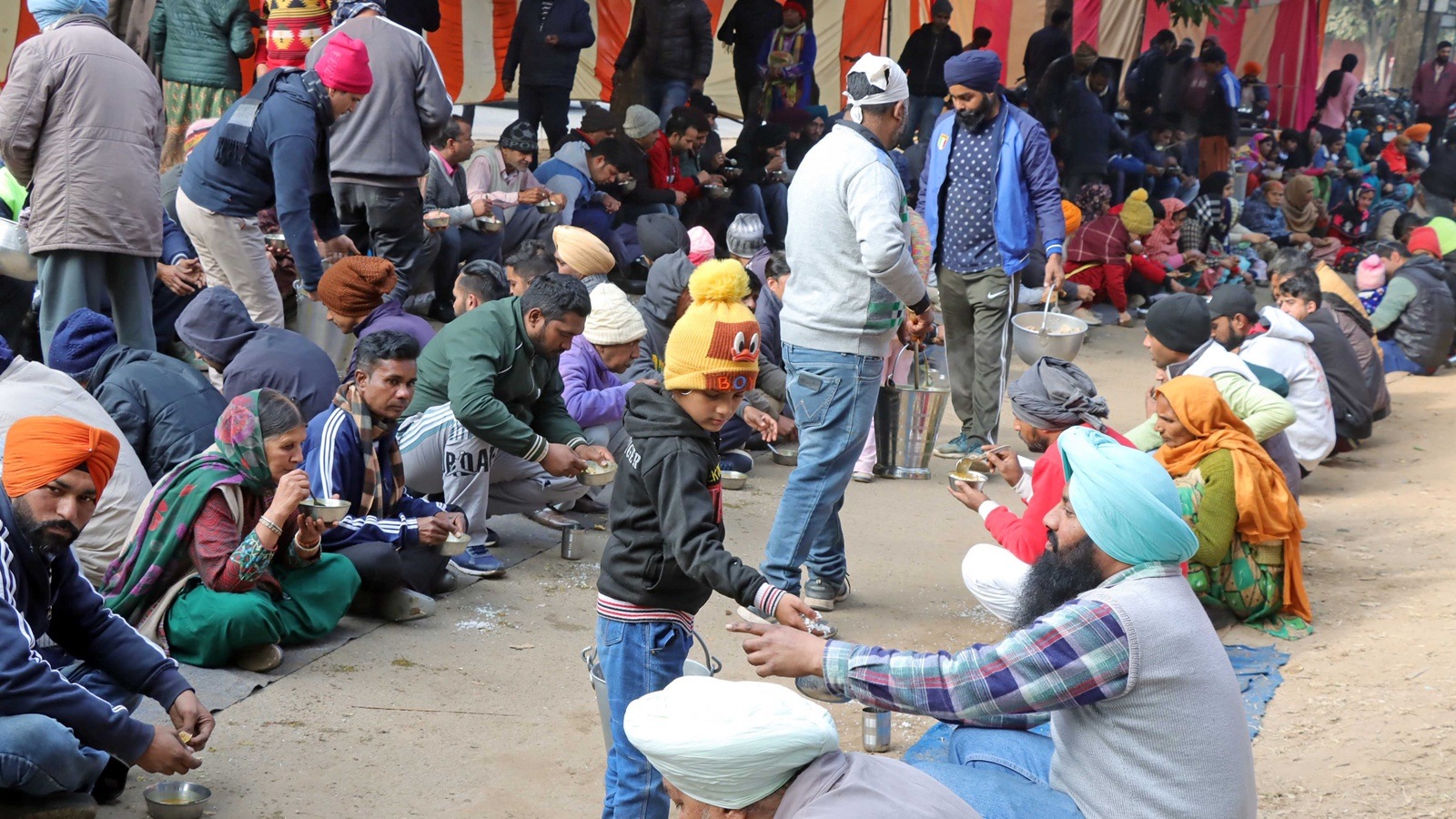 People of the community said that for Sikhs worldwide, December 21–27 is already Chaar Sahibzade Shaheedi Saptah (week). (Express Photo)
As the nation approaches December 26, officially designated as Veer Bal Diwas, the debate over terminology, which has persisted since the Centre’s announcement in January 2022, has once again intensified. Punjab MPs, the Akal Takht, the Shiromani Gurdwara Parbandhak Committee (SGPC), and a wide spectrum of Sikh scholars and institutions have reacted strongly to the controversy.
Their collective demand remains consistent: the terminology must be corrected to Sahibzade Shaheedi Diwas, and the commemoration must honour the martyrdom of all four sahibzade of Guru Gobind Singh, not only the two younger ones.
Sikh scholars argue that the issue is not symbolic alone, but theological, historical, and civilisational. According to them, the current nomenclature fragments a unified Sikh narrative and disregards long-established traditions of remembrance.
The four sahibzade and the controversy surrounding Veer Bal Diwas
Guru Gobind Singh had four sons, reverently addressed as the “chaar sahibzade”—the four princes of the Sikh faith. Baba Ajit Singh Ji, martyred at age 18 in the Battle of Chamkaur (December 22, 1705); Baba Jujhar Singh Ji, martyred at age 14 in the same battle (December 22, 1705); Baba Zorawar Singh Ji, bricked alive at age 9 in Sirhind (December 26, 1705); and Baba Fateh Singh Ji, bricked alive at age 6 alongside his brother (December 26, 1705). Their supreme sacrifice at such tender ages remains unparalleled in world history and is regarded by Sikhs as the ultimate triumph of faith over tyranny.
“The martyrdom of the younger two falls on 12–13 Poh (usually December 26–27), while the elder two attained martyrdom on 8 Poh (December 22). The entire week is observed with reverence as Shaheedi Saptah (Martyrdom Week)—not with mourning or self-flagellation, but with pride, celebration of courage, and recitation of Gurbani that glorifies their unshakable spirit,” said Sikh scholar and writer Gurcharanjit Singh Lamba.
For Sikh scholars, this continuity of remembrance is crucial. Separating the sahibzade by age or circumstance, they argue, violates the collective ethos of Sikh martyrdom.
On January 9, 2022, during the Prakash Purab celebrations of Guru Gobind Singh, Prime Minister Narendra Modi announced that December 26 would henceforth be observed as Veer Bal Diwas to honour the martyrdom of the two younger sahibzade. The decision was formalised through a gazette notification (No. CG-DL-E-09012022-232510).
While the announcement was projected as a tribute, Sikh scholars contend that the unilateral decision overlooked established Sikh conventions and institutions that traditionally guide matters of doctrine and remembrance.
Within hours, major Sikh institutions — the SGPC, the Akal Takht, and numerous scholars and jathebandis (organisations) — strongly objected to the name Veer Bal Diwas. They argued that the day should be called Chaar Sahibzade Shaheedi Diwas or Sahibzade Shaheedi Diwas, a name already in use for decades within the community.
“By focusing only on the two younger sahibzade and using the term “Bal” (child), the Government appeared to exclude or diminish the equal martyrdom of the two elder sons who fought and died on the battlefield against overwhelming odds. In daily Ardaas, Sikhs remember “Panj Piare, Chaar Sahibzade, Chaalis Mukte…” together. Separating the younger two is seen as unacceptable and divisive. A special SGPC sub-committee was formed to study the issue; it unanimously recommended changing the name to Sahibzade Shaheedi Diwas. Despite repeated representations, the Government of India has not altered the nomenclature,” said Lamba.
“When news of the martyrdom of all four sons reached Guru Ji, he displayed extraordinary resolve. Tradition records him saying: Chaar Muye To Kya Hua, Jeevat Kayi Hazar (What if four have died, when thousands still live?). In his famous Persian victory letter, Zafarnama, to Emperor Aurangzeb, he wrote, “What if four sons have been slain, when the coiled cobra (the Khalsa) still remains?’ Guru Ji made it clear that the physical loss of his four sons was insignificant compared to the thousands of spiritual sons—the Khalsa Panth—he had created, who would carry the mission forward for centuries,” said Lamba.
Sikh scholars emphasise that this very philosophy rejects selective remembrance and instead calls for collective honouring of sacrifice.
People of the community said that for Sikhs worldwide, December 21–27 is already Chaar Sahibzade Shaheedi Saptah (week). The community continues to request the Government of India to respect Sikh sentiments by officially renaming December 26 as Chaar Sahibzade Shaheedi Diwas or at least Sahibzade Shaheedi Diwas, thereby honouring all four princes equally and preserving the distinct identity of this sacred remembrance.
Until that happens, many Sikhs feel that an externally imposed name, however well-intentioned, cannot replace the reverence already embedded in their own centuries-old tradition.
Why Veer Bal Diwas is seen as problematic
Sikh scholars have given several reasons for their opposition to the new name, including the historical baggage of “Bal Diwas”. From 1947 until recently, November 14 was celebrated as Bal Diwas (Children’s Day) to mark the birth anniversary of Jawaharlal Nehru. Critics within the Sikh community allege that shifting “Bal Diwas” to December 26 and adding the prefix “Veer” is a deliberate attempt to erase Nehru’s commemoration while repurposing the term for political optics.
Secondly, the scholars say that the imposition of Veer is an attempt to subsume distinct Sikh martyrs into a broader “Hindu veer” narrative (especially since tantric texts list 52 Veers). Past instances of renaming—Bhai Hakikat Rai as “Veer Haqiqat Rai”, Baba Banda Singh Bahadur as “Veer Vairagi”, or linking Sikh figures with Hindutva ideologue Vinayak Damodar Savarkar—have also met with strong resistance.
Thirdly, they perceive in it the erosion of Sikh identity. Recent examples, such as naming village ponds “Amrit Sarovar” (a term traditionally reserved for the sacred pool at the Harmandir Sahib), have already caused unease. Many Sikhs see the insistence on Veer Bal Diwas as another step to dilute Sikh-specific terminology and history.

 6 min read